Eluding an Officer Defense in Oklahoma
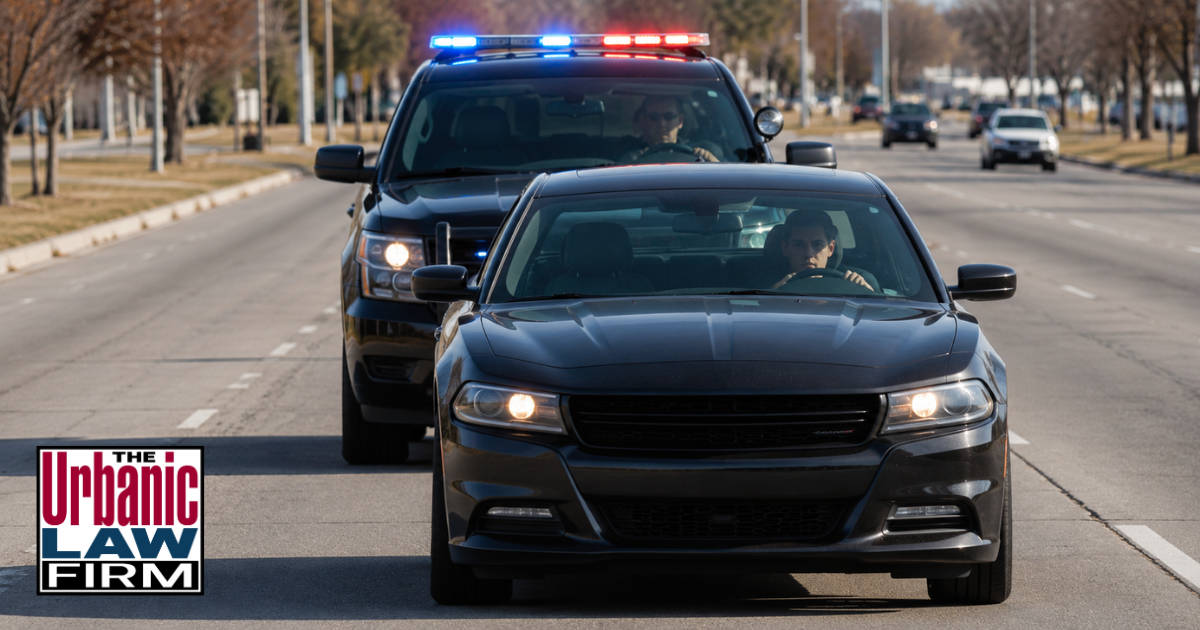 An eluding charge usually starts with one question: why didn’t you stop? However, the legal answer can be more complicated. Police may say you saw the lights, heard the siren, knew it was an officer, and still tried to get away.
This guide is for people accused of eluding an officer in Oklahoma and trying to understand the charge, possible punishment, and defense options before court. It explains the law, the proof issues, the license risks, and what happens next.
Quick links
What is eluding an officer in Oklahoma?
Eluding an officer means the State claims you got a proper police signal to stop and then willfully tried to avoid the stop. That can mean increasing speed, turning off lights, taking evasive turns, or refusing to stop in some other way.
The possible penalty depends on whether this is a first conviction, a later conviction, or a more serious version involving danger or injury. For the basic misdemeanor charge, the fight often turns on the signal, the officer’s vehicle, your intent, and whether you were the driver.
Talk to us before court
If you’ve been accused of eluding an officer in Oklahoma, reach out for a free consultation. An Oklahoma eluding an officer defense attorney can review the stop, the video, the officer’s report, and the license consequences before you make decisions in court.
Call us at 405-633-3420 or use our secure online form.
Explanation of the law
Oklahoma’s basic eluding law applies when an operator of a motor vehicle receives a visual and audible signal from a peace officer in an official police, sheriff, highway patrol, or state game ranger vehicle and then willfully eludes or attempts to elude the officer (21 O.S. § 540A(A)).
This page focuses on the basic misdemeanor version. However, the same statute also has felony versions when prosecutors allege endangerment or an accident involving great bodily injury. That’s why eluding cases sit near the line between a traffic stop and a serious criminal case.
This charge is part of the broader Oklahoma dangerous driving crimes area. It also belongs in the more specific group of Oklahoma eluding offenses.
Prosecutors may stack related counts when the facts involve speed, a crash, alcohol, or a later stop. Common examples include reckless driving, DUI, hit-and-run or failure to stop, and accident duties and reporting violations.
Key elements the State must prove
The misdemeanor elements come from jury instruction 6-29. In an eluding case, the State must prove the core facts below.
- You were the driver of a motor vehicle.
- Driver identity can matter when the vehicle had passengers, switched locations, or stopped out of view.
- You received a red light and siren from a peace officer or game ranger.
- The signal issue can involve video, audio, patrol-car equipment, distance, lighting, and surrounding traffic.
- The officer’s vehicle showed it was an official vehicle.
- The State must connect the signal to an official police, sheriff, highway patrol, or state game ranger vehicle.
- You willfully eluded or attempted to elude the officer.
- This is often the biggest fight. Confusion, fear, traffic, darkness, or looking for a safe stop can matter.
Penalties for eluding an officer
Basic eluding is a misdemeanor. These penalties can include jail, fines, and a separate driving-privilege suspension.
First conviction
- Jail: Up to 1 year in county jail.
- Fine: $100–$2,000.
- Classification: Misdemeanor.
- License: Service Oklahoma suspension risk under 47 O.S. § 6-206.
Second or subsequent conviction
- Jail: Up to 1 year in county jail.
- Fine: $500–$5,000.
- License: Longer suspension risk, including up to 1 year for a second conviction and up to 3 years for a third or later conviction.
- Record: A later conviction can make the case harder to resolve and harder to explain on background checks.
However, if prosecutors allege endangerment or great bodily injury, the case can move into a Class C1 felony category under 21 O.S. § 20L. Those felony versions also appear in 57 O.S. § 571, so they can create violent-crime consequences.
Collateral consequences
A conviction can also carry practical punishment outside the courtroom. Because this charge involves driving away from police, people often worry about work, insurance, and their license.
- Driving privilege suspension: Service Oklahoma can create separate driver’s license consequences after a conviction.
- Insurance problems: Your carrier may treat a pursuit-related conviction as a major risk event.
- Job issues: Driving jobs, security jobs, military work, and licensed professions may ask about the case.
- Background checks: A misdemeanor conviction can still appear in housing, school, and employment screening.
- Crash-related costs: If property damage or injury gets alleged, the court may address restitution.
How prosecutors prove eluding an officer
Prosecutors usually build these cases with officer testimony, video, dispatch records, and driving behavior. However, each proof source can have gaps.
- Dashcam and bodycam video showing the patrol vehicle, route, lights, and final stop.
- Patrol-car equipment evidence showing whether lights and siren worked and when they were activated.
- Dispatch audio and CAD logs showing timing, location, and pursuit notes.
- Driving pattern evidence such as speed, turns, stop signs, traffic lights, and distance.
- Driver identity evidence from officer observations, passengers, admissions, fingerprints, or video.
- Statements after arrest about whether you saw police, heard a siren, or knew you were being stopped.
Practical guide if you’re charged with this crime
What we look for first in an eluding an officer case
First, we look at the signal, the vehicle, the route, and the video. Then we test whether the State can prove you willfully tried to get away.
Defenses
- No proper signal: The State may struggle if the evidence doesn’t show both the required visual and audible signal.
- Driver identity: The case can weaken when the officer lost sight, passengers were present, or the stop happened later.
- No willful flight: You may have been confused, looking for a safe place, or unaware police were trying to stop you.
- Official-vehicle issue: The State must prove the vehicle showed it was an official law enforcement vehicle.
- Suppression issue: Statements, searches, or later evidence may be attacked if police violated your rights.
How we fight these charges
An Oklahoma eluding an officer defense lawyer should test the State’s proof before anyone assumes the officer’s version is complete.
- Gather dashcam, bodycam, dispatch audio, CAD logs, GPS data, and any nearby surveillance video.
- Test whether the officer’s lights, siren, and vehicle markings match the required legal elements.
- Challenge timing, distance, traffic, weather, and lighting claims that affect what you could see or hear.
- Attack driver identification when the officer lost sight, the vehicle stopped later, or passengers were involved.
- Suppress statements or evidence tied to unlawful questioning, detention, or search issues.
What The Urbanic Law Firm does to help
- Review the charging document, officer reports, videos, license notices, and court settings.
- Explain what each court date means, what choices matter, and what risks need attention.
- Track deadlines for discovery, motions, license issues, and court appearances.
- Prepare you for court so you know what to expect before you walk in.
- Communicate clearly about strategy, evidence, and next steps as the case develops.
Questions to ask your attorney
- What evidence shows the officer used the required signal?
- What evidence proves I was the driver?
- What facts does the State claim show willful eluding?
- What license suspension risk applies if I’m convicted?
- Can any statements, searches, or later evidence be suppressed?
Things you can do if you’re arrested for this crime
- Stay silent about the facts until you’ve talked with counsel.
- Save phone location data, receipts, messages, and anything showing where you were.
- Write down what you remember about lights, sirens, traffic, weather, and your reason for stopping where you did.
- Avoid posting about the chase, the officer, or the case on social media.
- Bring tickets, booking paperwork, license notices, and bond documents to your consultation.
What happens next
After an arrest or citation, the case usually moves to arraignment. A judge may set bond conditions, court dates, and deadlines.
Next, the defense reviews discovery. That may include officer reports, dashcam, bodycam, dispatch logs, crash reports, and any statements police claim you made.
After that, the case may involve motions, hearings, plea discussions, dismissal arguments, or trial settings. For a more detailed overview of the criminal process in Oklahoma, you can read more in our Oklahoma criminal process guide.
Table comparing crimes
These charges can look similar because they often start with a traffic stop or chase. However, the legal issue changes with the signal, the driving, the crash facts, and the level of danger.
| Offense | Core issue | Classification and risk | Common defense issues |
|---|---|---|---|
| Basic eluding an officer | Police claim you got the required signal and willfully avoided the stop. | Misdemeanor. Jail, fine, license suspension, and record consequences are the main risks. | Signal problems, no willful flight, driver identity, officer-vehicle proof, and video gaps. |
| Felony eluding with endangerment or great bodily injury | Police claim the pursuit endangered someone or caused a qualifying injury crash. | Class C1 felony. The stakes increase because danger or injury becomes a core issue. | Causation, injury level, actual danger, route evidence, speed claims, and crash reconstruction. |
| Reckless driving | The State focuses on unsafe driving rather than refusal to stop for police. | Usually a misdemeanor. License, insurance, and employment issues can still follow. | Driving conditions, speed proof, witness accuracy, video angle, and whether the driving was truly reckless. |
| Hit-and-run or failure to stop | The State focuses on duties after a crash, not whether you ignored a police signal. | Risk depends on injury, damage, and reporting duties. | Knowledge of a crash, injury proof, notice, identity, and whether required information was exchanged. |
Key terms
Elude
Elude means to avoid, escape from, or evade, as by cunning, daring, or artifice. (jury instruction 6-35)
This term matters when the State claims your driving showed flight instead of confusion or an attempt to stop safely.
Peace officer
Peace officer means any sheriff, police officer, federal law enforcement officer, tribal law enforcement officer, or any other law enforcement officer whose duty is to enforce and preserve the public peace. (21 O.S. § 99 & jury instruction 6-35)
This term connects directly to whether the signal came from the kind of officer covered by the law.
Willfully
Willfully, when applied to the intent with which an act is done or omitted, implies simply a purpose or willingness to commit the act or make the omission. It doesn’t require intent to violate law, injure another, or acquire advantage. (21 O.S. § 92)
In this charge, that concept focuses the fight on whether you meant to avoid the stop.
Great bodily injury
Great bodily injury means bodily injury that creates a substantial risk of death or causes serious permanent disfigurement or protracted loss or impairment of the function of any bodily member or organ. (21 O.S. § 540A & jury instruction 6-30 & jury instruction 6-35)
This term becomes critical when prosecutors try to move beyond basic misdemeanor eluding.
Driving
Driving means operating a motor vehicle while it is in motion. (jury instruction 6-35)
This definition matters when the defense challenges who operated the vehicle during the alleged pursuit.
FAQs about eluding an officer in Oklahoma
What is eluding an officer in Oklahoma?
Eluding an officer in Oklahoma means the State claims you received a proper police signal to stop and then willfully avoided, escaped, or tried to evade the officer while driving.
Is eluding an officer in Oklahoma a misdemeanor or a felony?
Basic eluding is a misdemeanor. However, the case can become a felony if prosecutors allege endangerment or an accident resulting in great bodily injury.
Can eluding an officer in Oklahoma affect my driver’s license?
Yes. A conviction can trigger a separate driving-privilege suspension through Service Oklahoma, even when the criminal case is a misdemeanor.
What defenses work in an Oklahoma eluding an officer case?
Common defenses include no proper signal, no willful flight, mistaken driver identity, unclear official vehicle proof, and suppression of evidence from an unlawful stop, search, or questioning.
Can an Oklahoma eluding an officer charge be expunged?
It may be eligible for expungement depending on the outcome, timing, prior record, and whether the case ended in dismissal, acquittal, conviction, or a deferred sentence. You can read more in our Oklahoma expungement guide.
Can running away from an officer on foot be charged as eluding in Oklahoma?
Usually, no. Oklahoma’s eluding law is tied to driving a motor vehicle after receiving the required officer signal, so running away on foot usually isn’t eluding an officer. However, prosecutors may look at obstructing an officer if they claim you willfully delayed or obstructed an officer’s lawful duties. If the facts include force, violence, fighting, pulling away, or resisting handcuffs, the State may instead consider resisting an officer. If you were already under arrest or in lawful custody, running could raise a separate obstruction-of-justice issue.
Important cases
Aldridge v. State, 1984 OK CR 7, 674 P.2d 553, upheld an eluding conviction even though the patrol vehicle didn’t have a siren. The court focused on the emergency light, horn, and evidence that the defendant knew a peace officer was trying to stop her.
Hayes v. State, 1977 OK CR 219, 566 P.2d 1172, shows why driver identity can matter. The court rejected a theory that a driver change could have happened merely because the officer briefly lost sight when the car went over a hill.
Example of this crime in the news
A recent KOCO report described an Oklahoma City minibike pursuit where police said the rider failed to stop, went through streets and yards, and was arrested for eluding. That kind of case shows why the legal fight often turns on the officer’s signal, what the driver could see or hear, and whether the State can prove a willful attempt to evade.
This page is for informational purposes only and is not legal advice. Every case is unique; consult an attorney about your specific situation. Law last reviewed on May 16, 2026 by attorney Frank Urbanic. Page last updated May 16, 2026. Review the statutes cited on this page for the most current version of the law.

Oklahoma Bird Law Attorneys: The Urbanic Law Firm v. Charlie Kelly
Banging More Than the Gavel! Another Judge Sex Scandal Raises Oklahoma Criminal Law Questions

Stick a fork in him! Brent Swadley convicted: Oklahoma post-trial sentencing procedure explained

When Workplace Retaliation Leads To Harm

Brent Swadley Trial Analysis: False Claims & Conspiracy to Defraud State Explained
| THIS OFFENSE IN THE NEWS |