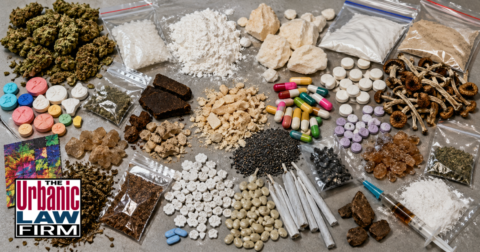
 Oklahoma controlled substance schedules can shape your entire drug case. The schedule can affect how prosecutors describe the drug, how they charge the case, and how they argue punishment. However, the schedule doesn’t tell the whole story.
Quantity, alleged intent, location, lab testing, prior record, and medical authorization can all matter. So, if you’re looking at a drug charge, you need to know what the schedule means and what it doesn’t decide by itself.
Worried About an Oklahoma Drug Case?
If police, prosecutors, or a court paper mention a schedule, don’t guess what it means. Call us at 405-633-3420 or use our secure online form.
Quick Links
What Do Drug Schedules Do?
A schedule is a legal category for a controlled dangerous substance. Oklahoma law sorts controlled substances into schedules based on abuse potential, accepted medical use, and dependence risk.
However, a schedule isn’t the same thing as a charge. A schedule tells you how the substance gets classified. The charge tells you what prosecutors claim you did with it.
For example, a case can involve simple possession, distribution, possession with intent, manufacturing, trafficking, or paraphernalia. Because of that, two cases involving the same substance can look very different in court.
Oklahoma’s main drug crimes defense framework turns on both the substance and the alleged conduct. So, the schedule is usually only the starting point.
The Oklahoma Schedule System at a Glance
Oklahoma uses Schedules I through V. You asked about Schedules I through IV, but Schedule V still matters in real cases. So, this guide covers it briefly too.
| Schedule | Basic idea | Why it matters |
|---|---|---|
| Schedule I | High abuse potential and no accepted medical use or accepted safety under medical supervision. | These substances often create the harshest charging posture. |
| Schedule II | High abuse potential, but with accepted medical use or accepted use with severe restrictions. | Prescription status can matter, but unauthorized possession can still trigger prosecution. |
| Schedule III | Lower abuse potential than Schedule I or II, with accepted medical use. | The State still treats unauthorized possession or distribution seriously. |
| Schedule IV | Lower abuse potential than Schedule III, with accepted medical use. | Many cases involve prescriptions, pills, or alleged unlawful transfers. |
| Schedule V | Lower abuse potential than Schedule IV, with limited dependence risk. | It can still matter in precursor, pharmacy, and prescription-related cases. |
Schedule I Controlled Substances
63 O.S. § 2-203 says Schedule I includes substances with a high potential for abuse and no accepted medical use in the United States, or a lack of accepted safety for use under medical supervision.
63 O.S. § 2-204 lists Schedule I substances. The list includes many hallucinogens, opiates, synthetic cannabinoids, and other substances.
Marijuana creates a special issue. Oklahoma medical-marijuana laws may create authorization defenses in some situations. However, prosecutors can still file charges for conduct outside that authorization, including unlicensed distribution, certain quantity-based cases, or conduct tied to impaired driving.
Because of that, a marijuana defense in Oklahoma often turns on more than the schedule label. You may need to look at your card status, location, packaging, amount, and statements.
Schedule II Controlled Substances
63 O.S. § 2-205 says Schedule II includes substances with a high potential for abuse, accepted medical use or accepted use with severe restrictions, and abuse risk that may lead to severe dependence.
63 O.S. § 2-206 lists Schedule II substances. Examples can include cocaine, methamphetamine, amphetamine, oxycodone, hydrocodone, morphine, methadone, and similar drugs.
However, a prescription doesn’t automatically end every issue. Prosecutors may still ask whether the prescription was valid, whether the pills matched the bottle, or whether the State claims transfer to another person.
So, a Schedule II case often needs a close review of pharmacy records, lab reports, pill counts, search facts, and statements. The details can change the defense.
Schedule III Controlled Substances
63 O.S. § 2-207 covers Schedule III characteristics. These substances have less abuse potential than Schedules I and II, accepted medical use, and abuse risk that may cause moderate or low physical dependence or high psychological dependence.
63 O.S. § 2-208 lists Schedule III substances. Examples can include anabolic steroids, ketamine, buprenorphine, and certain narcotic or depressant preparations.
Even so, Schedule III doesn’t mean “safe” in criminal court. Prosecutors can still file possession, distribution, possession-with-intent, manufacturing, or prescription-fraud-related theories.
In addition, the State may use packaging, cash, scales, messages, or alleged admissions to argue intent. The schedule matters, but the evidence matters more.
Schedule IV Controlled Substances
63 O.S. § 2-209 says Schedule IV substances have a low potential for abuse relative to Schedule III, accepted medical use, and limited dependence risk relative to Schedule III.
63 O.S. § 2-210 lists Schedule IV substances. Many cases involve sedatives, anti-anxiety medications, sleep medications, or other prescription drugs.
However, prescription-drug cases can still become serious. Prosecutors may focus on whether the prescription belonged to you, whether it had expired, whether the amount fit normal use, or whether there was an alleged transfer.
Because these cases often start with a traffic stop, purse search, backpack search, or home search, suppression issues can matter. A weak search can change the entire case.
Schedule V Controlled Substances
63 O.S. § 2-211 covers Schedule V characteristics. These substances have low abuse potential relative to Schedule IV, accepted medical use, and limited dependence risk relative to Schedule IV.
63 O.S. § 2-212 includes certain preparations, compounds, mixtures, pseudoephedrine or ephedrine products, and pregabalin.
Schedule V can matter in pharmacy, precursor, and manufacturing-related investigations. For example, pseudoephedrine facts can show up when police suspect methamphetamine production.
Finally, don’t assume Schedule V means no criminal exposure. The charge still depends on the conduct, the amount, the alleged intent, and your record.
How Schedules Can Change Oklahoma Drug Charges
First, prosecutors may file possession of a controlled dangerous substance under 63 O.S. § 2-402 when they claim personal possession.
However, the case can move into distribution-related CDS offenses, possession with intent to distribute, or manufacturing, precursor, or cultivation allegations under 63 O.S. § 2-401.
In addition, Oklahoma drug trafficking under 63 O.S. § 2-415 usually turns on the substance and amount. The schedule can matter, but weight can matter even more.
Also, prosecutors can file offer, solicitation, attempt, endeavor, or conspiracy drug allegations under 63 O.S. § 2-408. Those cases may rely heavily on messages, recordings, informants, or undercover claims.
Finally, separate possession and paraphernalia allegations under 63 O.S. § 2-405 can travel with the main drug count. In some cases, a CDS tax-stamp accusation can add another layer of risk.
Enhancements and Repeat Drug Cases
Many Oklahoma drug cases are felonies. Because of that, your prior record can matter. Prosecutors may try to increase punishment if they claim you have a qualifying prior felony conviction.
For some repeat drug felonies, Oklahoma’s habitual-offender law can come into play under 21 O.S. § 51.1. That’s why you should review any enhancement notice carefully.
In addition, schedule, amount, location, and prior convictions can affect plea negotiations. You can read more about Oklahoma sentence enhancement issues before making a decision.
Defense Issues in Schedule-Based Drug Cases
A schedule label doesn’t prove guilt. Prosecutors still need admissible evidence. So, the defense often starts with how police found the substance.
Search, Seizure, and Suppression
Police may rely on a traffic stop, warrant, consent search, dog sniff, informant tip, or inventory search. However, each path has rules. If officers crossed the line, the defense may ask the judge to suppress the evidence.
Because schedules can affect charge level, they can also affect first-appearance strategy and bond arguments. The earlier you challenge weak facts, the better.
Lab Testing and Drug Identity
The State must prove what the substance is. Field tests can be wrong. Packaging can be contaminated. Chain-of-custody gaps can matter. Therefore, lab reports deserve close review.
In pill cases, the defense may compare the alleged substance to prescription records, pharmacy records, bottle labels, and the lab result. A mismatch can create leverage.
Possession, Knowledge, and Intent
Drug cases often turn on knowledge and control. A substance in a car, house, bag, or shared room doesn’t automatically prove it belonged to you.
In addition, intent-to-distribute cases can depend on weak assumptions. Cash, baggies, scales, and messages may have explanations. The defense should test each one.
What Happens Next After a Schedule-Based Drug Charge?
After an arrest or filing, the next steps usually include an initial appearance, discovery, negotiations, and motion practice. However, the exact path depends on the county, charge level, and evidence.
You’ll want to review the police report, videos, lab reports, search documents, and any alleged statements. Because drug cases often turn on small details, don’t rely on the charge title alone.
Finally, look ahead. A drug case can affect employment, housing, professional licenses, immigration status, firearm rights, driving privileges, and future record-clearing options.
Key Terms
Public Housing Project
A public housing project means any dwelling or accommodations operated as a state or federally subsidized multifamily housing project by any housing authority, nonprofit corporation or municipal developer, or housing projects created pursuant to the Oklahoma Housing Authorities Act. This term can matter when location-based drug allegations increase the stakes. (63 O.S. § 2-401)
Controlled Dangerous Substance
A controlled dangerous substance means a drug, substance, or immediate precursor in Schedules I through V, or any drug, substance, or immediate precursor listed either temporarily or permanently as a federally controlled substance. If state and federal scheduling conflict, Oklahoma law resolves the conflict in favor of state law. This term drives the whole schedule-based drug framework. (63 O.S. § 2-101)
Immediate Precursor
An immediate precursor means a substance the Director has found and designated by regulation as the principal compound commonly used or produced primarily for use, and which is an immediate chemical intermediary used or likely to be used, in manufacturing a controlled dangerous substance, when control is necessary to prevent, curtail, or limit that manufacture. This term often matters in manufacturing and precursor cases. (63 O.S. § 2-101)
Marijuana
Marijuana includes all parts of the plant Cannabis sativa L., whether growing or not; the seeds; the resin extracted from any part of the plant; and every compound, manufacture, salt, derivative, mixture, or preparation of the plant, its seeds, or resin, subject to the law’s listed exclusions. Cannabis sativa L. includes all forms, varieties, and species of the plant genus cannabis. This definition affects schedule questions even when medical-marijuana authorization becomes part of the defense. (63 O.S. § 2-101 & jury instruction 6-10)
Distribute
Distribute means to deliver other than by administering or dispensing a controlled dangerous substance. This term separates simple possession from allegations involving sharing, selling, or transferring drugs. (63 O.S. § 2-101 & jury instruction 6-16)
FAQs About Oklahoma Controlled Substance Schedules
What do Oklahoma controlled substance schedules mean in a drug case?
Oklahoma controlled substance schedules classify drugs by abuse potential, accepted medical use, and dependence risk. The schedule can affect the charge, penalty range, negotiations, and defense strategy. However, the State still has to prove the substance, your connection to it, and the specific conduct alleged.
Are Oklahoma Schedule I drugs always charged more seriously than Schedule IV drugs?
Not always. Schedule I drugs often create more serious exposure, but the schedule isn’t the only factor. Quantity, location, alleged intent, prior record, trafficking thresholds, and search facts can all change the risk.
Can an Oklahoma medical marijuana card protect you in a Schedule I marijuana case?
Sometimes. A medical marijuana card can help when your conduct fits Oklahoma’s medical-marijuana rules. However, it may not protect against every allegation, including unlicensed sales, trafficking quantities, impaired driving, or conduct outside the law. Learn more about Oklahoma marijuana defense issues.
Can an Oklahoma controlled substance schedule affect trafficking charges?
Yes. Trafficking often depends on the substance and the amount. The schedule can help identify the substance category, but the State usually focuses on weight, lab testing, packaging, and alleged possession or transfer. Read more about Oklahoma drug trafficking defense.
Can an Oklahoma controlled substance offense be expunged?
Sometimes. Expungement eligibility depends on the exact charge, outcome, sentence, criminal history, and waiting period. A dismissal, deferred sentence, misdemeanor conviction, or felony conviction can each create a different analysis. Learn more in our Oklahoma expungement guide.
Serving Clients Statewide
Oklahoma County, Payne County, Cleveland County, Canadian County, Tulsa County, Logan County, Lincoln County, Pottawatomie County, and all others
Oklahoma City, Stillwater, Moore, Norman, Del City, Edmond, Mustang, El Reno, Lawton, Kingfisher, Valley Brook, Guthrie, Tulsa, Yukon, Midwest City, Bethany, Choctaw, and all others
This page is for informational purposes only and is not legal advice. Every case is unique; consult an attorney about your specific situation. Page last updated April 27, 2026. Consult the statutes listed above for the most up-to-date law.