Cleveland County Criminal Defense Lawyers in Oklahoma
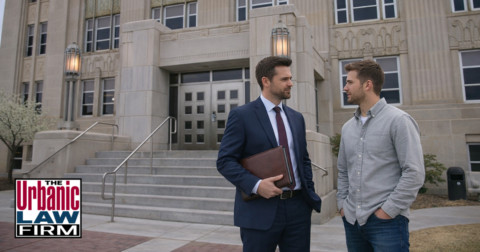 If you’ve been arrested in Cleveland County, you probably want answers fast. You want to know where the case goes, what the charge means, when you have to appear, and how to keep things from getting worse. That urgency is real. A Cleveland County case can move quickly, and early mistakes can hurt bond, evidence issues, plea talks, and sentencing.
This county has its own rhythm. Because Norman is a major college town, many cases involve students, young adults, roommates, late-night traffic stops, apartment calls, campus-adjacent incidents, and alcohol-fueled misunderstandings. Still, the label on the charge matters more than the story you tell yourself. A “minor” arrest can still leave you with a record, court costs, license trouble, school problems, and real consequences.
Quick Links
Get help before your case hardens
You don’t need to wait for the next hearing to start protecting yourself. A good defense often starts with body-cam review, witness preservation, record requests, bond terms, and a plan for what you will and won’t say. The earlier you act, the more options you usually have. Call us at 405-633-3420 or use our secure online form.
How Cleveland County court works in Oklahoma
The courthouse, the clerk, and the record trail
A lot of people mix up the offices at the courthouse complex. For a criminal case, your main public record source is usually the Cleveland County District Court Clerk, not the County Clerk. That matters because the County Clerk handles county records and board records, while the Court Clerk handles the district court file, costs, filings, and many practical questions tied to your case.
So, if you need docket information, court-cost details, or public case documents, start with the OSCN docket search and the Court Clerk’s office. If you want the broader county hub for offices and contact information, use the official Cleveland County website. Those are the places that usually answer the first round of practical questions after an arrest.
Jail, release, and the first court date
If your loved one is in custody, the starting point is the Cleveland County detention center page. That page connects you to inmate search tools and jail information. After release, the focus usually shifts fast to your report date, arraignment, bond conditions, and what the State thinks it can prove. Because of that, you should track the case early instead of waiting for something to show up by surprise.
In addition, Cleveland County offers text message reminders for court dates. That’s useful, but it is only a backup. You still need to verify settings, confirm dates, and stay on top of your case. Missing court because you assumed someone would remind you is a bad bet.
Traffic and campus citations in Cleveland County
This county also has a wrinkle that matters in a college town. Not every ticket goes to the same place. State-court traffic tickets in Cleveland County can come from agencies like the sheriff, the Oklahoma Highway Patrol, state park officers, wildlife officers, and even University of Oklahoma police. However, municipal tickets stay in the city or town where they were issued. So a ticket tied to Norman or OU does not automatically mean it will stay out of Cleveland County court.
That distinction matters for strategy. A person might assume the case is “just a ticket,” then learn it carries a court date, costs, and a DA review. So you need to identify the court first, then build the defense.
Common charges we see in Cleveland County court
Alcohol and driving cases
In practical terms, Cleveland County court sees a steady flow of alcohol and driving cases. That includes DUI, DWI, and actual physical control (APC) cases after late-night stops, parking-lot encounters, crashes, and roadside investigations. Because Norman is a college town, those cases often grow out of weekends, campus events, bar areas, apartment complexes, and game-day traffic.
The local docket also regularly includes public intoxication and disorderly conduct allegations. Sometimes those charges stand alone. Other times they ride with a stop, a fight, a dorm complaint, or a resisting allegation. So even a case that sounds low-level can become messy fast.
Drug, domestic, and property cases
Drug cases are common here too. Some start small, like possession of a controlled dangerous substance or paraphernalia possession. Others escalate into distribution-style allegations like possession with intent. Because students and young adults often share cars, apartments, and backpacks, possession issues in this county often turn on knowledge, access, and who actually controlled the item.
Domestic and property cases also show up often in Cleveland County court. That means we routinely watch for fact patterns tied to domestic violence, as well as burglary and trespass allegations involving roommates, exes, neighbors, parties, student housing, and breakups. In these cases, the first story in the police report is not always the full story.
Why college-town cases feel different
Cleveland County is not just another county docket. Norman changes the mix. You see more student defendants, more roommate witnesses, more phone videos, more dorm and apartment investigations, more campus-adjacent traffic stops, and more cases where alcohol drives the entire police narrative. Because of that, facts that look simple on paper often get complicated once you slow them down.
That also means the fallout can spread beyond the courthouse. A Cleveland County case can affect scholarships, housing, student conduct issues, graduate school plans, internships, licensing goals, immigration questions, and job offers. So you should not judge the case only by the maximum punishment. You also need to judge it by what a conviction can close off later.
At the same time, not every student case is truly a student case. Some Cleveland County arrests involve older adults, repeat offenders, domestic conflicts, serious crashes, or search-warrant drug investigations. So we never treat the “college town” label as a shortcut. We use it only when the local facts actually help explain what happened.
How we defend Cleveland County charges in Oklahoma
Every case needs its own defense plan. Still, certain pressure points show up again and again in Cleveland County court. That is where strong defense work often starts.
- Illegal stop or search: We look hard at why the officer stopped you, extended the stop, searched the car, entered the apartment, or seized the phone. If the stop or search fails, a big part of the case can fail with it.
- Statement problems: Police reports often rely on admissions, half-admissions, or statements pulled out of a chaotic scene. So we test Miranda issues, voluntariness, context, and whether the report actually matches what was said.
- Testing weaknesses: In DUI and drug cases, the State still has to prove the test means what it says. That means looking at observation periods, body-cam timing, blood draws, lab handling, and whether the test fits the theory of impairment.
- Possession and intent issues: Shared cars and shared living spaces create real doubt. We ask who owned the item, who knew about it, who had access, and whether the State can really prove control or intent.
- Witness credibility: A lot of Cleveland County cases rise or fall on one witness. So we compare 911 calls, body-cam footage, officer notes, phone videos, and later statements to see what changed and why.
- Overcharging and leverage: Prosecutors sometimes stack counts or file the case at its highest usable level. We push back when the facts fit a lesser offense, when the story is inflated, or when collateral damage outweighs the way the case was first charged.
What to do next after an arrest
Start protecting the case now
First, stop talking about the case with friends, roommates, classmates, or the police. Next, save what can disappear. Keep screenshots, texts, videos, rideshare receipts, location history, parking records, and names of witnesses. Because college-town cases often involve fast-moving nights and multiple phones, the best defense material can vanish in days, not months.
Also, verify where the case is filed. Use OSCN to check the docket. If you need public court records, use the District Court Clerk. If you need incident information from Norman police, the Norman Police public information page is a useful starting point because it links to activity reports and open-data tools.
Use the local tools, but don’t rely on them blindly
Finally, remember that Cleveland County court is still a prosecutor-driven system. The District Attorney’s Office drives charging and plea positions, and Cleveland County sits in Oklahoma District 21. That is why timing matters. The sooner you frame the facts and weaknesses, the better chance you have to influence where the case goes.
Talk to a lawyer before you guess your way through it
You do not have to figure out Cleveland County court on your own. Whether the case involves a student mistake, a traffic stop, a domestic allegation, a drug filing, or a burglary accusation, the right move is to get a defense plan built around the real facts. Contact The Urbanic Law Firm here to talk about your case.
Cleveland County criminal defense FAQs in Oklahoma
What happens first in an Oklahoma case after an arrest in Cleveland County?
Usually, the first issues are booking, release, bond conditions, and your first required court appearance. After that, the State begins shaping the case through reports, lab work, videos, and charging decisions. So the smart move is to confirm the filing, preserve evidence, and talk with a lawyer early.
Can a University of Oklahoma arrest end up in Cleveland County court in Oklahoma?
Yes, it can. Some tickets and arrests tied to University of Oklahoma police or campus-adjacent events can land in Cleveland County court instead of a city municipal court. The key question is which agency issued the citation and where the case was filed.
Do I have to go to court in Oklahoma for a Cleveland County traffic case?
Sometimes yes, sometimes no. It depends on the charge, the agency, and how the case is set. A person should never assume a traffic citation is “just payable” without checking the docket and the court instructions, because some traffic cases carry appearance requirements and prosecutor review.
Can I get a court-appointed lawyer in Oklahoma for a Cleveland County case?
Possibly. If you cannot afford to hire counsel, you may be able to ask for appointed counsel through the court process. Cleveland County posts an application form through the Court Clerk, but eligibility still depends on the court’s review of your finances and the type of case.
Will a first-time Oklahoma charge in Cleveland County stay on my record forever?
Not always. Some cases end in dismissals, deferred outcomes, reductions, or later expungement options. However, you should never assume a first case will clean itself up. The charge, the outcome, and the final paperwork all matter.
This page is for informational purposes only and is not legal advice. Every case is unique; consult an attorney about your specific situation. Page last updated April 13, 2026. Consult the statutes listed above for the most up-to-date law.