Threats, Stalking & Harmful Communications Crimes Defense in Oklahoma
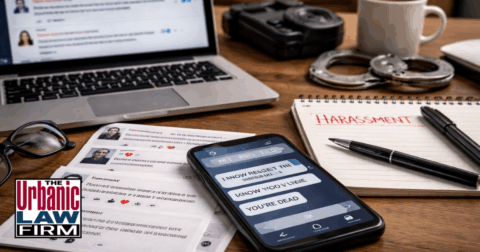 Harassing, obscene, and threatening communication crimes in Oklahoma cover a wide range of conduct, from angry texts and late-night calls to social media posts, DMs, and public comments. These cases move fast because police and prosecutors can seize phones, pull records, and rely on witnesses who say they felt scared, harassed, or targeted because of your words.
You may feel like you’re being punished for venting, sarcasm, or a private dispute that spun out of control. However, once the State labels a message a “true threat,” “harassment,” or “hate crime,” you’re facing serious criminal exposure, not just a platform suspension. A smart defense looks at the full context, your actual intent, the other person’s role in the communication, and the limits that free-speech protections place on these statutes.
Quick Links
- Threatening / Harassing Communications (21 O.S. §§ 1172, 1378(B), 1173)
- Hate-Crime–Based Intimidation & Incitement (21 O.S. § 850)
- Defamatory / Reputation-Harm Communications (21 O.S. §§ 778, 781)
- Defense Strategies for Harassing / Threatening Communication Charges
- FAQs About Oklahoma Harassing & Threatening Communication Crimes
Get Help Early for Harassing / Threatening Communication Charges
If you’ve been accused of harassing or threatening communication crimes in Oklahoma, reach out for a free consultation as soon as you can. You can call us at 405-633-3420 or use our secure online form.
Intimidation Crimes
Threatening and harassing communication laws in Oklahoma are aimed at messages that cross the line from ordinary conflict into criminal conduct. Police may claim you “wouldn’t stop texting,” that you made someone fear violence, or that you engaged in a repeated pattern of unwanted contact that rises to stalking.
These cases often hinge on screenshots, call logs, and partial message threads that don’t tell the whole story. Your defense may highlight mutual communication, mixed messages from the alleged victim, or missing context that changes how your words sound when read in order instead of as isolated quotes.
In addition, Oklahoma courts have to balance these statutes with free-speech protections. That means prosecutors still have to prove specific elements like intent to harass, a willful threat of violence, or a “course of conduct” that would cause reasonable fear, not just rude or offensive talk.
- Obscenity / Threatening / Harassing Electronic Communications — 21 O.S. § 1172: This law targets electronic messages that are obscene, threaten physical harm, or are sent with the intent to harass, annoy, or alarm someone through phones, computers, or other devices.
- Threaten Act of Violence — 21 O.S. § 1378(B): You can be charged when the State claims you maliciously communicated a threat to commit an act of violence that could reasonably create fear of serious bodily harm or death.
- Stalking — 21 O.S. § 1173: Stalking focuses on willful, malicious, and repeated behavior that follows or harasses someone and would cause a reasonable person to feel frightened, intimidated, or emotionally distressed.
Attempted and Planned Acts of Violence Related to Threats
Some Oklahoma cases go beyond the threat itself and focus on planning or trying to carry out an act of serious violence. These felony provisions can be filed alongside threatening communication charges when prosecutors claim you moved from talking to taking concrete steps toward an attack.
- Attempting, Conspiring, or Endeavoring to Perform an Act of Violence — 21 O.S. § 1378(A): This felony subsection covers attempting, conspiring, or endeavoring to carry out an act of violence involving, or intended to involve, serious bodily harm or death. It punishes taking concrete steps toward such an attack even if no actual injury occurs.
- Devising Plan, Scheme, or Program of Action to Cause Serious Bodily Harm or Death — 21 O.S. § 1378(C): This felony subsection applies when you devise a plan, scheme, or program of action to cause serious bodily harm or death with intent to perform that violent act, whether alone or with others. It targets the planning stage itself, even if the act is never carried out.
Hate-Crime–Based Intimidation & Incitement
Hate-crime communication charges add an allegation that your words were driven by bias based on race, color, religion, ancestry, national origin, or disability. Suddenly, what might have been filed as a lower-level threat or harassment case can turn into a felony accusation with higher penalties and long-term stigma.
Prosecutors often comb through your digital footprint, looking for old posts, comments, or messages they believe show prejudice. However, a heated personal dispute, a one-time insult, or an out-of-context screenshot doesn’t automatically prove a hate-based motive under Oklahoma law.
A strong defense pushes back against the claimed motive, examines why the conflict really started, and separates protected (even offensive) speech from criminal intimidation or incitement to imminent violence.
- Malicious Intimidation or Harassment (Hate Crime) — 21 O.S. § 850(A): This statute covers threats, intimidation, or harassment carried out because of a protected characteristic, and it requires proof of both the intimidating act and the hate-based motive.
- Inciting Imminent Violence (Hate-Crime Communications) — 21 O.S. § 850(B), (C): You may be charged for maliciously sending or broadcasting messages intended to incite imminent violence against someone due to a protected characteristic, not just for expressing offensive opinions.
Defamatory / Reputation-Harm Communications
Defamatory and reputation-harm communication statutes deal with threats to publish damaging material and the spreading of false, slanderous rumors. While civil defamation cases focus on money damages, these Oklahoma criminal laws can expose you to fines, probation, and even jail time.
Many cases arise from personal breakups, business disputes, or online drama where someone claims you tried to ruin their name or used embarrassing information as leverage. However, truth, opinion, and exaggeration all play important roles in whether a statement is criminally defamatory.
Your defense may center on whether the statements were actually false, whether you knew they were false, and whether they were shared as facts or opinions. It’s also crucial to examine how far the statements spread and whether they truly rose to the level of criminal slander or libel.
- Threats to Publish a Libel — 21 O.S. § 778: This crime involves threatening to publish written statements or content that would amount to libel in order to force someone to act, pay, or give up something of value.
- False Rumors of a Slanderous Nature — 21 O.S. § 781: You may face charges if you knowingly spread false, slanderous rumors presented as fact that tend to expose another person to hatred, ridicule, or public contempt.
Defense Strategies for Oklahoma Obscene / Threatening / Harassing Communication Charges
No two communication cases look the same, especially once you factor in context, private relationships, and how messages appear when read in order. Effective defense work digs into the facts, the digital trail, and the exact statutory elements the State must prove.
- Challenging intent: showing that you didn’t intend to threaten, harass, or intimidate anyone, but instead vented, joked, or argued in the heat of the moment.
- Arguing the message wasn’t a true threat: emphasizing that a reasonable person wouldn’t see your words as a serious plan to commit violence.
- Contesting “obscenity”: arguing that the material doesn’t meet the strict legal test for obscenity and may be offensive but still protected speech.
- Attacking the “course of conduct” element in stalking: showing contact was limited, mutual, invited, or not severe enough to cause reasonable fear.
- Disputing hate-crime motive: demonstrating that any conflict was personal or situational, not driven by race, religion, or other protected traits.
- Suppressing digital evidence: challenging unlawful searches of phones, computers, or accounts, or contesting the reliability of screenshots and logs.
- Negotiating outcomes: pursuing diversion, reduced charges, or plea agreements that avoid felony convictions, incarceration, or long-lasting collateral damage.
FAQs About Oklahoma Harassing, Obscene, & Threatening Communication Crimes
What counts as an obscene or threatening electronic communication in Oklahoma?
In Oklahoma, an obscene or threatening electronic communication usually involves messages that contain legally obscene content or serious threats of injury or harm. The State looks at the exact words, how often you sent them, and whether you intended to harass or frighten the other person. However, crude language alone isn’t always enough to make it a crime.
Can a single angry text message lead to an Oklahoma stalking or threatening charge?
A single text usually isn’t enough for stalking in Oklahoma, because stalking requires repeated conduct. Still, one message can sometimes support a charge like threatening an act of violence if it clearly threatens serious harm. Courts consider your history with the other person, the words used, and whether a reasonable person would see the message as a real threat.
How do Oklahoma hate-crime communication charges under 21 O.S. § 850 affect penalties?
Hate-crime communication charges in Oklahoma can increase the severity of the case because they treat bias-motivated threats or harassment as more serious offenses. When the State alleges that you acted because of someone’s race, religion, ancestry, national origin, or disability, it may seek enhanced punishment, including felony-level exposure and longer supervision.
Are online jokes or memes protected speech under Oklahoma obscene or inciting-violence laws?
Many online jokes and memes are protected speech, even when they are offensive. However, Oklahoma law doesn’t protect communications that qualify as true threats or that are likely to incite imminent violence with the required intent. Courts often look at context, audience, and timing to decide if a meme was satire or an unlawful call to action.
What should you do first if police contact you about an Oklahoma obscene or threatening communication allegation?
If police contact you about an alleged obscene or threatening communication in Oklahoma, you should stay calm and avoid explaining the situation on the spot. Instead, you can politely say that you want to speak with an attorney before answering questions. It’s also important not to delete messages or accounts, because doing so can create more legal problems.
This page is for informational purposes only and is not legal advice. Every case is unique; consult an attorney about your specific situation. Page last updated December 23, 2025. Consult the statutes listed above for the most up-to-date law.