Hit-and-Run & Failure to Stop Crimes Defense in Oklahoma
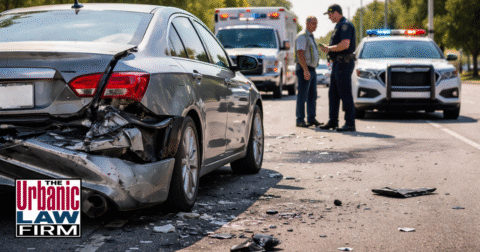 Hit-and-run and failure to stop cases grow out of one basic rule. If you’re in a crash, you must stop. When someone drives away instead, prosecutors treat that decision as a serious public safety problem.
Oklahoma law ratchets penalties up as harm increases. A simple property damage crash can start as a misdemeanor. When someone gets hurt or dies, the same conduct can jump into felony territory. Prison time and harsh license consequences often follow.
Police rarely see these cases in isolation. They often add DUI, reckless driving, or other dangerous driving accusations from the same event. That stacking can turn one brief moment on the road into a long list of charges.
This guide explains how these crimes work, what they share, and where they differ. It also shows defense themes that can protect your record, your license, and your freedom.
Quick links
Talk with a hit-and-run defense lawyer early
Early legal help can change how a hit-and-run case plays out. When you move fast, your lawyer can protect your right to stay silent. Your team can also gather helpful evidence and start contact with the prosecutor on your terms.
If you’ve been accused of hit-and-run or failure to stop crimes in Oklahoma, reach out for a free consultation. Do that before you answer questions or appear in court. Call us at 405-633-3420 or use our secure online form.
Overview of hit-and-run and failure to stop law
All of these offenses focus on what you do after a crash, not what led up to it. The law expects you to stop, stay at the scene, exchange information, and help anyone who’s hurt.
Because those steps protect injured people and first responders, the law treats leaving as both a legal and moral breach. Prosecutors try to show that you knew about the crash and chose to drive away anyway. A defense often turns on what you actually saw, heard, and felt in the chaos.
These statutes also tie into license rules and later civil claims. A conviction can trigger revocation, insurance problems, and lawsuits from other drivers. So you need to think about both the criminal case and the long term fallout.
Courts also look closely at your mental state. They want to know whether you left to escape arrest, testing, or blame. They also consider whether you made a panicked mistake while stressed or scared. That difference can decide whether a judge views you as a felon or someone who deserves a second chance.
Hit-and-run crimes in Oklahoma
The three main hit-and-run crimes share a basic duty to stop and remain at the scene. However, each statute ties the penalty to the harm involved: property damage only, nonfatal injury, or death.
Failure to stop for an accident resulting in nonfatal injury
Failure to stop for an accident resulting in nonfatal injury covers crashes where someone gets hurt. It applies when the driver doesn’t meet the legal duty to stop and remain at the scene. This law appears in 47 O.S. § 10-102. You must stop as close as you safely can and return if you overshoot. You must then stay until you share identifying and insurance information. You also have to give reasonable aid and call emergency services when the situation calls for it.
Prosecutors usually try to show that you left on purpose to avoid detection, arrest, or alcohol or drug testing. The law treats this offense as a felony. Punishment ranges from ten days to two years in the Department of Corrections. The court can also impose a fine between fifty dollars and one thousand dollars. In addition, your license faces revocation and you can see serious damage to your record, career, and insurance.
Failure to stop for an accident resulting in death
Failure to stop for an accident resulting in death applies when a crash kills someone. It also requires proof that the involved driver doesn’t stop and remain as required. This law appears in 47 O.S. § 10-102.1. The same core duties apply, but the stakes rise sharply because a death occurred. Prosecutors often argue that the driver left to avoid responsibility rather than to seek help or safety.
This offense is a felony. The range is one to ten years in the Department of Corrections. The court can also impose a fine between one thousand and ten thousand dollars. You also face license revocation and intense public and courtroom scrutiny. Because emotions run high, careful work on causation, identity, and your reasons for leaving matters even more.
Accidents involving damage to a vehicle
Accidents involving damage to a vehicle address crashes that only damage a vehicle that’s driven or attended by a person. This law appears in 47 O.S. § 10-103. You must stop at or near the scene, return if needed, and avoid blocking traffic more than necessary. You also have to share required information and, when appropriate, render aid.
A violation is a misdemeanor. The court can impose up to one year in the county jail and a fine up to five hundred dollars. On top of that, the court can order you to pay civil damages. In some cases that amount can reach three times the value of the damage. Even at this level, a conviction can still hurt your record, your job prospects, and your insurance rates.
Common charging patterns and related counts
In real cases, hit-and-run charges rarely stand alone. Prosecutors often add DUI, reckless driving, racing, or other dangerous driving charges from the same event. That approach lets them threaten more jail time and more license consequences in plea talks.
You may also see extra counts for failing to give information or failing to render aid under related statutes. In addition, civil claims and restitution requests can follow the criminal case. A strong defense plan looks at the entire stack of charges. It pushes to drop, merge, or reduce counts instead of treating each one in isolation.
Defense strategies for hit-and-run cases in Oklahoma
No two accidents look the same, but certain defense themes keep appearing in Oklahoma hit-and-run cases. The strategies below give you a sense of where a skilled defense team can often push back.
- Challenge identity and involvement. The State has to prove that your vehicle was in the crash and that you were driving. Video, damage patterns, GPS data, and witness statements often leave room for doubt.
- Dispute what you knew and intended. Many crashes are loud and confusing, yet some impacts feel minor from inside the car. If you honestly didn’t know that a crash caused injury or even contact, that matters. A jury may doubt claims that you willfully fled.
- Test the proof of injury or death. In injury and death cases, the prosecution must connect the harm to the accident. Medical records, prior conditions, and later events can raise doubt about what actually caused the claimed injury.
- Attack illegal police conduct. Officers sometimes cut corners on stops, searches, or interviews when they’re chasing a fleeing driver. If a stop lacked reasonable suspicion or if they ignored Miranda rules, that can help you. Your lawyer can ask the court to keep statements, test results, or seized items out of the case.
- Explain emergency or safety reasons for leaving. Some drivers leave because they need urgent medical care or fear immediate danger at the scene. When you act reasonably in an emergency and then try to report the crash, that helps. Those facts can support defenses or at least strong mitigation.
- Build a mitigation package. Even when the evidence looks strong, you can still fight for a better outcome. Prompt reporting, restitution, treatment, and community support all help. They can move a case toward reduced charges, deferred sentences, or alternatives to jail.
Key legal terms in hit-and-run cases
Highway
A highway means the full width between the boundary lines of a way open to the public for vehicle travel. A public entity must maintain that way for it to count as a highway. The definition comes from 47 O.S. § 1-122.
Vehicle
A vehicle means any device that can carry a person or property on a highway. The only exception covers devices used only on rails or tracks. The statute excludes certain farm equipment and some mobility devices from this definition. The definition comes from 47 O.S. § 1-186.
Great bodily injury
Great bodily injury means bodily injury that creates a substantial risk of death. It also includes injuries that cause serious and permanent disfigurement. It includes injuries that cause a long term loss or impairment of the function of a bodily member or organ. (47 O.S. § 11-904(B)(2); jury instruction 6-35)
FAQs about hit-and-run charges in Oklahoma
What happens if I leave the scene of a minor car accident in Oklahoma?
If you leave after a crash that only damages another attended vehicle in Oklahoma, you still take a risk. You may face a misdemeanor hit-and-run charge. The court can impose up to a year in the county jail, fines, restitution, and license consequences. Insurance problems often follow, even if no one suffered physical injury.
Is hit-and-run in Oklahoma always charged as a felony?
No. Property damage only cases stay at the misdemeanor level. When someone gets hurt, failure to stop becomes a felony. A death raises the felony level and the potential prison time. So disputes over the kind and cause of harm often play a big role.
Can I face an Oklahoma hit-and-run charge if I did not realize there was an accident?
The State must prove that you were in an accident and then chose not to meet your duties. If you honestly didn’t know about contact, that matters. If you thought there was no damage or injury, that can undermine the required mental state. Physical evidence and witness accounts often matter more than your statements alone.
Can Oklahoma prosecutors charge me if someone else was driving my car in a hit-and-run?
They can try, but they still have to prove who drove at the time of the crash. If several people had access to the vehicle, that weakens the State’s claim. If someone borrowed or took it without permission, your lawyer can challenge that link. Phone data, video, and alibi witnesses often shape this fight.
How do hit-and-run charges in Oklahoma interact with DUI or reckless driving cases?
Hit-and-run accusations in Oklahoma often appear next to DUI, reckless driving, or racing charges. Prosecutors use the same officers, videos, and test results to support every count. When you challenge the stop, the testing, or witness reliability, you attack key pieces of the case. Doing that can strengthen your position on all of the related charges at once.
This page is for informational purposes only and is not legal advice. Every case is unique; consult an attorney about your specific situation. Page last updated February 3, 2026. Consult the statutes listed above for the most up-to-date law.