Assault on a Referee or Sporting Official Defense in Oklahoma
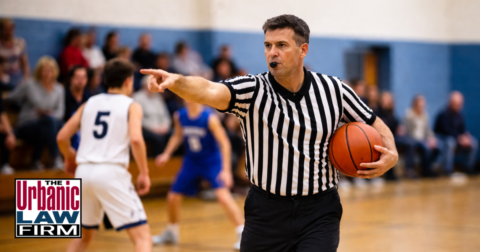 A charge like this usually starts fast. A bad call happens. Tempers spike. Someone steps toward an official, makes contact, or throws something. Then a sports argument turns into a criminal case. If you’re facing this accusation, you need to know what the State must prove, what the penalties are, and where the weak points may be.
This page fits within our school, youth-system, and sports assault pages and our broader assault, battery, and domestic abuse section. So if your case grew out of a game, tournament, sideline dispute, or youth-sports event, this is where to start.
Talk with The Urbanic Law Firm
If you’ve been accused of assault on a referee or sporting official in Oklahoma, reach out for a free consultation about the charge, the evidence, and the next court date. Early review matters because video, witness statements, and league records can shape the whole case. Call us at 405-633-3420 or use our secure online form.
Quick links
- How this charge works
- What the State must prove
- Penalties
- Collateral consequences
- How prosecutors try to prove it
- Practical guide
- What happens next
- Key terms
- FAQs
- Recent Oklahoma example
How this charge works
Under 21 O.S. § 650.1, Oklahoma makes it a misdemeanor to commit an assault, battery, or assault and battery against a referee, umpire, timekeeper, coach, official, or another person with authority in connection with an amateur or professional athletic contest, without justifiable or excusable cause and with intent to do bodily harm.
That means this isn’t every loud sideline dispute. The State still has to prove more than anger. It has to prove prohibited conduct, a protected victim, and intent to do bodily harm. It also has to show the official was performing sports-related duties at the time. So timing matters. Role matters. Context matters.
This is also where many cases split. Some stay as a sports-official misdemeanor. Others grow into more serious allegations if prosecutors claim a weapon was used, someone was seriously hurt, or the scene led to other offenses. Depending on the facts, the State may also add simple assault, simple battery, assault and battery with a dangerous weapon, disorderly conduct, public intoxication, or related counts tied to the same event.
What the State must prove
To convict, the State has to prove each part of the charge beyond a reasonable doubt.
- Assault, battery, or assault and battery. The case has to involve one of those acts. A pure verbal complaint, by itself, usually won’t be enough.
- A protected sports official. The alleged victim must fit the statute’s protected group, such as a referee, umpire, timekeeper, coach, official, or another person with authority over the contest.
- No justifiable or excusable cause. So self-defense, defense of another, or other lawful justification can matter.
- Intent to do bodily harm. That mental-state issue is often where the real fight is.
- Performance of duties. The official must have been acting in that sports role when the incident happened.
That last point can be important. A confrontation in a parking lot after the event, after duties have ended, may raise a different argument than contact made during the game or while an official is still handling the contest. In addition, the current jury instruction does not require the State to prove you knew the person’s official role. So the defense often focuses on the conduct, the timing, the intent, and whether any justification existed.
Penalties
- Misdemeanor conviction
- County jail for up to 1 year.
- A fine of up to $1,000.
- The court can impose both jail and a fine.
- Probation or suspended sentence
- The court may add reporting, classes, testing, counseling, community service, or no-violence conditions.
- Stay-away or no-contact restrictions may follow, especially if the event involved a league, school, or recurring venue.
- Financial fallout
- Court costs and fees can add to the total.
- Restitution may come into play if there was medical treatment, damaged property, or other measurable loss.
Even though this is not a felony-level sports-official charge, it still deserves close attention. A misdemeanor assault case tied to a public game can affect bond, plea options, and future background checks. So you don’t want to treat it like a ticket.
Collateral consequences
- Employment issues. A violent-looking misdemeanor can still hurt hiring, promotions, and professional credibility.
- Coaching or volunteer problems. Youth leagues, schools, and sports organizations may suspend or ban participation.
- Protective or access restrictions. You may be barred from certain gyms, fields, schools, tournaments, or events.
- Civil exposure. The alleged victim may pursue civil claims for injuries, lost work, or related damages.
- Future charging risk. A prior assault-related conviction can make later negotiations harder and can matter if a future case arises.
How prosecutors try to prove it
These cases often look simple at first. Still, the proof can get messy fast because sports scenes are loud, emotional, and crowded. That chaos can help the State or hurt it.
- Eyewitness accounts. Referees, coaches, players, parents, and staff often all saw different parts of the event.
- Video. Cell phone clips, livestreams, venue cameras, and bodycam footage can shape the case.
- Role evidence. Rosters, assignments, tournament records, and league paperwork may be used to show the victim was acting as an official.
- Injury and scene evidence. Photos, medical records, and damaged objects can be used to argue contact and intent.
- Statements. Police interviews, on-scene remarks, texts, and social-media posts can become evidence if the State thinks they show intent.
Because these cases are emotional, witness stories often shift. One person may describe a shove. Another may swear it was a reflex. Someone else may focus on what happened after the first contact. That’s why early investigation matters. Once the story hardens, it gets harder to undo.
Practical guide
Questions to ask your attorney
- Can the State really prove intent to do bodily harm, or does the evidence only show a heated sports argument?
- Was the alleged victim still performing official duties when the contact happened?
- What video, livestream, or phone footage exists, and how fast can it be preserved?
- Do the witness statements conflict on who started the physical contact?
- Is there a path to dismissal, reduction, diversion, or another result that avoids a damaging conviction?
Things you can do if you’re arrested for this crime
- Stay off social media. Don’t post your version of the game, the call, or the fight.
- Save names, numbers, and screenshots from anyone who saw the full incident.
- Write down the timeline while it’s still fresh, including what happened before contact.
- Keep clothing, phones, and other items that may matter as evidence.
- Follow every bond condition and court date exactly, especially any no-contact or stay-away order.
Defenses
- No intent to do bodily harm. A reflex, accidental contact, or chaotic bump is not the same as purposeful intent to hurt someone.
- No protected-duty status at that moment. If the alleged victim was no longer performing official duties, the sports-official element may fail.
- Self-defense or defense of another. If you reasonably used only the force needed to prevent imminent bodily harm, the State may not be able to prove the conduct was unjustified.
- Identity or perception problems. Crowded sidelines, quick movement, and partial video can produce real doubt about who did what.
- Suppression issues. If law enforcement got statements unlawfully or ignored constitutional limits, key evidence may be challenged.
How we fight these charges
- Lock down the video. The Urbanic Law Firm moves early to preserve venue footage, livestreams, and phone recordings before they disappear.
- Break apart the timeline. Small timing details can decide whether the official-duty element stands or falls.
- Compare every witness version. Sports-fight cases often collapse when statements are lined up side by side.
- Litigate the statements. The Urbanic Law Firm challenges admissions, interviews, and scene statements when the law was not followed.
- Push the right resolution. When the proof is weak or overcharged, The Urbanic Law Firm presses for dismissal, reduction, or a cleaner misdemeanor outcome.
What The Urbanic Law Firm does to help clients charged with this crime
- Explain the charge, the elements, and the realistic exposure in clear terms.
- Track court dates, bond terms, no-contact issues, and filing deadlines from the start.
- Gather video, league records, witness information, and defense documents before they’re lost.
- Communicate where the case stands, what the prosecution is doing, and what decision points are coming.
- Prepare the case for negotiation, motion practice, or trial instead of waiting for the State’s version to control the record.
What happens next
Most cases move through the usual misdemeanor track. That means arrest or citation, a court date, arraignment, bond conditions, discovery, negotiation, and sometimes motions or trial. But sports-official cases also have a practical layer. League bans, venue restrictions, and event-related fallout can start before the criminal case ends.
So the first stretch matters. Video needs to be preserved. Witnesses need to be identified. And any stay-away or no-contact order needs to be taken seriously. For a more detailed overview of the criminal process in Oklahoma, you can read more in our Oklahoma criminal process guide.
Key terms
Assault
An assault is any willful and unlawful attempt or offer with force or violence to do a corporal hurt to another. In this charge, that matters because the State can proceed on an assault theory even if it claims no completed touching happened. (21 O.S. § 641; jury instruction 4-2)
Battery
A battery is any willful and unlawful use of force or violence upon the person of another. That definition matters here because even relatively slight contact can become the act the State relies on in a sports-official case. (21 O.S. § 642; jury instruction 4-3)
Willful
Willful means a willingness to commit the act or omission referred to, but it does not require intent to violate the law or gain an advantage. That can matter when the defense argues the contact was accidental, reflexive, or not a purposeful act at all. (21 O.S. § 92)
FAQs about this charge in Oklahoma
Is assaulting a referee a misdemeanor in Oklahoma?
Yes. This charge is typically filed as a misdemeanor. But that does not make it minor. You can still face up to one year in county jail, a fine, and serious fallout tied to work, sports participation, and background checks.
What does the State have to prove for assault on a referee in Oklahoma?
The State must prove an assault, battery, or assault and battery, that the alleged victim was a protected sports official, that there was no justifiable or excusable cause, that you acted with intent to do bodily harm, and that the official was performing duties at the time.
Can a heated sports argument in Oklahoma become an assault-on-a-referee case?
Yes, it can. A loud argument alone usually is not enough. Still, once the State claims threatening movement, attempted contact, actual contact, or an object was used, the case can quickly move from a sports dispute to a criminal filing.
Can self-defense apply to an assault-on-a-referee charge in Oklahoma?
It can, depending on the facts. If you reasonably believed force was necessary to protect against imminent bodily harm and used no more force than reasonably necessary, that issue may directly affect whether the State can prove the conduct was unjustified.
What happens after an arrest for assault on a referee in Oklahoma?
You can expect a court date, an arraignment, bond conditions, and a period of evidence exchange and negotiation. In addition, there may be separate fallout with the school, league, gym, tournament, or sports organization involved in the incident.
Recent Oklahoma example
One of the clearest Oklahoma examples of this crime came out of a youth basketball tournament in Oklahoma City, where police said a coach allegedly struck a referee with a clipboard after getting upset over a call. According to the report, the booking included assault and battery upon a referee. That kind of fact pattern shows why these cases often turn on video, witness accounts, and whether prosecutors try to grow the case into a more serious count based on the object used and the claimed injury.
Serving Clients Statewide
Oklahoma County, Payne County, Cleveland County, Canadian County, Tulsa County, Logan County, Lincoln County, Pottawatomie County, and all others
Oklahoma City, Stillwater, Moore, Norman, Del City, Edmond, Mustang, El Reno, Kingfisher, Valley Brook, Guthrie, Tulsa, Yukon, Midwest City, Choctaw, and all others
This page is for informational purposes only and is not legal advice. Every case is unique; consult an attorney about your specific situation. Page last updated April 13, 2026. Consult the statutes listed above for the most up-to-date law.

Legislative Payback or Public Safety? Sara Polston’s Shocking Constitutional Fight!

Tulsa’s “Serial Defecator” Case: Legal Analysis of a Messy Situation

Oklahoma Discovery Law Changes: 2026–2027 Guide
Oklahoma Domestic Abuse Law Updates Nov. 1: Five Big Changes

Oklahoma Stalking Case Reversed: When a Post Isn’t Enough
| THIS OFFENSE IN THE NEWS |