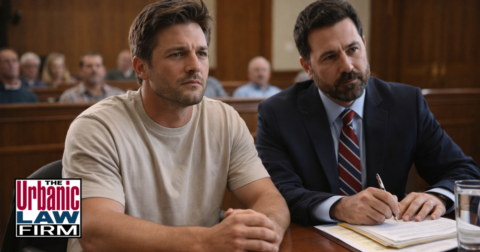
Assault in Oklahoma: Law, Penalties, and Defenses
 An assault charge can seem minor at first. However, it can still create real problems fast. A heated argument, a shove that never landed, a raised fist, or a sudden move during a confrontation can all lead to an arrest. So, the key issue is often whether the State can really prove an assault happened at all.
In many files, the fight is over what actually happened in the moment. Sometimes there was no contact. Sometimes there was only yelling. In other cases, the police arrest first and sort out the facts later. If you want the broader overview, see our Simple Assault & Battery page and our Assault, Battery & Domestic Abuse category.
If you’ve been accused of assault in Oklahoma, reach out for a free consultation before you make the case harder on yourself. Early decisions matter. So does getting a clear read on the facts, the witnesses, and whether the State can prove an overt act instead of just bad words or a tense scene. Call us at 405-633-3420 or use our secure online form.
Quick links
What this charge means
Under 21 O.S. § 641, assault means a willful and unlawful attempt or offer, with force or violence, to do bodily hurt to another person. In plain English, that means the State does not need to prove actual touching. Instead, prosecutors try to prove an intentional threatening act or attempted strike backed by force or violence.
That matters because assault is not the same thing as battery. If the State claims actual contact happened, the accusation can shift into battery or assault and battery. And if the facts involve a spouse, dating partner, police officer, school employee, protective order, or a weapon, prosecutors often stack on other counts instead of leaving the case as simple assault.
Just as important, words alone usually aren’t enough. The State still needs proof of an overt act or offer with force or violence. So, many assault cases turn on video, distance, timing, witness credibility, and whether the accused actually made a move that the law treats as assault.
What the State must prove
To convict you of assault, prosecutors must prove each element beyond a reasonable doubt:
- Willful conduct. The act must be purposeful, not accidental.
- Unlawful conduct. The State must rule out lawful force, such as valid self-defense or defense of another.
- An attempt or offer with force or violence. There has to be more than vague anger or insulting language.
- Bodily harm aimed at another person. The alleged act must be directed at someone else.
Because those elements are narrow, a weak witness statement, missing video, or a messy timeline can create real doubt.
Penalties
The punishment for simple assault appears in 21 O.S. § 644. This offense is a misdemeanor, not a felony.
- Jail time
- Up to 90 days in the county jail.
- Fine
- Up to $500.
- Both
- The court can impose both jail and a fine.
- Court costs and conditions
- You may also face court costs, probation conditions, classes, or no-contact terms depending on the facts.
Even when the charge stays simple assault, prosecutors sometimes use the filing as leverage to push pleas in cases that also include battery, domestic abuse allegations, resisting arrest, disorderly conduct, or protective-order issues. This crime is often prosecuted in municipal courts as a violation of municipal code.
Collateral consequences
- A pending case or conviction can show up on background checks.
- Employment problems can follow, especially in jobs involving public contact, schools, health care, or security clearance concerns.
- Judges may impose bond conditions, no-contact orders, or stay-away terms that disrupt daily life.
- Non-citizens can face added immigration risk depending on the plea wording and surrounding allegations.
- A conviction can make later assault-related allegations look worse to prosecutors, even if the new accusation should be filed as a separate event.
How prosecutors try to prove the case
- Complainant testimony. Many assault cases rise or fall on one person’s version of a brief confrontation.
- Eyewitness accounts. However, bystanders often disagree about distance, timing, and who moved first.
- Bodycam, dashcam, store video, or phone video. These clips can help, but they can also undercut the charge.
- Your statements. So, a rushed apology, angry text, or partial admission can become a major piece of the State’s theory.
- Surrounding conduct. Prosecutors often use posture, gestures, threats, and movement to argue there was an attempted strike or violent offer.
A practical guide if you’re facing this charge
Questions to ask your attorney
- What exact act does the State claim made this an assault?
- Is there video, bodycam, or 911 audio that helps the defense?
- Can the case be attacked because there was no overt act, only words?
- Are there self-defense or defense-of-another facts that need to be developed now?
- What plea options, dismissals, or deferred outcomes may realistically be on the table?
Things you can do if you’re arrested for this crime
- Stay quiet about the facts until you’ve had legal advice.
- Write down the timeline while it’s still fresh.
- Save texts, call logs, photos, and location data that may show what really happened.
- Identify witnesses before they disappear or forget details.
- Follow every bond or no-contact condition exactly, even if you think the order is unfair.
Defenses
- No overt act. Mere angry words or a vague threat usually do not prove assault without an actual attempt or offer with force or violence.
- No willful act. If the movement was accidental, reflexive, or misread, the State may fail on intent.
- Self-defense or defense of another. Lawful protective force can make the alleged act not unlawful.
- Identity and credibility problems. A fast-moving argument, poor lighting, or conflicting stories can create reasonable doubt.
- Suppression issues. Unlawful detention, a bad identification procedure, or an involuntary statement can weaken or shrink the State’s proof.
How we fight these charges
- Lock down the timeline before witnesses drift and video disappears.
- Compare every statement for changes, exaggerations, and missing details.
- Rebuild the full scene so the court sees the argument, distance, movement, and who escalated first.
- File targeted motions when statements, identifications, or police conduct create legal suppression issues.
- Push for dismissal, reduction, or a better resolution when the facts fit a non-criminal argument better than an assault case.
What The Urbanic Law Firm does to help
- Explain the charge, the real exposure, and the practical next step after each court date.
- Prepare you for arraignment, bond issues, no-contact terms, and prosecutor screening.
- Review discovery closely for bodycam gaps, weak witness details, and overcharging.
- Communicate clearly about plea offers, defenses, risks, and trial strategy.
- Position the case for the strongest possible outcome, whether that means dismissal work, negotiation, or trial.
What happens next
Usually, the case starts with arrest, booking, bond, and a first court date. Then the prosecutor reviews reports, video, and witness statements. Sometimes the charge stays simple assault. Other times, the State tries to push it into battery, assault and battery, domestic abuse, or an officer-related count if the facts arguably fit.
After that, the case often turns on discovery. If the proof is thin, early pressure can matter. If the facts are disputed, trial preparation matters even more. Either way, the first goal is usually the same: pin down what act the State says happened, then test whether the evidence really proves that act beyond a reasonable doubt.
Key terms
Assault
An assault is any willful and unlawful attempt or offer to do a bodily hurt to another with force or violence. That matters here because Oklahoma can charge assault even when the State cannot prove actual physical contact. (21 O.S. § 641; jury instruction 4-2)
Battery
A battery is any willful and unlawful use of force or violence upon the person of another. So, this definition helps show why a case may start as assault but get filed as battery or assault and battery if contact is alleged. (21 O.S. § 642; jury instruction 4-3)
Willfully
The term “willfully,” when applied to the intent with which an act is done or omitted, implies simply a purpose or willingness to commit the act or omission referred to, and it does not require an intent to violate law, injure another, or gain an advantage. In an assault case, that becomes important when the defense is that the movement was accidental, misread, or not deliberate at all. (21 O.S. § 92)
FAQs
What counts as assault in Oklahoma?
In Oklahoma, assault generally means a willful and unlawful attempt or offer to do bodily harm to another person with force or violence. Actual touching is not required. Because of that, the fight in many cases is whether there was a real overt act or only words and confusion.
Can words alone be assault in Oklahoma?
Usually, words alone are not enough for assault in Oklahoma. Prosecutors still need proof of an act or offer with force or violence. So, when the evidence shows only yelling, insults, or a verbal argument, the defense may have a strong element attack.
What is the punishment for assault in Oklahoma?
For simple assault in Oklahoma, the court can impose up to 90 days in the county jail, a fine of up to $500, or both. Court costs and bond conditions may also matter. The exact outcome often depends on the facts, your record, and whether other counts were filed with it.
Can an assault charge be dismissed in Oklahoma?
Yes, an assault charge can be dismissed in Oklahoma if the State cannot prove the required elements. That can happen when witness stories conflict, video undercuts the accusation, the act was accidental, or the facts fit self-defense better than assault. Some cases are also resolved through reduction or deferred outcomes instead of outright trial.
What happens after an assault arrest in Oklahoma?
After an assault arrest in Oklahoma, you can expect booking, bond, and an initial court appearance. Then the prosecutor reviews the reports and evidence. From there, the case may move toward dismissal talks, plea negotiations, motion practice, or trial preparation depending on how strong the proof really is.
Important cases
In Minnix v. State, 1955 OK CR 37, 282 P.2d 772, the court explained the difference between assault and battery. That distinction still matters because the State must prove an attempt or offer with force or violence for assault, while battery requires actual force upon another person.
In Lloyd v. State, 1982 OK CR 184, 654 P.2d 645, the court said a lesser-offense instruction is not required when the evidence does not support it. In practice, that matters in assault-related cases when prosecutors overcharge the facts and the real issue is what the proof can actually sustain.
This page is for informational purposes only and is not legal advice. Every case is unique; consult an attorney about your specific situation. Page last updated March 29, 2026. Consult the statutes listed above for the most up-to-date law.