Vehicle, Aircraft & Equipment Theft Crimes Defense in Oklahoma
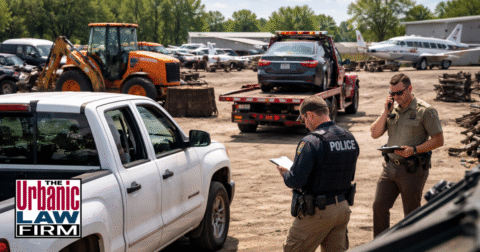 When a car, truck, aircraft, or piece of heavy equipment goes missing, the law reacts fast. These cases combine high property values, insurance pressure, and claims that you meant to keep someone else’s property. You can face felony exposure even if you thought you had permission or planned to bring the vehicle back. Because each vehicle, trailer, or machine can count as a separate item, charges and potential punishment can stack quickly.
This hub pulls together vehicle, aircraft, and equipment theft crimes into one place so you can see how they connect. You’ll see how these charges relate to broader theft and property offenses, how prosecutors stack counts, and where defenses repeat. If your situation also involves stolen cash, tools, or other items, it may overlap with general theft and property offenses that appear in our theft and property crimes guide.
Quick links
How vehicle, aircraft and equipment theft cases work
All the crimes in this group involve moving, using, or controlling vehicles, aircraft, or heavy equipment that belongs to someone else. Some offenses focus on classic theft where the State claims you meant to keep the property for good. Others target temporary use, receiving a vehicle that’s already stolen, or working around a chop shop operation. Because the items are valuable and often insured, investigators usually treat these files as high priority.
Prosecutors lean on titles, registration records, VIN checks, surveillance video, cell-phone data, and statements from owners or coworkers. They may also use digital information from GPS trackers, telematics systems, or dealer records that show key fob programming or repair history. In addition, they often argue that your proximity to a stolen vehicle or equipment shows knowledge, even when you never touched the paperwork. A strong defense pushes back on those inferences and forces the State to prove each element.
Charging patterns can get aggressive. Prosecutors sometimes file both theft and unauthorized use counts for the same incident and let a jury sort it out. They may add burglary, conspiracy, or other property charges if they claim you broke into a building or yard to reach the vehicle. When multiple vehicles, trailers, or machines are involved, they can charge a separate count for each one. That’s why it’s important to understand how these related statutes fit together.
Get early help on vehicle theft charges in Oklahoma
If you’ve been accused of vehicle, aircraft, or equipment theft crimes in Oklahoma, reach out for a free consultation before you talk to police or insurance investigators. Early advice helps you avoid unforced errors, protect key evidence, and manage contact with officers, victims, and adjusters. Call us at 405-633-3420 or use our secure online form.
Types of vehicle, aircraft and equipment theft crimes
These offenses share a common theme: control over high-value movable property. However, each statute uses different mental states and fact patterns. Some focus on the original taking, while others punish what happens after a vehicle or piece of equipment becomes stolen. Understanding where your charge fits in this group helps you see real exposure and defense options rather than guessing from the label alone.
Theft of aircraft, automobile, automotive-driven vehicle, or construction/farm equipment
Oklahoma treats stealing an aircraft, automobile, other automotive-driven vehicle, construction equipment, or farm equipment as a specific form of larceny with its own statute (21 O.S. § 1720). The State must usually show a taking and carrying away of the vehicle or equipment, that it belonged to someone else, and that you intended to deprive the owner permanently. Because these items can be worth a lot, punishment ranges climb quickly and often outpace other property crimes. Prosecutors may also argue that each separate vehicle or piece of equipment supports its own count.
Unauthorized use of a vehicle
Unauthorized use of a vehicle targets situations where you allegedly took or drove a vehicle without consent but didn’t necessarily plan to steal it outright (47 O.S. § 4-102). Many cases grow out of disputes over borrowed cars, misunderstandings about permission, or vehicles shared by friends, relatives, or coworkers. The State still needs to show that you used the vehicle wrongfully and without the owner’s consent. However, your lawyer can often use text messages, past lending patterns, or workplace policies to show genuine confusion about permission.
Unauthorized use of an implement of husbandry
This offense uses the same unauthorized-use statute and applies it to implements of husbandry such as tractors, combines, and other farm machines. Many of these cases come from disputes between workers, family members, or neighbors over who can move or operate equipment on shared land. The State still tries to show knowing, wrongful use rather than a simple mix-up about timing or route. Evidence about long-standing farming practices, custom work arrangements, and prior informal agreements can matter a lot.
Joyriding
Joyriding means driving or trying to drive a car or other motor vehicle without the owner’s consent. The statute on loitering in, injuring, or molesting automobiles and motor vehicles covers joyriding in Oklahoma (21 O.S. § 1787). Prosecutors often say that getting into a parked car, starting it, or moving it briefly shows interference with the vehicle. However, they still must prove you acted willfully and without permission, not by mistake or simple confusion. Defenses usually focus on shared-car habits, mixed messages about consent, and how short the trip actually was.
Tampering with a vehicle
Tampering with a vehicle means intentionally damaging or meddling with a vehicle or implement of husbandry. You must act without any right to do so for the statute to apply (47 O.S. § 4-104). Police often use this charge when a parked car shows damage, loose parts, or disabled safety equipment. Officers may also use it when someone moves, alters, or partly strips equipment in a field or work site. Defenses can stress honest repair attempts, miscommunication about permission, or the lack of real damage to the vehicle.
Chop shop (operating a motor vehicle chop shop)
Operating a motor vehicle chop shop punishes running a business or location where people alter, dismantle, or store stolen vehicles or major vehicle parts (47 O.S. § 1503). The State often tries to link you to repeated recovery of stolen vehicles or parts at one address, especially when VIN plates look altered or parts from different vehicles appear in one place. These cases can involve long investigations with surveillance, undercover work, and cooperation from codefendants. Effective defense strategies often attack how officers tied you to daily operations and whether you actually knew the parts were stolen.
Defense strategies for vehicle theft cases in Oklahoma
Good defenses in this area tend to repeat across different statutes. Because intent, consent, and knowledge drive so many of these crimes, small facts can make a big difference. The right strategy depends on your specific charge, your relationship with the owner, and the paper trail that surrounds the vehicle or equipment.
- Challenge intent. Many charges require proof that you meant to steal or to deprive the owner permanently. Showing a plan to return the vehicle, or evidence that you believed you had permission, can undercut that element.
- Prove consent or mixed signals. Texts, call logs, prior lending history, and informal work arrangements can show that the owner allowed you to use the vehicle or equipment, or at least sent confusing messages about permission.
- Dispute whether the property was actually stolen. Some cases hinge on civil disputes, title mistakes, or business fallouts rather than true theft. Highlighting those conflicts can weaken the State’s claim that the vehicle or equipment was stolen at all.
- Attack knowledge in receiving and chop shop cases. When prosecutors say you should have known an item was stolen, your lawyer can present normal pricing, legitimate purchase steps, and your lack of access to suspicious information.
- Question identity and control. If multiple people had keys, access codes, or use of the same lot or shop, it may be hard for the State to prove who actually controlled the vehicle or ran the operation.
- Suppress statements and illegal searches. Many investigations rely on roadside questioning, shop walkthroughs, or consent searches. If officers overstepped, excluding that evidence can change how strong the case looks.
Key legal terms in vehicle theft cases
Vehicle
Vehicle means a device used to transport people or property on a highway, if it isn’t moved only by human power or used solely on fixed rails or tracks, and if it doesn’t fall into excluded categories such as certain agricultural machines (47 O.S. § 1-186; jury instruction 6-35). That definition matters because it helps decide whether a particular machine, trailer, or piece of equipment falls under vehicle-based theft and unauthorized-use statutes.
Implement of husbandry
An implement of husbandry is machinery or a vehicle that is built for farm, ranch, or horticultural work and used primarily in those operations, such as tractors, combines, or similar agricultural equipment, even when it is occasionally moved on a highway. (47 O.S. § 1-125)
Chop shop
A chop shop is any building, lot, or similar place where people knowingly take apart, rebuild, alter, or store motor vehicles or parts they know were illegally obtained, so they can hide or change identifying information or sell the vehicles or parts. (47 O.S. § 1502)
FAQs about vehicle, aircraft and equipment theft in Oklahoma
What counts as vehicle theft in Oklahoma if I planned to bring the car back?
Vehicle theft in Oklahoma usually requires proof that you meant to deprive the owner permanently, not just for a short time. However, prosecutors may argue that your actions, timing, or attempts to hide the car show a permanent plan, even if you now say you intended to return it. Evidence about prior agreements, text conversations, and how quickly you cooperated once contacted can be important. You could also be charged with unauthorized use of a motor vehicle.
Can Oklahoma prosecutors file both theft and unauthorized use charges for the same incident?
Prosecutors in Oklahoma sometimes file both theft and unauthorized use counts that grow out of the same incident. They may do that when they’re unsure whether they can prove intent to deprive permanently but still want a fallback theory. Juries don’t automatically convict on both, and your lawyer can argue that the State must pick a theory or that the evidence fits only the lesser offense, if any.
How do prior theft convictions affect vehicle theft sentencing in Oklahoma?
Prior theft or stolen property convictions can increase your exposure in Oklahoma vehicle theft and chop shop cases. The State may use them to seek sentence enhancements or to argue that you knew exactly what you were doing. Even so, courts still look at the details of the current case, the age of the prior convictions, and your overall record when deciding punishment.
Are joyriding and tampering with a vehicle felonies in Oklahoma?
Joyriding and tampering sit in a middle space in Oklahoma law. Sometimes they’re charged as misdemeanors when the damage is low and the conduct looks impulsive. In other situations, especially with high-value vehicles or repeat histories, they can support felony filings. The exact level depends on the statute used, the value involved, and your prior record.
What happens to a seized vehicle in an Oklahoma chop shop case?
When officers seize a vehicle in an Oklahoma chop shop investigation, they often hold it as evidence while the case moves forward. Insurance companies and titled owners may also pursue their own claims to the vehicle or the value of its parts. Because of that, your defense lawyer should track what happens to the vehicle, how parts are cataloged, and whether any testing or dismantling might affect your ability to challenge the State’s evidence.
This page is for informational purposes only and is not legal advice. Every case is unique; consult an attorney about your specific situation. Page last updated February 4, 2026. Consult the statutes listed above for the most up-to-date law.