Possession of a Sawed-Off Shotgun or Rifle Defense in Oklahoma
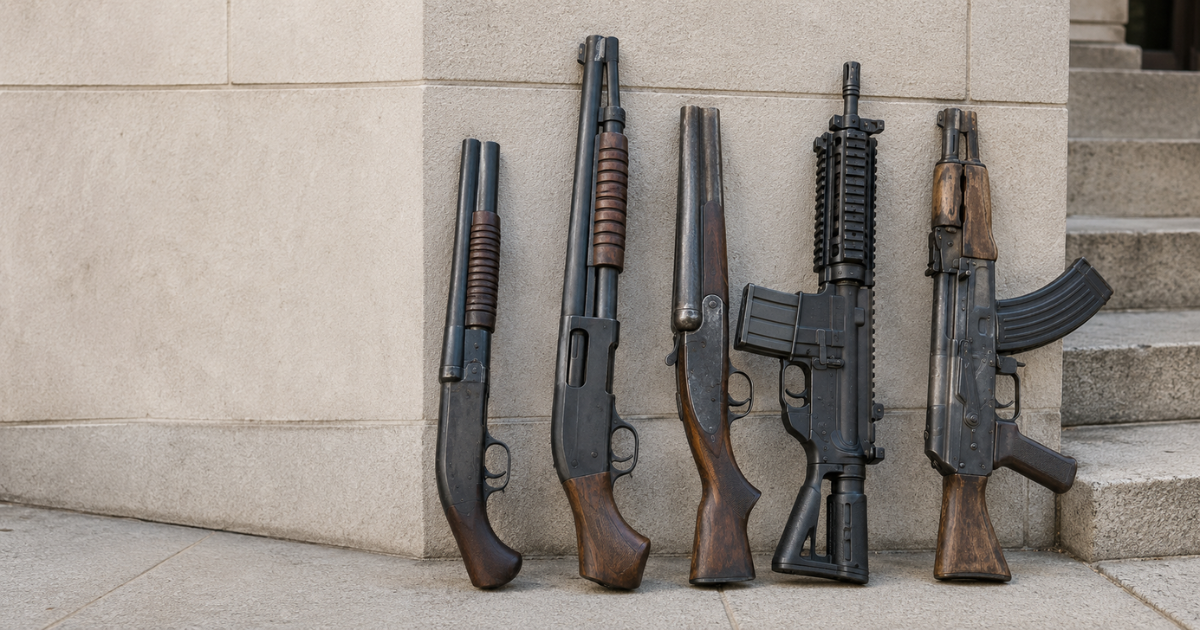 Possession of a sawed-off shotgun or rifle is a felony weapons charge. It usually turns on knowledge, control, weapon measurements, and the legality of the search. However, the label alone doesn’t prove the State’s case.
This guide is for people accused of this crime in Oklahoma and trying to understand the charge, possible punishment, and defense options before court. Because the case may involve a vehicle, shared home, hunting gear, old firearms, or another person’s weapon, the details matter.
Quick links
What is possession of a sawed-off shotgun or rifle in Oklahoma?
You can be charged when the State claims you knowingly had possession or immediate control of a sawed-off shotgun or rifle. The weapon doesn’t have to be concealed. Also, the State doesn’t have to prove you fired it.
The penalty depends on your record and whether the State can prove knowing control of the weapon. Because these cases often come from traffic stops or searches, suppression issues can decide the case.
Talk to a defense attorney early
If you’ve been accused of possession of a sawed-off shotgun or rifle in Oklahoma, reach out for a free consultation with an Oklahoma possession of a sawed-off shotgun or rifle defense attorney. Early review can protect your bond position, your search issues, and your court strategy.
Call us at 405-633-3420 or use our secure online form.
Explanation of the law
Under 21 O.S. § 1289.18, it’s illegal to knowingly have a sawed-off shotgun or sawed-off rifle in your possession or under your immediate control, whether concealed or not. The law also creates definitions based on barrel length, overall length, and firearm type.
However, the law doesn’t apply to a firearm lawfully possessed under federal law or one that isn’t regulated as a firearm under the National Firearms Act. In addition, the statute excludes antique firearms as federal law defines them.
This offense sits within Oklahoma firearms crimes and overlaps with The Urbanic Law Firm’s prohibited weapons and restricted ammunition coverage. Depending on the facts, prosecutors may add prohibited-person firearm possession, use of a firearm while committing a felony, felony pointing a firearm, or felony discharging a firearm.
Key elements the state must prove
For unlawful firearm-possession cases, jury instruction 6-37 frames the proof around knowing, willful possession or immediate control of a specified firearm. Also, the notes explain that an extra unlawfulness element isn’t needed for weapons like sawed-off shotguns or rifles because possession is unlawful in itself.
- Knowing awareness. The State must show you knew the weapon was there.
- Willful possession or immediate control. The State must show purposeful control, not a mistake or accident.
- A sawed-off shotgun or rifle. The State must prove the object meets the legal firearm definition and length requirements.
- Shotgun measurement. The State focuses on barrel length and any overall-length exclusion.
- Rifle measurement. The State focuses on barrel length or modified overall length, including the stock portion.
- No statutory exception. Federal lawful possession, non-regulated status, or an antique-firearm issue can change the analysis.
- Admissible evidence. If officers found the weapon through an unlawful stop, search, or seizure, the State may lose key proof.
Penalties
A first conviction is a Class D2 felony under 21 O.S. § 20O. The penalties get higher when prior felony convictions move the case into later D2 tiers.
- First conviction
- Prison: 0–2 years in prison
- Minimum service: 20%
- Fine: Up to $1,000
- Second or third qualifying conviction
- Prison: 1–5 years in prison
- Minimum service: 20%
- Fine: Up to $1,000
- Additional subsequent qualifying conviction
- Prison: 1–10 years in prison
- Minimum service: 30%
- Fine: Up to $1,000
Because prior convictions can change the range, review our Oklahoma sentence enhancement guide for the bigger picture. Depending on your record and facts, a deferred sentence, suspended sentence, or supervised probation may become part of case planning.
Collateral consequences
The punishment can follow you through firearm rights, background checks, and supervision rules. Also, a felony record can affect more than court.
- Firearm rights. A felony conviction can affect your ability to own, possess, buy, or carry guns.
- Employment. Background checks may flag a felony weapons conviction.
- Housing and school. Applications may ask about felony convictions or pending cases.
- Immigration and military issues. A weapons felony can create serious review questions.
- Future felony exposure. Later cases may bring harsher sentencing ranges.
How prosecutors prove Possession of a Sawed-Off Shotgun or Rifle
Prosecutors usually build these cases from the search scene outward. So, the report, bodycam, measurements, and location of the weapon become major evidence.
- Officer testimony about where the weapon was found and who had access to it.
- Photos and measurements showing barrel length, overall length, and firearm condition.
- Bodycam or dashcam video showing the stop, search, statements, and consent issues.
- Statements the State claims connect you to the weapon.
- Vehicle or room control evidence, including keys, ownership, location, and proximity.
- Paperwork gaps when the State claims no federal lawful-possession exception applies.
Practical guide if you’re charged with this crime
What we look for first in a Possession of a Sawed-Off Shotgun or Rifle case
First, The Urbanic Law Firm looks at where the weapon was found, how officers got there, and whether the search was lawful. Then, the firm reviews measurements, ownership clues, bodycam, and any claimed statements.
Defenses
- Lack of knowledge. The State may not prove you knew the weapon was present.
- No immediate control. A weapon near you isn’t enough if the evidence doesn’t show power and intent to control it.
- Wrong measurements. The object may not meet the barrel-length or overall-length definition.
- Statutory exception. Lawful federal possession, non-regulated status, or antique-firearm status may undercut the charge.
- Suppression. Evidence can be challenged when officers used an unlawful stop, search, seizure, or interrogation.
How we fight these charges
- Investigate the stop, search, consent, warrant, and officer timeline.
- Test the measurements with photos, inspection, and expert input when needed.
- Separate your access from someone else’s ownership or control in a shared space.
- Challenge statements, Miranda issues, and any claimed admissions.
- Expose missing paperwork, chain-of-custody problems, and inconsistent reports.
How The Urbanic Law Firm helps
- Explain the charge, felony class, court dates, and realistic case risks.
- Collect reports, videos, photos, measurements, and search documents.
- Track deadlines for discovery, hearings, motions, and court appearances.
- Coordinate inspection or expert review when the firearm definition matters.
- Prepare you for hearings, testimony risks, and decisions before each court setting.
Questions to ask your attorney
- What facts does the State claim show I knew the weapon was there?
- What evidence connects me to immediate control?
- Are the barrel and overall-length measurements documented correctly?
- Did officers have a lawful basis to stop, search, and seize the weapon?
- Could a federal lawful-possession or antique-firearm issue apply?
Things you can do if you’re arrested for this crime
- Stay calm and don’t argue about the weapon at the scene.
- Preserve photos, receipts, paperwork, messages, and ownership documents.
- Write a private timeline for your attorney while details are fresh.
- Avoid discussing facts with police, friends, or online contacts.
- Bring federal-registration, transfer, repair, inheritance, or antique-firearm paperwork if any exists.
What happens next
After arrest, the first steps usually include booking, an initial appearance, and bond conditions. However, the most important work often starts with the police reports, videos, and search documents.
Next, the case may move to arraignment, discovery, preliminary hearing, motions, and trial settings. Because this is a felony, the preliminary hearing can become a key place to challenge weak proof.
Finally, for a more detailed overview of the criminal process in Oklahoma, you can read more in our Oklahoma criminal process guide.
Table comparing crimes
These offenses can sound similar, but the proof and risk can differ a lot. The table below shows why the exact charge matters.
| Offense | What the State must prove | Why classification matters | Common defense issues |
|---|---|---|---|
| Possession of a sawed-off shotgun or rifle | Knowing possession or immediate control of a weapon that meets the sawed-off definition. | Class D2 felony treatment means prison ranges increase with qualifying prior convictions. | Knowledge, shared access, search legality, barrel length, overall length, and federal-law exceptions. |
| Prohibited-person firearm possession | A qualifying prior status and possession or control of a firearm. | The focus shifts from the weapon’s measurements to your status and prior record. | Prior-conviction proof, knowledge, constructive possession, and search issues. |
| Use of a firearm while committing a felony | A firearm connection to another felony offense. | This can add serious risk when prosecutors connect a gun to another alleged felony. | Whether a firearm was used, whether another felony occurred, and whether proof overlaps unfairly. |
| Felony pointing a firearm | Pointing a firearm at another person under the facts required by law. | The conduct focus changes from possession to alleged threatening use. | Witness reliability, intent, self-defense facts, firearm identity, and video evidence. |
Key terms
Sawed-off shotgun
A sawed-off shotgun means any firearm capable of discharging a series of projectiles of any material that may reasonably be expected to cause lethal injury, with a barrel or barrels less than eighteen inches in length, using a combustible propellant charge, subject to the overall-length exclusion. (21 O.S. § 1289.18(A) & jury instruction 6-45). The measurement issue can decide whether the weapon fits this charge.
Sawed-off rifle
A sawed-off rifle means any rifle with a barrel or barrels less than sixteen inches in length, or any weapon made from a rifle if the modified weapon has an overall length of less than twenty-six inches, including the stock portion. (21 O.S. § 1289.18(B) & jury instruction 6-45). Because this definition is measurement-based, photos and inspection can matter.
Firearm
A firearm is a weapon from which a shot or projectile is discharged by the force of a chemical explosive such as gunpowder; an airgun, such as a carbon dioxide gas-powered air pistol, isn’t a firearm within that definition. The offense statute also excludes antique firearms as federal law defines them. (21 O.S. § 1289.18(E) & jury instruction 6-45). This term matters when an object looks like a gun but doesn’t legally qualify.
Knowingly
Knowingly requires awareness of the facts that make the conduct fit the law, not knowledge that the conduct is unlawful. (21 O.S. § 96 & jury instruction 6-45). In this crime, that ties to whether you knew the weapon was present and under your control.
Possessing
Possessing means having actual physical custody, or knowledge of the weapon’s presence, as well as power and intent to control its use or disposition. (jury instruction 6-45). In a car, bedroom, garage, or shared home, this can become the central fight.
FAQs
Is possession of a sawed-off shotgun or rifle a felony in Oklahoma?
Yes. Possession of a sawed-off shotgun or rifle is a Class D2 felony if the State proves knowing possession or immediate control.
What does the State have to prove for possession of a sawed-off shotgun or rifle in Oklahoma?
The State must prove you knowingly possessed or immediately controlled a weapon that legally qualifies as a sawed-off shotgun or rifle. Search legality, measurement proof, and control evidence often decide the case.
Can I be charged in Oklahoma if the sawed-off shotgun or rifle was in someone else’s car?
Yes, but presence alone shouldn’t end the analysis. Prosecutors still need evidence that you knew about the weapon and had possession or immediate control.
Can possession of a sawed-off shotgun or rifle in Oklahoma be expunged?
It depends on the outcome, your record, waiting periods, and the exact expungement path. You can read more in our Oklahoma expungement guide.
Does Oklahoma require the sawed-off shotgun or rifle to be loaded for this crime?
No. The charge focuses on knowing possession or immediate control of the weapon. However, ammunition can still affect how prosecutors describe the facts.
Important cases
Gourley v. State, 1989 OK CR 28, 777 P.2d 1345, dealt with convictions that included possession of a sawed-off shotgun. The court’s discussion shows why duplicate gun counts and same-facts prosecutions can become major defense issues.
Example of this crime in the news
In a recent KTUL report, authorities said a Wagoner County traffic stop led to a vehicle search, ammunition, and a sawed-off shotgun found near the driver’s seat. The report shows why these cases often focus on where the weapon sat, who controlled the vehicle, whether the search was valid, and whether the State can prove knowing control.
This page is for informational purposes only and is not legal advice. Every case is unique; consult an attorney about your specific situation. Law last reviewed on May 9, 2026 by attorney Frank Urbanic. Page last updated May 9, 2026. Consult the statutes listed above for the most up-to-date law.

Two Votes, One Prison Cell: Sara Polston’s Oklahoma Voting Nightmare!

Legislative Payback or Public Safety? Sara Polston’s Shocking Constitutional Fight!

Tulsa’s “Serial Defecator” Case: Legal Analysis of a Messy Situation

Oklahoma Discovery Law Changes: 2026–2027 Guide
Oklahoma Domestic Abuse Law Updates Nov. 1: Five Big Changes
| THIS OFFENSE IN THE NEWS |