Prohibited Weapons, Restricted Ammunition & Altered Firearms Crimes Defense in Oklahoma
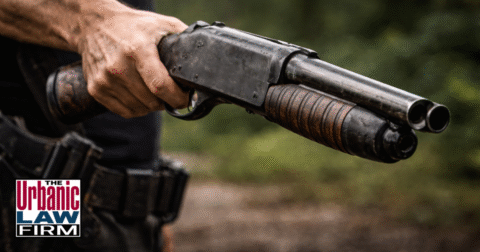 Prosecutors treat prohibited weapons, restricted ammunition, and altered firearms charges as red flags. They signal to the court that your gun, ammo, or serial number looks especially dangerous or suspicious. Because of that, these cases often move fast, draw extra attention, and create harsh plea offers. You need to understand what the law actually punishes and where there’s room to fight.
This guide pulls together Oklahoma charges that focus on the type of weapon, ammunition, or firearm markings you allegedly possessed. Instead of accusing you of firing a gun or making threats, these statutes target how the gun itself is configured. Because this area overlaps with other gun laws, it fits within our broader Oklahoma firearms crimes overview. Below, you’ll see how these offenses connect, how prosecutors stack them, and where defenses often start.
Quick links
Talk with an Oklahoma firearms defense attorney early
If you’ve been accused of prohibited weapons, restricted ammunition, or altered firearms crimes in Oklahoma, get help fast. Early advice can protect your rights, shape how charges are filed, and keep you from making damaging statements. Because police and prosecutors move quickly on gun cases, your lawyer needs time to investigate and push back.
Call us at 405-633-3420 or use our secure online form.
How prohibited weapons, restricted ammo, and altered firearm charges work in Oklahoma
Prohibited weapons, restricted ammo, and altered firearm cases all focus on how dangerous the equipment looks on paper. Prosecutors argue that sawed-off barrels, armor-piercing bullets, and scratched serial numbers show planning, concealment, and intent to break the rules. Because of that framing, judges often view these allegations as more serious than a simple on-body carry case. The statutes also plug into Oklahoma’s newer felony classification system, so prison ranges can jump quickly with prior convictions.
Some of these charges are misdemeanors, but several are classified as serious felonies with multi-year ranges. Manufacturing or using restricted bullets and possessing a defaced firearm during a felony sit in higher felony classes. By contrast, carrying a prohibited weapon or certain banned handgun ammunition usually stays a misdemeanor unless another felony joins it. So your exact exposure depends on the object, your record, and what else the State claims you did that day.
What these charges have in common
All of these laws care about three things: the gun, the ammo, and the serial number. They don’t require you to fire a shot, brandish the weapon, or even threaten anyone. Instead, the State tries to prove you knowingly possessed a weapon that the law treats as especially dangerous. Because of that focus, knowledge and possession concepts often sit at the center of your defense.
These cases also share proof problems for the State. Prosecutors need to show the object meets the legal definition, which can require measurements, expert opinions, or lab work. So small errors in how officers describe, store, or test the firearm or ammunition can create real problems for prosecutors. A careful defense looks at every step, from the traffic stop to the property room and the lab bench.
Common charging patterns and enhancements
Prohibited weapon and altered-serial charges rarely appear alone. They often ride along with accusations like felon in possession, pointing a firearm, assault and battery, robbery, or drug distribution. Because of that, one arrest can suddenly include several different gun counts and a serious underlying felony. Prosecutors sometimes use these extra counts to push for longer prison recommendations or to pressure you during plea talks.
Some of these statutes also tie into Oklahoma’s felony classification grid and racketeering laws. For example, restricted bullet offenses and altered-serial-number felonies appear as designated crimes in the sentencing tables. So a conviction can affect not only this case but how future charges get scored if you’re ever arrested again. Understanding that bigger picture helps you weigh offers, trial risks, and the value of fighting every single count.
Charges in this prohibited weapons and altered firearms group
Carrying or possession of a prohibited weapon
Carrying or possession of a prohibited weapon applies when you have certain listed weapons on or about your body. The law treats that as a crime if you’re outside narrow exceptions, like your home or other protected locations (21 O.S. § 1272). Weapons in this group include items such as pistols, certain knives, blackjacks, and other devices the statute labels as offensive. Because the offense is a misdemeanor, penalties usually involve county jail time, fines, forfeiture of the weapon, or some mix.
Possession of a sawed-off shotgun or sawed-off rifle
Possession of a sawed-off shotgun or sawed-off rifle targets guns with barrels or overall lengths below specific minimums (21 O.S. § 1289.18). The statute defines a sawed-off shotgun as one with a barrel under eighteen inches. It also covers a shotgun with an overall length under twenty-six inches. A sawed-off rifle uses similar measurements, but the barrel cutoff drops to sixteen inches, with the same overall length rule. Because this offense is a Class D2 felony, prison exposure can reach ten years if you have prior felonies.
Possession or use of restricted bullets
Possession or use of restricted bullets focuses on ammunition rather than the firearm itself (21 O.S. § 1289.21). The State has to show you possessed, carried, used, or tried to use a restricted bullet against another person. Restricted bullets are designed to pierce body armor. Lawmakers treat this conduct as a Class B4 felony with a two- to ten-year prison range and no suspended sentence. So a single round in your pocket can create a felony even if officers never find a gun.
Manufacture of restricted bullets
Manufacture of restricted bullets goes after the supply side, not just the person carrying the round (21 O.S. § 1289.20). The statute reaches anyone who manufactures restricted bullets, causes them to be made, imports them into Oklahoma, or sells them. Limited exceptions exist for public safety or national security testing. Because this is also a Class B4 felony, prison exposure runs from two to ten years, often with significant fines.
Possession of prohibited ammunition under the Self-Defense Act
Possession of prohibited ammunition under the Self-Defense Act applies to handgun licensees who carry certain banned rounds while armed (21 O.S. § 1290.6). The list includes handgun tracer or incendiary rounds and certain fluorocarbon-coated bullets. It also covers other ammunition that state law or OSBI rules forbid for license holders. If officers say you’re carrying this ammo, you face the same misdemeanor penalties that apply to prohibited weapons. You also risk license suspension, revocation, and extra administrative fines through the licensing process.
Removing or defacing a firearm’s serial or identification number
Oklahoma groups two related crimes under its serial-number statute, including the act of altering the number itself (21 O.S. § 1550). Removing, defacing, altering, obliterating, or otherwise mutilating a firearm’s factory serial or identification number is a standalone misdemeanor offense. Because the State doesn’t have to prove another crime, these cases often turn on who actually handled the gun. They also turn on when the damage to the serial number happened. Penalties run up to a year in the county jail, a fine that can reach one thousand dollars, or both. However, collateral consequences can feel much heavier, because a conviction suggests you tried to hide a gun’s history.
Possession of a firearm with a removed or defaced serial number during a felony
The felony version applies when the State says you had a firearm with a defaced serial number. It must also show you were committing or attempting another felony at the same time. Because this is a Class D1 felony, prison exposure can reach ten years, and fines can run into five figures. So even if another felony already carries prison time, this added count can significantly raise your overall risk.
Defense strategies for prohibited weapons and altered firearm cases in Oklahoma
No two cases look the same, but several defense themes repeat in prohibited weapon and altered firearm prosecutions. A strong strategy usually mixes legal challenges to the stop and search with technical attacks. Those attacks focus on how the State labels the weapon, ammo, or serial number.
- Challenge the stop and search. If officers pulled you over without a solid legal basis, your lawyer can attack everything found after that stop. That includes the weapon, the ammo, and any statements you made during the encounter.
- Dispute knowledge and intent. The State must usually show you knew about the weapon, the ammunition type, or the missing serial number. So evidence about who owned the gun, where it was stored, and who handled it recently can matter a lot.
- Attack the weapon or ammo classification. Your lawyer can question whether the barrel measurements, coating, or core materials actually meet the technical definitions. Careful measurements and expert testimony sometimes show that the object sits just outside the statute’s limits.
- Fight constructive possession claims. When police find a weapon in a car, house, or shared space, they often claim everyone nearby possessed it. Because the law requires proof of control and knowledge, your lawyer can use fingerprints and witnesses to challenge that claim.
- Scrutinize forensic and ballistics evidence. Testing errors, chain-of-custody gaps, and sloppy documentation sometimes undermine claims about barrel length, ammo composition, or serial-number damage. So your defense team can dig into lab notes, photos, and reports rather than just accepting the State’s labels.
- Leverage stacking and overcharging. Because prosecutors often pile on several gun counts, your lawyer can negotiate strategically. That approach can lower your sentencing exposure, protect immigration or professional consequences, and sometimes avoid a felony conviction.
Key terms for prohibited weapons and restricted ammunition
Sawed-off shotgun
A sawed-off shotgun is a shotgun with a barrel less than eighteen inches long. It also includes a shotgun with an overall length under twenty-six inches when measured in the usual way (21 O.S. § 1289.18(A)).
Sawed-off rifle
A sawed-off rifle is a rifle with a barrel less than sixteen inches long. The definition also includes a rifle with an overall length under twenty-six inches as measured in the same manner (21 O.S. § 1289.18(B)).
Restricted bullet
A restricted bullet is a round or elongated missile with a core made of less than sixty percent lead. It also has a fluorocarbon coating and is designed to travel at high velocity and penetrate body armor (21 O.S. § 1289.19(1)).
FAQs about prohibited weapons and altered firearms in Oklahoma
What counts as a prohibited weapon in Oklahoma?
Oklahoma law lists specific items, including certain handguns, dangerous knives, blackjacks, and similar offensive weapons. The exact list is detailed and can change. So your lawyer will review the current law, the weapon’s design, and how you allegedly carried it.
Is possession of a sawed-off shotgun always a felony in Oklahoma?
Yes, Oklahoma treats knowing possession of a sawed-off shotgun or sawed-off rifle as a felony. However, the sentencing range depends on your prior record. The law uses a tiered system that increases punishment with each qualifying conviction.
What are restricted bullets in Oklahoma?
Restricted bullets are specialized rounds with low-lead cores and fluorocarbon coatings. They’re built to travel at high speeds and to punch through body armor. So Oklahoma law treats them harshly and punishes both possession and manufacturing.
Can prosecutors stack prohibited weapons and other gun charges in Oklahoma?
Yes, prosecutors in Oklahoma often file prohibited weapon, restricted ammo, or altered-serial counts on top of other charges. Because each count can carry its own prison range, stacking increases your overall exposure. It also gives the State more leverage in plea negotiations.
Will a prohibited weapons conviction affect my gun rights in Oklahoma?
A prohibited weapons conviction can affect your ability to own, possess, or carry firearms in Oklahoma. It may trigger state or federal firearm bans, complicate background checks, and limit future concealed-carry or license options. Because the rules are complex, your attorney will look at both Oklahoma and federal law before you enter any plea.
Get help with prohibited weapons and altered firearm charges
Gun cases move fast, and prohibited weapons, restricted ammo, or altered firearms charges can reshape your entire case strategy. In addition, judges and prosecutors often treat these counts as markers of extra danger, even when nobody got hurt. So getting advice from a defense lawyer who understands Oklahoma firearm law and the wider gun-crimes landscape really matters.
Call us at 405-633-3420 or use our secure online form.
This page is for informational purposes only and is not legal advice. Every case is unique; consult an attorney about your specific situation. Page last updated February 19, 2026. Consult the statutes listed above for the most up-to-date law.