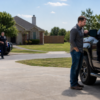
You may have recently seen dramatic pictures on the local news of a truck sticking out of the Bricktown canal. The driver, Mark Cushman, was arrested for DUI. Incidents like this serve as a good reminder of Oklahoma’s DUI laws. This post discusses Oklahoma DUI law and how we can learn from the Bricktown Truck case.
Accused of DUI or aggravated DUI in Oklahoma?
If you’ve been accused of DUI or aggravated DUI in Oklahoma, reach out for a free consultation at 405-633-3420 or fill out our secure form through our online contact page.
What happened in the Bricktown canal story?
According to the news coverage, Mark Cushman ended up with his truck in the canal after leaving a nearby area. First responders pulled him out and made sure no one was seriously hurt. Then officers shifted from rescue mode to investigation mode and treated the scene like a potential drunk driving case. He reportedly refused “a sobriety test.”
Because this happened in a busy entertainment district, the images spread fast. However, the criminal case will move much more slowly than the social media comments. Prosecutors still have to prove a real DUI under Oklahoma law. They’ll look at where the truck traveled, how the driver acted, and what any breath or blood tests showed before they decide whether to file standard DUI or push for aggravated DUI.
How Oklahoma DUI law looks at a crash like this
Under Oklahoma law (47 O.S. § 11-902), the State doesn’t just care whether you wrecked a truck. Instead, it has to show that you were driving a motor vehicle on a public street, highway, turnpike, or a similar place that people use for travel. In addition, prosecutors have to prove that you either had a blood or breath alcohol concentration of .08 or more, or that alcohol or another intoxicating substance affected your ability to drive safely.
In a Bricktown style crash, the State will focus on a few things. First, officers will ask where your truck was right before the splash. Second, they’ll look at your balance, speech, and behavior. Finally, they’ll lean hard on the breath or blood test number, because that single figure often drives both the charge and the possible sentence.
If you want a deeper dive into how Oklahoma handles these cases, you can read more about Oklahoma misdemeanor and felony DUI charges on our main DUI page.
Could a Bricktown canal crash turn into aggravated DUI?
Oklahoma law doesn’t stop at regular DUI. It also has a tougher version called aggravated DUI. That label kicks in when your blood or breath alcohol concentration hits .15 or higher.
So how would that play out in a high-profile canal crash? First, officers need a valid chemical test. Because of that, they pay close attention to the time between the accident, the arrest, and the breath or blood draw. In addition, they’ll look for any medical issues, mouth alcohol, or other factors that could throw off the result.
If the result comes back at .15 or higher, prosecutors may push for aggravated DUI even if no one else was hurt. That step matters because sentencing for aggravated DUI usually adds extra conditions. Those can include alcohol evaluation and treatment, longer supervision, and mandatory ignition interlock on your vehicle as part of the sentence (OUJI-CR 10-13E). You’re looking at a felony of the BAC is .15 or higher.
You can see how seriously the State treats high test results by looking at how Oklahoma handles aggravated DUI charges in Oklahoma. Even a first offense can affect your life for years.
From splash to courtroom: how DUI and aggravated DUI cases get built
Probable cause after a very public crash
When a truck ends up in a canal, officers already know something went very wrong. However, that odd crash alone doesn’t automatically prove DUI. Instead, police stack observations. They might notice the smell of alcohol, slurred speech, bloodshot eyes, or unsteady balance. They may also hear you admit to drinking, which gives them extra fuel for a DUI arrest.
Because Bricktown is packed with bars and restaurants, officers also know jurors will expect questions about how much you drank and when. That’s why they ask about your last drink, your route, and your plans. In addition, they may run you through field sobriety tests, even if the ground is wet and icy.
Breath tests, blood tests, and timing
Once officers believe they have probable cause, the focus shifts to chemical testing. Breath tests and blood draws give the State the numbers it needs for DUI or aggravated DUI. Jury instructions for driving under the influence and related offenses talk about blood or breath tests, and they often mention that tests should happen within a certain period after arrest to tie the number to your driving (OUJI-CR 6-18; 6-24).
Because of that timing issue, delays can become fertile ground for defense work. Maybe medical treatment comes first. Maybe officers struggle to get a working machine. Maybe weather, distance, or staffing slow everything down. Each extra minute can make the test less reliable as evidence of your condition when the truck first splashed into the canal.
Defense angles in an Oklahoma “canal DUI” case
A wild set of photos doesn’t erase your rights. Instead, a defense lawyer will start by asking basic questions. Did officers clearly show you were driving, rather than just sitting in the vehicle after the crash? Did they follow the rules for field sobriety tests and breath tests? Did they handle video, body-cam footage, and paperwork correctly?
Because Oklahoma DUI law has both number-based and behavior-based paths, you sometimes have more than one way to fight. You might challenge the test, the cause for the stop or arrest, or the way officers described your driving. You can also present your own evidence about medical conditions, weather, road layout, or even how the truck ended up in the canal in the first place.
Important Oklahoma DUI terms explained
Before you try to make sense of a Bricktown style case, it helps to translate a few key phrases that show up in Oklahoma DUI cases and jury instructions.
- Driving under the influence
- This phrase means you drove a motor vehicle on a qualifying road or place while alcohol or another intoxicating substance affected your ability to drive safely, or while your blood or breath alcohol concentration was .08 or more (OUJI-CR 6-18; 6-24).
- Aggravated DUI
- This is still a DUI, but with a higher test result. You’re looking at aggravated DUI when your blood or breath alcohol concentration is .15 or more while you drive a motor vehicle on a qualifying area (OUJI-CR 6-18A; 10-13E).
- Blood alcohol concentration (BAC)
- BAC is the measured amount of alcohol in your blood, usually shown as a number like .08 or .15. In Oklahoma DUI law, .08 is the standard legal limit for DUI, and .15 marks the line where prosecutors can pursue aggravated DUI (OUJI-CR 6-18; 6-18A).
FAQs about Oklahoma DUI charges after unusual crashes
Can a truck landing in the Bricktown canal really lead to a DUI charge in Oklahoma?
Yes, it absolutely can. The dramatic crash grabs attention, but prosecutors still have to prove the normal DUI elements. They must show you were driving a motor vehicle in Oklahoma and that alcohol or another intoxicating substance affected your ability to drive safely, or that your test result hit .08 or more. The canal just becomes the backdrop.
What makes a regular DUI turn into aggravated DUI in Oklahoma?
The big difference is the test result. When your blood or breath alcohol concentration reaches .15 or more, prosecutors can treat the case as aggravated DUI. The facts of the crash still matter, but the number controls the label. That higher BAC also opens the door to extra conditions at sentencing, like evaluation, treatment, and ignition interlock.
Does Oklahoma treat a DUI more harshly if a crash happens but no one gets hurt?
Judges and prosecutors take crashes seriously because they show real danger, even when everyone walks away. In Oklahoma, a wreck tied to a DUI charge can make negotiations tougher and may lead to stricter probation terms, higher fines, or longer treatment requirements. However, the absence of injuries can still matter when your lawyer argues for the lightest possible outcome.
Is an aggravated DUI in Oklahoma always a felony?
We do not believe it is. In Oklahoma, an aggravated DUI can still be a misdemeanor on a first offense in some situations. Some attorneys believe that all aggravated DUIs are felonies under the updated aggravated DUI law. We don’t believe that’s the case, and we will contest this issue.
Do I have to plead guilty right away to a DUI or aggravated DUI in Oklahoma?
You don’t have to plead guilty at your first court date. In fact, it’s usually smarter to slow things down. You and your lawyer can review the police reports, any videos, and the test records before you decide on a plan. That review can uncover problems with the stop, the investigation, or the test that might change how your case should end.
This page is for informational purposes only and is not legal advice. Every case is unique; consult an attorney about your specific situation. Page last updated February 4, 2026. Consult the statutes listed above for the most up-to-date law.