Criminal Investigation in Oklahoma
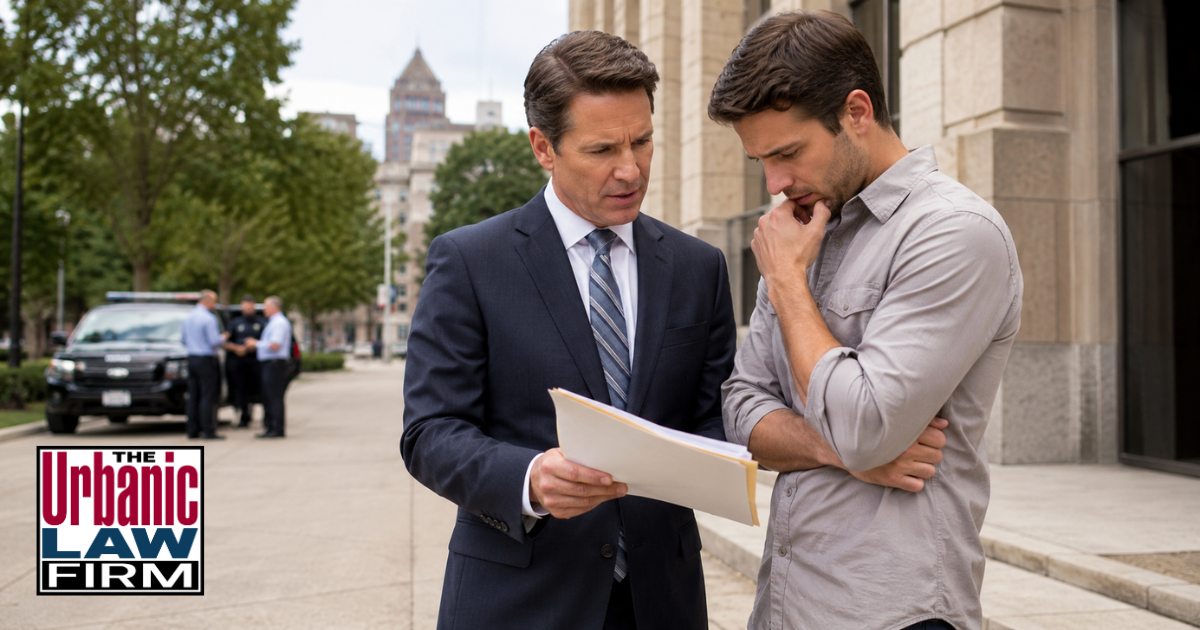 The investigation is where an Oklahoma criminal case starts taking shape. It’s where police reports get written, witnesses get interviewed, evidence gets collected, and assumptions start hardening into charges. However, an investigation isn’t the same thing as proof.
Because of that, the defense shouldn’t wait until court to start working. A weak stop, bad search, unreliable witness, missing video, or pressured statement can change everything. So, if you’re under investigation or already charged, the first question isn’t just what police found. It’s also how they found it.
Talk before the investigation hardens
Early defense work can preserve video, locate witnesses, protect your rights, and stop small facts from getting twisted. Also, it can help you avoid statements that make the case worse. Call us at 405-633-3420 or use our secure online form.
How Oklahoma criminal investigations start
A criminal investigation may start before you know you’re a suspect. Sometimes it starts with a 911 call. Other times, it starts with a traffic stop, store report, online tip, confidential informant, search warrant, or witness statement.
However, the first version of events often becomes the backbone of the case. That’s why the defense looks closely at the beginning. If the first report is wrong, rushed, or incomplete, everything built on it may be shaky.
Common investigation triggers
- A 911 call or emergency dispatch
- A victim, neighbor, employee, or witness complaint
- A traffic stop or roadside detention
- A confidential informant or controlled operation
- A store-loss-prevention report or business record
- An online report, cyber tip, or social media allegation
- A search warrant, arrest warrant, or follow-up interview
In addition, police may talk to other people before they talk to you. That can create a one-sided story. So, the defense may need its own investigation to find what law enforcement missed.
Stops, searches, and seizures
Search-and-seizure issues can control the whole case. If police stop you without enough legal basis, extend a stop too long, or search the wrong place, the defense may challenge the evidence.
A search warrant is defined by 22 O.S. § 1221. In addition, Oklahoma search-warrant law addresses grounds for issuance under 22 O.S. § 1222 and probable cause under 22 O.S. § 1223. Those rules matter because a warrant should rest on facts, not guesses.
Search warrant issues
The defense may review whether the warrant met the requirements of 22 O.S. § 1225. Also, when officers rely on oral or electronic support for a warrant, 22 O.S. § 1223.1 and 22 O.S. § 1224.1 may matter.
- Did the affidavit show probable cause?
- Did the warrant identify the right place or person?
- Did the warrant describe what police could seize?
- Was the information stale or too thin?
- Did the affidavit leave out important facts?
Search execution issues
Even when a warrant exists, execution still matters. Oklahoma law addresses entry during warrant execution under 22 O.S. § 1228. It also addresses verified returns, inventories, property restoration, and exceeding authority under 22 O.S. § 1233, 22 O.S. § 1234, 22 O.S. § 1237, and 22 O.S. § 1240.
Finally, police may search a defendant for dangerous weapons or evidence under 22 O.S. § 1241. However, the facts still matter. The defense should ask whether the search fit the law and the situation.
Statements, interviews, and interrogations
What you say during an investigation can become the State’s favorite evidence. However, police interviews don’t always show the full context. The tone, timing, location, and pressure all matter.
Oklahoma law addresses electronic recording of custodial interrogations in 22 O.S. § 22. So, the defense should look for recordings, not just summaries. A short sentence in a report may leave out hours of pressure, confusion, or repeated questioning.
Questions the defense should ask
- Were you free to leave?
- Were you advised of your rights when required?
- Did you ask to stop or ask for a lawyer?
- Did officers use threats, promises, pressure, or deception?
- Was the full interview recorded?
- Does the report match the video or audio?
In addition, silence can be smarter than guessing. If you don’t know what police already have, you may fill gaps for them. So, it’s often dangerous to “clear things up” without legal advice.
Witnesses, identification, and informants
Witnesses can be mistaken, biased, scared, angry, pressured, or incomplete. Also, a witness may tell one story at the scene and another later. Those changes can matter.
Eyewitness identification deserves special attention. Oklahoma law addresses eyewitness identification procedures in 22 O.S. § 21. Because identification can shape charging decisions, the defense should review lineups, photo arrays, bodycam, and officer instructions.
Common witness problems
- Bias, anger, jealousy, or personal motive
- Memory gaps or changing details
- Poor lighting, distance, stress, or brief observation
- Contamination from social media, police comments, or other witnesses
- A benefit, deal, or expectation from the State
- Important facts left out of the first interview
Confidential informants require caution too. They may have their own charges, money issues, or pressure from police. Therefore, the defense should test what they claimed and what officers verified.
Digital, forensic, and physical evidence
Modern investigations often turn on phones, messages, location data, surveillance video, and cloud records. However, digital evidence can mislead when it’s taken out of context.
For example, a text thread may look bad when the State shows only five messages. Yet the full conversation may show sarcasm, fear, confusion, or someone else’s role. Likewise, location data may place a phone somewhere, not necessarily you.
Digital evidence to review
- Phone extraction reports
- Texts, app messages, and call logs
- GPS, tower, Wi-Fi, and app-location data
- Ring, business, dashcam, bodycam, and surveillance video
- Cloud records, backups, shared accounts, and metadata
Forensic evidence to test
Forensic evidence may sound scientific, but it still depends on people, procedures, and assumptions. So, the defense should review collection, storage, testing, and interpretation.
- DNA collection, mixture interpretation, and contamination risks
- Fingerprint comparison and documentation
- Lab testing, weights, and substance identification
- Firearms testing, gunshot residue, and handling
- Medical records, injury photos, and timing issues
- Chain of custody and missing links
Defense investigation in Oklahoma cases
The State investigates to prove its case. The defense investigates to test it. Those goals aren’t the same. Because of that, the defense shouldn’t simply accept the police report as the full story.
Instead, a defense investigation looks for missing context, better timelines, alternative explanations, and evidence police didn’t collect. Also, it can preserve material before it disappears.
Steps that can change the case
- Review discovery, reports, recordings, and lab records
- Request and preserve bodycam, dashcam, and surveillance footage
- Interview witnesses before memories shift
- Visit the scene and check lighting, distance, layout, and camera angles
- Subpoena records when needed
- Use experts when science or digital evidence matters
- Build mitigation evidence early when sentencing may become an issue
Defense strategies for Oklahoma investigation issues
A strong defense strategy starts with pressure-testing the investigation. That means looking for what police did, what they didn’t do, and what they assumed too quickly.
- Lock down the timeline. Compare dispatch logs, reports, videos, phone records, and witness statements.
- Challenge the stop. Ask whether police had a lawful reason to detain you.
- Attack the search. Review warrants, consent claims, vehicle searches, phone searches, and scope problems.
- Test the statement. Look at custody, warnings, pressure, promises, recording gaps, and officer summaries.
- Check witness reliability. Look for bias, inconsistent stories, poor viewing conditions, and outside influence.
- Preserve digital evidence. Move fast before surveillance footage, app data, or messages disappear.
- Expose missing evidence. Use gaps in the investigation to show reasonable doubt.
- Use experts when needed. Digital, forensic, medical, or reconstruction issues may need more than cross-examination.
Important cases about investigation issues
State v. Lewis shows why the timeline of a traffic stop matters. The Oklahoma Court of Criminal Appeals examined whether officers had reasonable suspicion to extend a stop beyond its original purpose. For the defense, that kind of issue can be huge. If officers turned a short stop into a broader investigation without enough facts, the evidence may face a suppression challenge.
State v. Velasquez dealt with search-warrant execution and the remedy for a knock-and-announce violation. The Court’s analysis matters because not every police mistake leads to suppression. However, the case also shows why the defense must separate warrant problems from execution problems. Probable cause, warrant scope, entry, seizure, and remedy may each require a different argument.
Key terms
Search warrant
A search warrant is an order in writing, in the name of the State of Oklahoma, signed by a magistrate, directed to a peace officer, commanding the peace officer to search for personal property, persons, or other items described in the warrant and bring them before the magistrate. (22 O.S. § 1221) This term matters because many investigation fights start with whether the warrant was valid.
Evidence
Evidence is the testimony received from witnesses under oath, exhibits admitted into evidence, stipulations made by the attorneys, and facts judicially noticed by the court. (jury instruction 10-5) Evidence helps separate what police claim from what can actually be used in court.
Direct evidence
Direct evidence is the testimony of a person who asserts actual knowledge of a fact, such as an eyewitness. (jury instruction 9-2)
Circumstantial evidence
Circumstantial evidence is proof of facts or circumstances from which the existence or nonexistence of another fact may reasonably be inferred. (jury instruction 9-3) Investigations often rely on timelines, location data, and surrounding facts, so it is important to do a thorough investigation.
Corroborating evidence
Corroborating evidence is supplementary evidence which tends to connect the defendant with the commission of the crime charged. (jury instruction 9-27) This term can matter when the State relies on a witness whose story needs support.
FAQs about Oklahoma criminal investigations
What happens during an Oklahoma criminal investigation?
Police may gather reports, interview witnesses, collect evidence, review video, seek warrants, and question suspects. However, each step can create defense issues.
Can Oklahoma police search my phone during an investigation?
Sometimes, but phone searches raise serious legal issues. The defense should review consent, warrant scope, extraction methods, and whether the search went too far.
Can I refuse to talk during an Oklahoma criminal investigation?
Yes, you generally have the right to remain silent. Also, asking for a lawyer can protect you from making statements that police may use later.
How can an Oklahoma defense lawyer challenge a bad investigation?
A defense lawyer can challenge stops, searches, statements, witness reliability, missing evidence, digital records, and forensic assumptions. The right issue depends on the facts.
Does a weak Oklahoma investigation mean my case gets dismissed?
Not always. However, weak investigation issues can support suppression, reduced charges, better negotiations, stronger trial defenses, or dismissal in the right case.
This page is for informational purposes only and is not legal advice. Every case is unique; consult an attorney about your specific situation. Law last reviewed on May 9, 2026 by attorney Frank Urbanic. Page last updated May 9, 2026. Consult the statutes listed above for the most up-to-date law.