Petit Larceny in Oklahoma: Law, Penalties, & Defenses
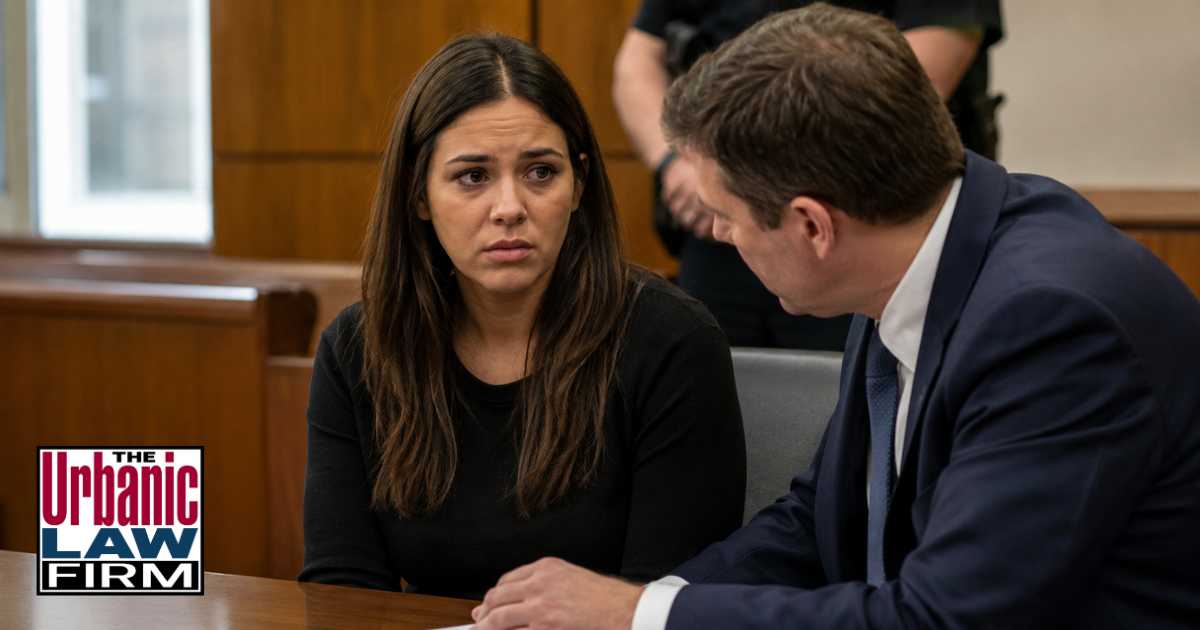 A petit larceny accusation usually starts with a claim that someone took property, carried it away, and meant to keep it. However, the real fight often turns on value, intent, ownership, video, witness accounts, and whether the State can prove the property belonged in someone else’s possession.
This guide is for people accused of petit larceny in Oklahoma and trying to understand the charge, possible punishment, and defense options before court. Because a misdemeanor theft conviction can still affect your record, work, school, housing, and future background checks, it’s worth taking seriously from the start. Note that petit larceny is often charged in municipal courts such as Oklahoma City and Norman.
Quick links
Can you go to jail for petit larceny in Oklahoma?
Yes. Petit larceny is a misdemeanor in Oklahoma, and a conviction can carry 0–6 months in county jail, a $10–$500 fine, or both.
However, jail isn’t automatic. The outcome can depend on the facts, your record, restitution issues, the strength of the evidence, and whether the defense can challenge intent, identity, value, or how the property allegedly moved.
Talk with The Urbanic Law Firm
If you’ve been accused of petit larceny in Oklahoma, reach out for a free consultation before you make statements, accept a plea, or assume the case can’t be fought.
An Oklahoma petit larceny defense attorney can help you understand the evidence, the court process, and the defense angles that may matter most.
Call us at 405-633-3420 or use our secure online form.
Explanation of the law

Oklahoma larceny starts with the basic definition. Under 21 O.S. § 1701, larceny is the taking of personal property by fraud or stealth, with intent to deprive another of it.
Then Oklahoma separates larceny into two degrees. 21 O.S. § 1703 says the first degree is grand larceny and the second degree is petit larceny.
The dividing line comes from 21 O.S. § 1704. Grand larceny applies when the property is worth $1,000 or more, or when property is taken from the person of another.
Petit larceny covers larceny that doesn’t meet those grand-larceny triggers. So, the State still has to prove a taking, carrying away, personal property, value, fraud or stealth, and intent to deprive permanently.
Petit larceny sits inside Oklahoma’s broader theft and property crimes laws. In addition, prosecutors may add shoplifting, receiving or concealing stolen property, or second degree burglary if the facts suggest a store theft, later possession, or entry into a building.
Key elements the state must prove
The elements focus on taking, carrying away, property, value, fraud or stealth, and intent. Under jury instruction 5-94, the State must prove each required part of petit larceny.
- Taking: The State must prove you took the property.
- Carrying away: The State must prove movement, even if the movement was slight.
- Personal property: The item must qualify as personal property.
- Of another: The property must belong to, or be lawfully possessed by, someone else.
- Of value: The property must have value.
- Fraud or stealth: The State must prove the taking happened through fraud or stealth.
- Intent to deprive permanently: The State must prove you meant to permanently deny the rightful possessor the property’s use or value.
Because intent is usually proved through circumstances, a weak timeline can become a strong defense issue. For example, a mistaken belief about ownership may undercut the State’s intent theory.
Penalties
A petit larceny conviction is a misdemeanor under 21 O.S. § 1706. The punishment is county-jail based, not a felony result.
- Misdemeanor
- Petit larceny is a misdemeanor
- Jail
- 0–6 months in county jail
- Fine
- $10–$500
- Other court exposure
- Court costs and fees
- Restitution if the court orders repayment for loss or damage
- Probation, a deferred sentence, or a suspended sentence if the court and facts allow it
However, the penalty still matters because a theft-related record can create problems beyond the courthouse.
Collateral consequences
A misdemeanor theft conviction can follow you after the court date ends. Beyond court, punishments can affect work, housing, school, and licensing goals.
- Background checks may show a theft-related conviction
- Employers may treat dishonesty-related offenses seriously
- Landlords may consider theft history during applications
- Schools, boards, or licensing agencies may ask about the case
- Noncitizens may face immigration risk from theft-related conduct
In addition, those penalties can affect plea talks, trial risk, and record-clearing strategy.
How prosecutors prove petit larceny
Prosecutors usually build petit larceny cases with witness statements, video, item records, and your own words. However, circumstantial evidence still has to prove each element.
- Video: Store, home, business, or phone footage may show movement, timing, or identity.
- Witnesses: Employees, owners, security staff, or bystanders may describe what they think happened.
- Property and value: Receipts, tags, invoices, or owner estimates may support value.
- Possession: Police may argue that later possession connects you to the taking.
- Statements: Officers may use admissions, explanations, texts, or inconsistent details.
Because theft cases often turn on small details, the defense should test what the evidence actually shows.
Practical guide if you’re charged with this crime
What we look for first in a petit larceny case
We look first at intent, value, ownership, and identification. Then we test whether the State can prove a real taking by fraud or stealth.
Defenses
- No intent to deprive permanently: A mistake, misunderstanding, or temporary-use theory may attack the intent element.
- Ownership or possession dispute: If you had a good-faith claim to the property, the State’s theory may weaken.
- No fraud or stealth: Open conduct, permission, or unclear proof can create reasonable doubt.
- Value problem: The State still has to prove the item had value.
- Illegal search or unlawfully obtained statement: Evidence may be excluded if police violated your rights.
How we fight these charges
- Review surveillance, body camera footage, store reports, and time stamps for gaps or identity problems.
- Test value proof through receipts, replacement costs, condition, ownership records, and inconsistent estimates.
- Investigate permission, ownership, shared-property facts, and mistake evidence.
- Challenge statements when officers ignored rights, used pressure, or left out context.
- Prepare hearing and trial themes around the weakest elements, not the loudest accusation.
What The Urbanic Law Firm does to help
- Organize discovery so you know what evidence exists and what’s missing.
- Explain court dates, options, risks, and likely next steps in direct language.
- Communicate before major deadlines, settings, and decisions.
- Investigate witnesses, video, receipts, ownership records, and police reports.
- Build a defense record that protects your trial issues and future options.
Questions to ask your attorney
- What evidence does the State claim proves intent?
- Does the video clearly show identity, taking, and carrying away?
- How will the State prove the item had value?
- Are there search, seizure, or statement issues worth challenging?
- What outcome best protects my record, job, school, and future?
Things you can do if you’re arrested for this crime
- Stay calm and don’t argue with police or store security.
- Avoid explaining your side without counsel.
- Save receipts, texts, location records, work schedules, and call logs.
- Avoid contacting witnesses, alleged victims, employees, or co-defendants.
- Write a private timeline for your attorney while details are fresh.
An Oklahoma petit larceny defense lawyer can help you avoid mistakes that create extra evidence for the State. However, each decision should fit the facts, the court, and your goals.
What happens next
After arrest or a citation, the case usually moves through arraignment, release conditions, discovery, pretrial settings, and either resolution or trial. The court may also address bond if you’re arrested.
In addition, some misdemeanor cases may involve state court diversion programs. For a more detailed overview of the criminal process in Oklahoma, you can read more in our Oklahoma criminal process guide.
The next best step is usually to protect your record while testing the State’s proof. That means checking discovery, court deadlines, and any offer against the facts.
Comparison to other crimes
Charge classification matters because similar facts can create different risks. This table compares petit larceny with related Oklahoma offenses prosecutors may consider.
| Offense | Core proof issue | Conduct or setting | Classification risk | Common defense pressure points |
|---|---|---|---|---|
| Petit larceny | Taking and carrying away personal property of value by fraud or stealth with intent to deprive permanently | Lower-value larceny facts that don’t fit a greater larceny trigger | Misdemeanor with county-jail and fine exposure | Intent, value, ownership, identity, permission, video gaps, and unlawful searches or statements |
| Grand larceny | Higher-value taking or taking from the person of another | Property value or person-of-another facts drive the more serious charge | Felony treatment can apply depending on the facts | Value proof, ownership disputes, intent, identity, and whether the facts fit the greater-theft trigger |
| Shoplifting | Taking merchandise from a retailer or wholesaler | Retail store, self-checkout, concealment, receipt, return, or price-tag facts | Often depends on value and prior history | Scanner errors, mistake, lack of concealment, weak video, value, and intent |
| Receiving or concealing stolen property | Possessing, receiving, or concealing property tied to theft | Later possession rather than the original taking | Can become more serious when value or facts increase risk | Knowledge, innocent possession, unclear ownership, weak source proof, and illegal searches |
| Second degree burglary | Breaking and entering, or forced machine opening, with intent to steal or commit a felony | Building, room, structure, tent, railroad car, or covered machine facts | Felony risk because the entry theory changes the case | No breaking, no entry, no intent at entry, lawful access, and mistaken identity |
Key terms
Larceny
Larceny is the taking of personal property accomplished by fraud or stealth, and with intent to deprive another thereof. A petit larceny case depends on whether the State can prove this definition through admissible evidence. In many cases, intent and permission become the key fight. (21 O.S. § 1701)
Personal property
Personal property means money, goods, chattels, effects, evidences of rights in action, and written instruments effecting a monetary obligation or right or title to property. Because petit larceny requires personal property, the item at issue must fit this category. A defense can focus on what the item was, who possessed it, and whether it had value. (21 O.S. § 103 & jury instruction 5-106)
Carrying away
Carrying away means removing an article for the slightest distance. Carrying away is more than a mere change of position; it’s a movement for purposes of permanent relocation. Video gaps, camera angles, and interrupted movement can affect how this element gets argued. (jury instruction 5-106)
Fraud
Fraud means a false representation intended to cause a surrender of personal property from the person in rightful possession. For petit larceny, alleged deception must connect to the surrender of the property. Sometimes, a contract dispute or misunderstanding gets mislabeled as theft. (jury instruction 5-106)
Intent to deprive permanently
Intent to deprive permanently means the purpose forever to deny the person in rightful possession of the use or value of property. Since intent is rarely recorded on video, prosecutors often rely on conduct and statements. A defense may point to mistake, permission, return efforts, or lack of concealment. (jury instruction 5-106)
FAQs
Is petit larceny a misdemeanor in Oklahoma?
Yes. Petit larceny is a misdemeanor. A conviction can include county jail, a fine, court costs, restitution, and supervision conditions.
What does Oklahoma have to prove for petit larceny?
The State must prove a taking, carrying away, personal property of another, value, fraud or stealth, and intent to deprive permanently.
Can Oklahoma petit larceny be expunged?
It may be eligible for expungement depending on the outcome, your record, and timing. You can read more in our Oklahoma expungement guide.
Can returning property help an Oklahoma petit larceny case?
It can help with negotiations or restitution issues, but it doesn’t automatically dismiss the case. The State may still argue the required intent existed when the property was taken.
What’s the difference between Oklahoma petit larceny and shoplifting?
Petit larceny is the broader lower-level larceny offense. Shoplifting focuses on merchandise from a retailer or wholesaler, so retail facts can lead prosecutors to use that more specific theory.
Important cases
Tate v. State, 1985 OK CR 116, 706 P.2d 169, explains that the State’s larceny proof includes intent to permanently deprive the owner of property. It also recognizes that an honest mistake about ownership rights can defeat a larceny conviction.
Phipps v. State, 1977 OK CR 337, 572 P.2d 588, addresses the permanent-intent-to-deprive requirement in a larceny prosecution. That issue matters in petit larceny because the same intent concept appears in the elements.
Example of this crime in the news
A KTUL report described arrests tied to alleged retail theft activity involving Kenneth Foreman, Savannah Potter, and Chester Radcliff. According to the report, Radcliff was arrested on petit larceny and retailer-related accusations after an alleged Target incident. The story shows how a lower-level theft allegation can sit beside more specific retail counts, and why value, identity, intent, and video evidence can drive the defense.
This page is for informational purposes only and is not legal advice. Every case is unique; consult an attorney about your specific situation. Law last reviewed on May 25, 2026 by attorney Frank Urbanic. Page last updated May 25, 2026. Review the statutes cited on this page for the most current version of the law.

Brent Swadley Trial Analysis: False Claims & Conspiracy to Defraud State Explained

Click, caught, charged! OKC News 9 photographer charged with 21 clandestine photo felonies!

Memorabilia Mess! Desmond Mason’s Arrest & Oklahoma’s Embezzlement Law Explained

What Counts as Actual Physical Control (APC) in Oklahoma?

Immigration Consequences of a Criminal Charge in Oklahoma
| THIS OFFENSE IN THE NEWS |