Sabotage and defense interference crimes defense in Oklahoma
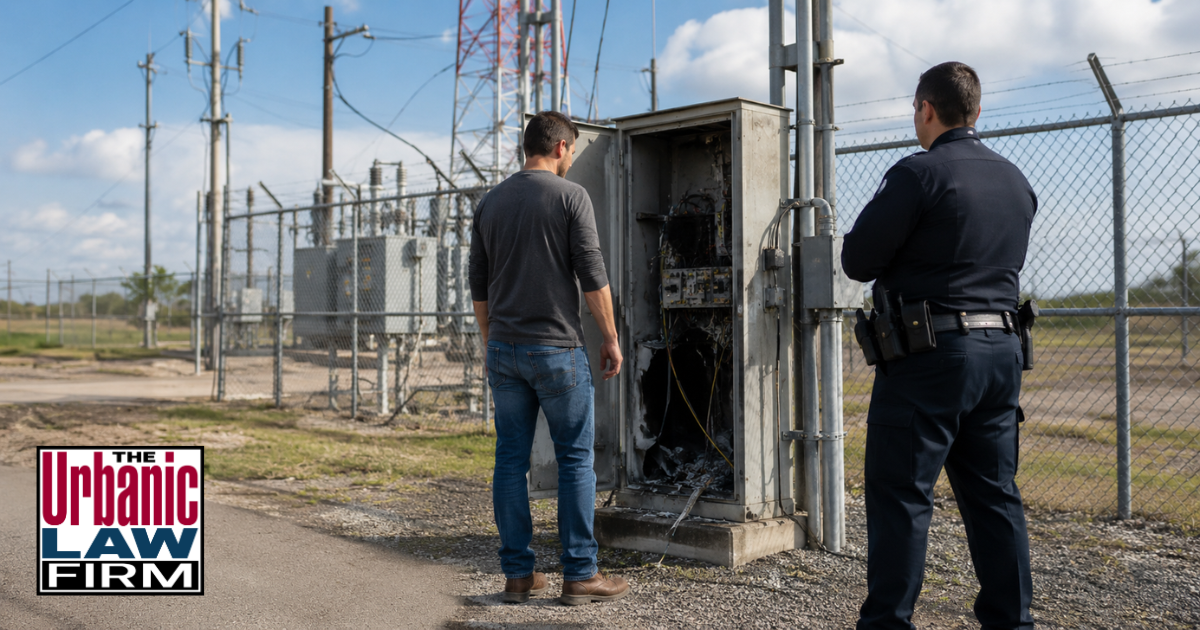 Sabotage and defense interference offenses in Oklahoma focus on property, equipment, public utilities, highways, articles, and orders tied to defense or war preparation. These cases can involve alleged damage, tampering, defective work, planned conduct, group agreements, or restricted access near protected property. Because the statutes use defense-related intent language, prosecutors often look beyond ordinary property damage.
This guide is for people accused of sabotage or defense interference crimes in Oklahoma and trying to understand what the State must prove, what related charges may appear, and what defenses may matter. In addition, these allegations often overlap with subversion and terrorism crimes, public-safety investigations, and property-damage cases.
Talk to an Oklahoma criminal defense lawyer
If you’ve been accused of sabotage and defense interference crimes in Oklahoma, reach out for a free consultation. Early legal help can protect the record, preserve evidence, and keep the State’s theory from going unchallenged.
Call us at 405-633-3420 or use our secure online form.
What counts as sabotage interference in Oklahoma?
Sabotage interference usually means alleged damage, tampering, defective work, attempted conduct, conspiracy, or violation of a restriction order tied to defense, war preparation, or protected infrastructure. However, the State still has to prove the required intent, the property connection, and the act charged.
That distinction matters. A broken machine, damaged item, or restricted road issue isn’t automatically a sabotage case. Instead, prosecutors must connect the conduct to the statute’s defense-related purpose.
How sabotage interference cases work in Oklahoma
What these offenses have in common
These offenses share a focus on intent, property, preparation, public systems, and restricted access. Because of that, investigators often ask why the conduct happened, what the property was used for, and whether the alleged act affected defense-related operations.
In addition, prosecutors may pair these allegations with vandalism and malicious mischief, trespass, unlawful entry, burglary, obstruction of justice, or riot offenses. Those companion charges usually depend on property damage, entry, group activity, or alleged resistance.
Evidence prosecutors often use
The State may rely on repair records, surveillance video, access logs, device data, work orders, witness statements, messages, and physical evidence. However, evidence of damage doesn’t prove the required defense-related intent by itself.
Because these cases can involve technical systems, the details matter. The defense may need to test whether the item was actually used for defense purposes, whether the defect was intentional, and whether another explanation fits the evidence.
Crimes in this group
Interfering or hindering preparations for defense
Interfering or hindering preparations for defense (21 O.S. § 1265.2) targets destroying, impairing, injuring, interfering with, or tampering with real or personal property. The State has to connect the property conduct to an intent to hinder, delay, or interfere with defense or war preparation.
However, not every property-damage accusation fits this offense. A defense can focus on the property’s actual use, your access rights, the condition of the item, and whether prosecutors can prove the required intent.
Making defective articles
Making defective articles (21 O.S. § 1265.3) covers intentionally making or causing a defect in an article or thing. The prosecution must show both intentional defect creation and reasonable grounds to believe the item would be used for defense or war purposes.
In many cases, the fight may turn on mistake, poor workmanship, unclear specifications, supply-chain problems, or lack of knowledge about the item’s intended use. Because this is a serious felony theory, technical records can matter as much as witness testimony.
Attempts to commit sabotage crimes
Attempts to commit sabotage crimes (21 O.S. § 1265.4) can cover more than an unfinished completed act. The statute also treats certain solicitation, material collection, and entry-with-intent conduct as an attempt.
Even so, the State still has to prove intent and legally meaningful conduct. Therefore, a defense may challenge whether the alleged step was preparation, innocent conduct, protected speech, or proof of a different offense.
Conspiracy to commit sabotage crimes
Conspiracy to commit sabotage crimes (21 O.S. § 1265.5) focuses on an alleged agreement between two or more people. Under this statute, prosecutors don’t have to prove that anyone completed the planned act.
Because agreement is the core issue, messages, meetings, group chats, shared tools, and witness statements often become important. However, being present, angry, careless, or connected to others doesn’t automatically prove an unlawful agreement.
Violation of orders under section 9
Violation of orders under section 9 (21 O.S. § 1265.10) addresses violating certain orders connected to restricted or closed highway access near protected property. This offense depends on the existence, scope, and validity of the order.
Unlike the felony sabotage provisions above, this offense is a misdemeanor. Still, a conviction can matter. A defense may focus on notice, signage, whether the order applied to your conduct, and whether the restriction was legally authorized.
Defense strategies for sabotage interference offenses
When we defend these cases, we first look for the State’s theory of intent. We also review the property, the alleged damage, the timeline, device data, access rights, witness claims, and whether investigators stretched public-safety facts beyond the statute.
- Challenge the required intent. The defense may argue the State can’t prove an intent to hinder, delay, or interfere with defense or war preparation.
- Dispute the defense-related property link. The item, system, road, or article may not fit the statute’s protected purpose.
- Attack access, notice, and order problems. Lawful access, unclear boundaries, poor signage, or an invalid order can change the case.
- Question identity and causation. The State may have to prove who caused the defect, damage, entry, or violation.
- Separate speech from criminal conduct. Protected speech, political views, or association can’t replace proof of a criminal act or agreement.
Key terms for sabotage interference offenses
Highway
Highway includes any private or public street, way, or other place used for travel to or from property. (21 O.S. § 1265.1) The term can matter when a case involves restricted travel near property tied to defense, war preparation, or public utility work.
Highway commissioners
Highway commissioners means any individual, board, or other body having authority under then-existing law to discontinue the use of the highway that is desired to restrict or close to public use and travel. (21 O.S. § 1265.1) In a restriction-order case, this term can affect whether the order came from the proper authority.
Public utility
Public utility includes any pipeline, gas, electric, heat, water, oil, sewer, telephone, telegraph, radio, railway, railroad, airplane, transportation, communication, or other system, by whomsoever owned or operated for public use. (21 O.S. § 1265.1) This broad term can bring communication, transportation, and utility systems into a sabotage-related investigation.
Perpetrating act
A perpetrating act is one that would end in the commission of the intended crime, but for the intervention of circumstances independent of the defendant’s will. (jury instruction 2-12) In an attempt case, this term helps separate a punishable step from mere preparation.
Overt act
An overt act is any act performed by any member of the conspiracy for the purpose of furthering or carrying out the ultimate intent of the agreement, or which would naturally accomplish the object of the conspiracy. (jury instruction 2-18) Although the sabotage-conspiracy statute has its own rule, this term still helps explain how prosecutors often think about conspiracy evidence.
FAQs about sabotage interference charges
Can Oklahoma charge sabotage interference if nothing was fully damaged?
Yes. Oklahoma prosecutors may pursue an attempt theory when they claim you took a legally meaningful step toward the offense. However, they still have to prove the required intent and conduct.
What does Oklahoma have to prove in a defense interference case?
The State usually has to prove the act, the property or article involved, and the required defense-related intent. In many cases, intent is the hardest issue for prosecutors to prove.
Are Oklahoma sabotage interference offenses felonies?
Most sabotage interference offenses in this group are felonies. However, violating an order under section 9 is treated as a misdemeanor.
Can an Oklahoma sabotage interference case be expunged?
Maybe. Expungement depends on the charge, outcome, sentence, waiting period, and your record. You can learn more about eligibility on our Oklahoma expungement law page.
Can speech or online posts support an Oklahoma sabotage interference charge?
Speech or online posts can lead investigators to ask questions. However, protected speech alone should not replace proof of a criminal act, agreement, attempt, or required intent.
Sabotage interference offenses in the news
A KOSU report about a weather-radar vandalism prosecution described allegations involving damage to equipment used for public warnings. The reported charges were not the sabotage statutes discussed above. Even so, the story shows how alleged interference with communication or public-safety equipment can move a case beyond ordinary property damage.
That distinction matters for this page. A sabotage interference prosecution would still need proof of the exact statutory elements. However, cases involving public utilities, communication systems, restricted property, or critical equipment can draw broader investigative attention.
This page is for informational purposes only and is not legal advice. Every case is unique; consult an attorney about your specific situation. Law last reviewed on May 8, 2026 by attorney Frank Urbanic. Page last updated May 8, 2026. Consult the statutes listed above for the most up-to-date law.

Two Votes, One Prison Cell: Sara Polston’s Oklahoma Voting Nightmare!

Legislative Payback or Public Safety? Sara Polston’s Shocking Constitutional Fight!

Tulsa’s “Serial Defecator” Case: Legal Analysis of a Messy Situation

Oklahoma Discovery Law Changes: 2026–2027 Guide

Oklahoma Domestic Abuse Law Updates Nov. 1: Five Big Changes
| THESE OFFENSES IN THE NEWS |