Riot Crimes Defense in Oklahoma
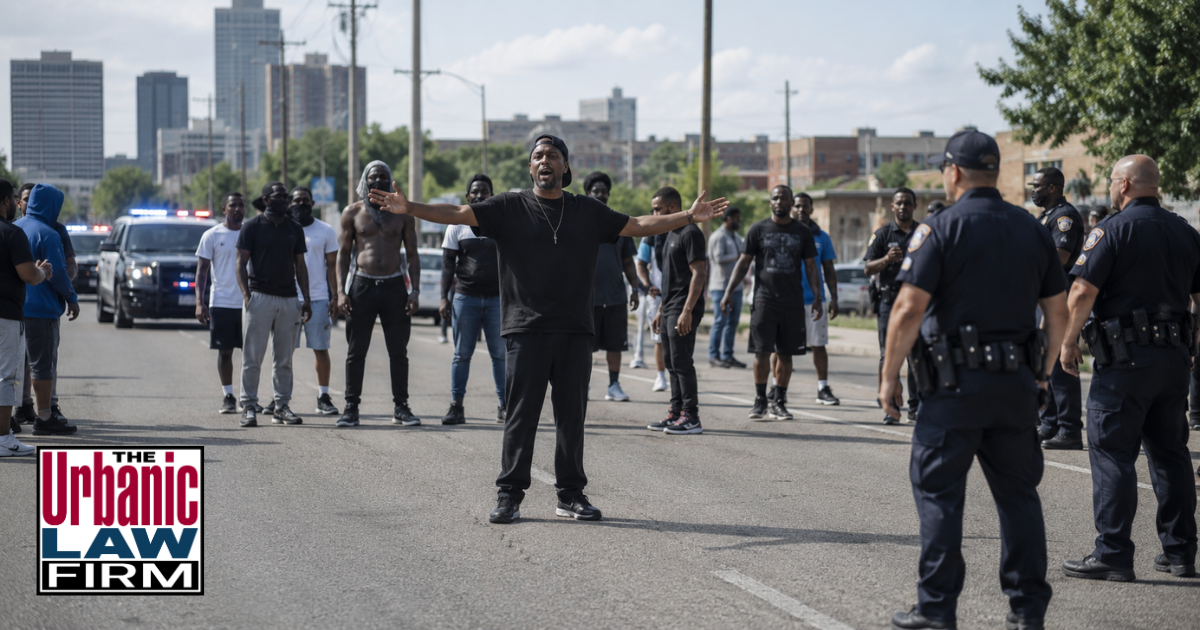 Riot crimes in Oklahoma focus on group action, force or violence, and the State’s claim that you joined more than a crowd. This guide is for people accused of riot crimes in Oklahoma who are trying to understand what counts as a riot, why one incident can grow into several counts, and what defenses may matter.
These cases often start with confusing scenes, short videos, officer reports, and claims about what a group meant to do. However, the law still has to connect you to the prohibited conduct. For the broader list, see our Oklahoma riot and public safety crimes guide.
Quick links for riot crimes
Talk with a riot crimes defense lawyer
If you’ve been accused of riot crimes in Oklahoma, reach out for a free consultation before you answer questions, post about the event, or guess your way through court paperwork.
Call us at 405-633-3420 or use our secure online form.
What counts as rioting in Oklahoma?
A riot charge usually means prosecutors claim three or more people acted together without legal authority and used force or violence. It can also mean they claim a threat of force or violence came with the immediate ability to carry it out. Presence alone shouldn’t be enough. However, videos, group messages, clothing, masks, weapons, and movement with the group can shape how the State frames participation.
How riot and public safety cases work
What these crimes have in common
These charges share a focus on group conduct, unlawful force, and what each participant meant to do. Prosecutors often try to prove that people acted together. However, they still need more than a broad claim that you stood near disorder.
In addition, prosecutors may file companion charges such as assault and battery, arson, robbery, firearms crimes, vandalism and malicious mischief, or obstruction of justice. When the facts include a serious injury or death, related murder or maiming allegations can change the whole defense posture.
Evidence prosecutors usually rely on
Police often rely on body-camera video, aerial footage, social media posts, group chats, officer commands, and witness accounts. However, those sources may not show what you heard. They also may not show whether you had a shared purpose or whether you were leaving the scene.
Why the State’s theory matters
The exact theory matters. A case about road obstruction differs from a case about a weapon, a disguise, or alleged encouragement of violence. Because of that, we break the charge into the State’s required facts before we decide what evidence matters most.
Crimes in this group
Rioting without aggravating factors
Rioting without aggravating factors starts with the basic riot definition and default penalty framework (21 O.S. § 1311 and 21 O.S. § 1312). The State must show group action by at least three people, no legal authority, and force, violence, or a qualifying threat.
This charge can be a misdemeanor when none of the listed aggravating facts apply. However, prosecutors may still use the same event to argue broader public-safety concerns, bond restrictions, and related conduct.
Riot resulting in murder, maiming, robbery, rape, or arson
Subsection (1) raises the stakes when prosecutors claim a listed serious offense happened during the riot. Those listed offenses include murder, maiming, robbery, rape, and arson.
The core fight often concerns causation, timing, and individual responsibility. Because a large scene can involve many people, the defense looks for proof that separates your actions from what someone else allegedly did.
Riot to resist law or obstruct an officer
Subsection (2) applies when the State claims the riotous assembly formed to resist execution of law or block a public officer’s legal duties. In practice, police reports often focus on commands to move, attempts to serve process, or efforts to clear a scene.
However, the State still has to prove the assembly’s purpose. A defense may challenge whether you knew about the order, whether the officer had lawful authority, or whether the proof points only to confusion rather than obstruction of justice.
Armed or disguised participation in a riot
Subsection (3) focuses on whether police claim you carried a firearm, another deadly or dangerous weapon, or a disguise during the riot. This doesn’t make every object a weapon. The State still has to prove what the item was and how it fits the law.
Because identity matters in a moving crowd, disguise allegations often depend on video quality and witness assumptions. If a weapon allegation appears, the defense may also examine related firearms crimes or assault and battery with a dangerous weapon theories.
Directing, advising, encouraging, or soliciting violence during a riot
Subsection (4) targets claims that someone directed, advised, encouraged, or solicited other riot participants to use force or violence. The State may point to shouted words, messages, gestures, livestreams, or planning evidence.
However, context matters. The defense may argue the statement didn’t urge unlawful force, wasn’t heard by others, or didn’t cause the conduct alleged. In addition, protected speech concerns may become central when the case depends on words instead of conduct.
Obstructing use of a road by impeding traffic
Subsection (5) focuses on obstructing the normal use of a public street, highway, or road while participating in a riot. The State may allege traffic was impeded, vehicles were approached, or safe movement was endangered.
Finally, the related vehicle-operator provision addresses civil and criminal liability when a driver unintentionally injures or kills someone while fleeing a riot under the conditions listed in 21 O.S. § 1320.11. That provision isn’t a separate riot charge against you, but it can affect how both sides discuss the road scene.
Defense strategies for riot crimes in Oklahoma
When we defend these cases, we first look at what the State says you personally did. Then we compare that claim to the videos, dispatch records, officer commands, witness statements, social media posts, and timing. Because riot cases often involve crowds, the first defense issue is usually whether the evidence proves your conduct.
- No personal participation: The State may have evidence of a chaotic scene, but not proof that you joined the riot conduct.
- No force, violence, or qualifying threat: Words, presence, or movement with a crowd may not satisfy the legal standard.
- Mistaken identity or weak video proof: Blurry footage, masks, similar clothing, and poor angles can create real identification problems.
- Protected speech and no unlawful urging: A statement may be loud, angry, or political without directing others to violence.
- Roadway facts don’t fit the statute: The defense may challenge whether the road was obstructed as the law requires.
Key terms in riot cases
Riot
A riot is any use of force or violence, or any threat to use force or violence if accompanied by immediate power of execution, by three or more persons acting together and without authority of law. (21 O.S. § 1311 & jury instruction 6-59) Because group action drives these cases, the State must separate your conduct from the crowd’s conduct.
Obstruct
Obstruct means to render impassable or to render passage unreasonably inconvenient or hazardous. (21 O.S. § 1312) In a road-based riot case, this word can control whether traffic facts actually fit the charge.
Rape
Rape is an act of sexual intercourse involving vaginal or anal penetration accomplished with a male or female who is not the spouse of the perpetrator and who may be of the same or opposite sex as the perpetrator, under listed circumstances. (21 O.S. § 1111) When a riot allegation names rape as the listed serious offense, consent, penetration, and identity may become separate proof issues.
Dangerous weapon
A dangerous weapon includes a pistol, revolver, shotgun, rifle, blackjack, loaded cane, billy, hand chain, metal knuckles, or any implement likely to produce death or great bodily harm in the manner it is used or attempted to be used. (jury instruction 4-28) Armed participation allegations often depend on whether the object fits this definition.
Disfigures
Disfigures means injures personal appearance in such a way as is calculated to attract observation after healing. (21 O.S. § 755 & jury instruction 4-118) When the State claims a riot resulted in maiming, the visible nature and lasting effect of the injury can matter.
Riot crime FAQs
What does Oklahoma have to prove for a riot charge?
The State usually has to prove group action, unlawful force or violence, a qualifying threat, and your participation. A defense can attack each point, especially when the evidence mainly shows a crowd instead of your conduct.
Can an Oklahoma riot charge be a felony?
Yes. A riot case can involve felony exposure if the State alleges a listed serious offense, a weapon, a disguise, obstruction of an officer, or direction of violence. The exact theory matters.
Is being present at a protest enough for an Oklahoma riot conviction?
No. Mere presence at a protest, party, detention facility, or street scene shouldn’t prove guilt by itself. Prosecutors need evidence tying you to the riot conduct.
Can an Oklahoma riot case be expunged?
It depends on the result, your record, and the waiting rules that apply. Dismissals, acquittals, deferred sentences, and some convictions may qualify under Oklahoma expungement law.
What defenses work in Oklahoma riot cases?
Common defenses include no shared intent, no force or violence, protected speech, mistaken identity, unreliable video, an unlawful police order, and proof that someone else caused the alleged harm.
Riot allegations in the news
In a KSWO report from Lawton, four jail inmates were described as facing felony riot-related counts after officials said they refused housing orders and tried to break into another cell. The story shows why these cases often turn on group conduct, shared purpose, and whether the State can prove each person joined the unlawful action.
This page is for informational purposes only and is not legal advice. Every case is unique; consult an attorney about your specific situation. Law last reviewed on May 8, 2026 by attorney Frank Urbanic. Page last updated May 8, 2026. Consult the statutes listed above for the most up-to-date law.

Legislative Payback or Public Safety? Sara Polston’s Shocking Constitutional Fight!

Tulsa’s “Serial Defecator” Case: Legal Analysis of a Messy Situation

Oklahoma Discovery Law Changes: 2026–2027 Guide
Oklahoma Domestic Abuse Law Updates Nov. 1: Five Big Changes

Oklahoma Stalking Case Reversed: When a Post Isn’t Enough
| THESE OFFENSES IN THE NEWS |