Oklahoma Public Health & Safety Crimes Defense
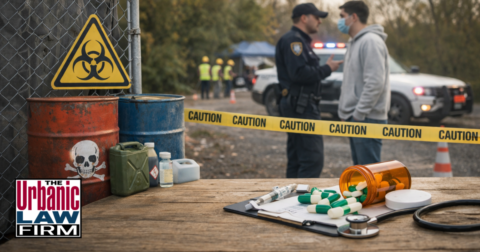 Oklahoma public health and safety crimes cover allegations that you put other people, animals, water, roadsides, or the public at risk through exposure, contamination, dumping, poison, or unsafe handling. These cases can look unusual at first. Still, they can move fast. That’s because the State may frame them as threats to community safety, not just private disputes.
Some cases start with a complaint to police. Others start with a health report, a pharmacy issue, a local cleanup problem, or an agency referral. So, by the time you hear about the case, investigators may already have records, witnesses, and a timeline. That early paper trail can make a weak case sound stronger than it is.
Quick links for this guide
- Get early legal help
- How these cases usually work
- Crime groups in this category
- Defense strategies for these cases
- Key terms for Oklahoma public health and safety crimes
- FAQs
Get ahead of the case early
If you’ve been accused of Oklahoma Public Health & Safety crimes in Oklahoma, reach out for a free consultation as early as you can. Early action matters here. Records get gathered fast, and agencies often shape the story before you get a chance to respond.
Call us at 405-633-3420 or use our secure online form.
How these public health and safety cases usually work
These charges usually focus on risk. In other words, the State often claims you created a danger to the public, even if the facts are disputed. Some cases turn on intent. Others turn on knowledge, recklessness, or negligence. Because of that, the exact mental state can decide a lot.
Common scenarios include alleged disease exposure, leaving quarantine, putting poison where animals or people can reach it, dumping trash near a road or home, or filling a prescription the wrong way. However, the accusation alone doesn’t prove the charge. The State still has to connect the act, the risk, and the required mental state.
Investigators often look at medical records, lab results, exposure timelines, witness statements, text messages, agency reports, surveillance, photos, fill logs, labels, and chain-of-custody records. In addition, expert testimony can play a big role. That is especially true when the State claims a transfer was likely, a condition was known, or a substance created a real danger.
These cases also branch into other accusations. So, prosecutors may add public nuisance allegations, assault-based claims if bodily contact is alleged, animal-related counts in poison cases, or licensing and drug-related accusations in prescription cases. Some of these offenses are misdemeanors. Others can be charged as felonies. Therefore, the facts, the mental state, and any prior record all matter.
Crime groups in this category
Infectious disease & quarantine cases
This is the group most people are likely to search after an arrest or investigation. These cases usually center on alleged exposure, alleged knowledge of a condition, or an alleged failure to follow a public health restriction. That often means disease-spread allegations under 21 O.S. § 1192, HIV-transfer accusations under 21 O.S. § 1192.1, or quarantine-order violations under 21 O.S. § 1195.
The shared fight is usually over proof. Did you know the relevant facts? Did the conduct actually fit the statute? Was there real evidence of intent, recklessness, or a valid order? In addition, this group can include public-place exposure allegations when the State says someone exposed another person while affected by a contagious condition. These cases often depend on records, timelines, and what was actually communicated to everyone involved.
Hazardous substance and dumping cases
This group focuses on harmful substances and unsafe disposal. The State may claim you placed poison where an animal or person could take it, as addressed in 21 O.S. § 1197. It may also claim you dumped gas-tar waste into public water under 21 O.S. § 1194. Or it may claim you left trash, junk, or refuse too close to a road or someone else’s occupied dwelling under 21 O.S. § 1205.
These cases often turn on location, control, and proof of the substance involved. So, the key questions may include who placed the material, where it was left, whether the site was approved, and whether the State can prove the required mental state. Because many scenes are open to the public, identity can be a real issue here. Agency photographs, cleanup records, land access, and witness reliability can matter as much as the substance itself.
Prescription and apothecary error cases
This group is narrower, but it can still produce serious accusations. The main statute covers alleged prescription-labeling or filling errors by an apothecary when life or health is endangered, under 21 O.S. § 1196. That can include claims that the wrong label was used, the wrong drug was substituted, the wrong amount was provided, or the fill departed from the prescription in another unsafe way.
These cases usually rise or fall on records and process. Because pharmacies create logs, labels, refill data, and staff trails, the State may try to build the case from paperwork first. Still, paperwork can mislead. So, a defense may focus on who handled the order, whether the alleged error actually happened, whether any risk was overstated, and whether the State can prove the conduct fits this criminal statute rather than a mistake, training issue, or administrative problem.
Defense strategies for these cases
- Challenge intent. Many of these charges depend on what you knew, meant, or consciously ignored.
- Dispute knowledge. The State may claim you knew a condition, risk, order, or danger that the evidence does not really prove.
- Contest causation. Exposure, danger, or endangerment often sounds stronger than the proof behind it.
- Attack the records. Timelines, labels, reports, and agency paperwork can contain gaps, assumptions, or mix-ups.
- Show a lawful exception. Approved disposal sites, necessary transport, consent issues, or other statutory limits can matter.
- Test the experts. These cases often depend on opinions about risk, transfer, contamination, or medical significance.
Key terms for Oklahoma public health and safety crimes
Willful
Willful means purposeful. It does not require any intent to violate the law, to injure another, or to acquire any advantage. That term can shape whether the State says your conduct was a deliberate choice instead of a mistake in an exposure, quarantine, or handling case (21 O.S. § 92; jury instruction 6-45).
Knowingly
Knowingly means personally aware of the facts. That can matter when the State claims you knew about a condition, a restriction, or a dangerous circumstance before the alleged act happened (21 O.S. § 96).
Negligence
Negligence imports a want of such attention to the nature or probable consequences of the act or omission as a prudent person ordinarily bestows in acting in his or her own concerns. That definition matters most in prescription-fill and handling cases, where the fight may be over carelessness rather than a deliberate act (21 O.S. § 93).
Malice
Malice imports a wish to vex, annoy or injure another person, established either by proof or presumption of law. That concept can matter when the State tries to push a case away from accident and toward a harmful purpose (21 O.S. § 95).
Maliciously
Maliciously imports a wish to vex, annoy or injure another person, established either by proof or presumption of law. In this category, that wording can become important if prosecutors try to describe the handling of poison, waste, or exposure as more than careless conduct (21 O.S. § 95).
Questions people ask about these charges
What makes a public health and safety charge a felony in Oklahoma?
It depends on the statute the State files, the facts it claims it can prove, and sometimes your prior record. In this category, some offenses are misdemeanors, while others can be filed as felonies if the law treats the alleged conduct as a more serious public risk.
Can Oklahoma prosecutors file charges even if no one got sick or injured?
Yes, sometimes they can. Several statutes in this area focus on exposure, danger, prohibited conduct, or public risk, not just a completed injury. Even so, the State still has to prove the exact facts and mental state the statute requires.
How do Oklahoma investigators prove exposure or contamination?
They often rely on records, witness statements, agency reports, photos, surveillance, medical information, and expert opinions. Because these cases can become technical fast, the defense often focuses on weak timelines, missing proof, and overstated conclusions.
Are Oklahoma public health and safety charges always misdemeanors?
No. This category includes both misdemeanor and felony exposure. So, you have to look at the exact statute, not just the broad label of the case. A broad category can include very different penalty ranges.
What defenses come up most often in Oklahoma public health and safety cases?
The most common defenses usually target intent, knowledge, causation, identity, records, and expert proof. In some cases, a lawful exception, consent issue, necessary movement, or approved disposal setting can also make a major difference.
This page is for informational purposes only and is not legal advice. Every case is unique; consult an attorney about your specific situation. Page last updated March 24, 2026. Consult the statutes listed above for the most up-to-date law.