Animal Cruelty, Neglect, and Abandonment Crimes Defense in Oklahoma
 If you’re facing Oklahoma animal cruelty crimes, neglect, or abandonment charges, you may feel shocked and judged. Friends, neighbors, vets, and officers often assume the worst before you tell your side. That rush to judgment can shape how investigators collect evidence and how prosecutors view your case.
These cases sit at the intersection of emotion and law. Prosecutors may push for harsh outcomes because animals create strong sympathy. You, however, may see a more complicated story about money, health, timing, and intent. You need someone who understands how Oklahoma animal cruelty crimes really work, not just how they sound in a report.
Quick links
Talk with an animal-crimes defense attorney
If you’ve been accused of Oklahoma animal cruelty crimes, neglect, or abandonment, early advice can protect both your record and your animals. Our firm talks with you about the facts, the statutes, and the jury instructions that apply before you answer questions alone. Call us at 405-633-3420 or use our secure online form.
Understanding animal cruelty, neglect, and abandonment laws
Oklahoma animal cruelty crimes reach far beyond classic abuse images. The statutes cover physical torture, severe neglect, dangerous transport, poisoning, and the way people handle animals they can’t or won’t keep anymore. Each law uses its own language about intent, consent, and control, so the details of your situation matter a lot.
Evidence in these cases often includes photographs, vet records, shelter notes, and statements from neighbors or family members. However, pictures don’t always show how long a condition lasted, what treatment you tried, or how quickly a problem developed. When you bring in context, Oklahoma animal cruelty crimes can look very different from the story in the first report.
This guide focuses on cruelty, neglect, and abandonment offenses within the broader animal-crimes framework. If you want to see how these charges connect with other animal-related offenses, you can explore the larger Oklahoma animal crimes category hub on our site.
How these charges are filed and stacked
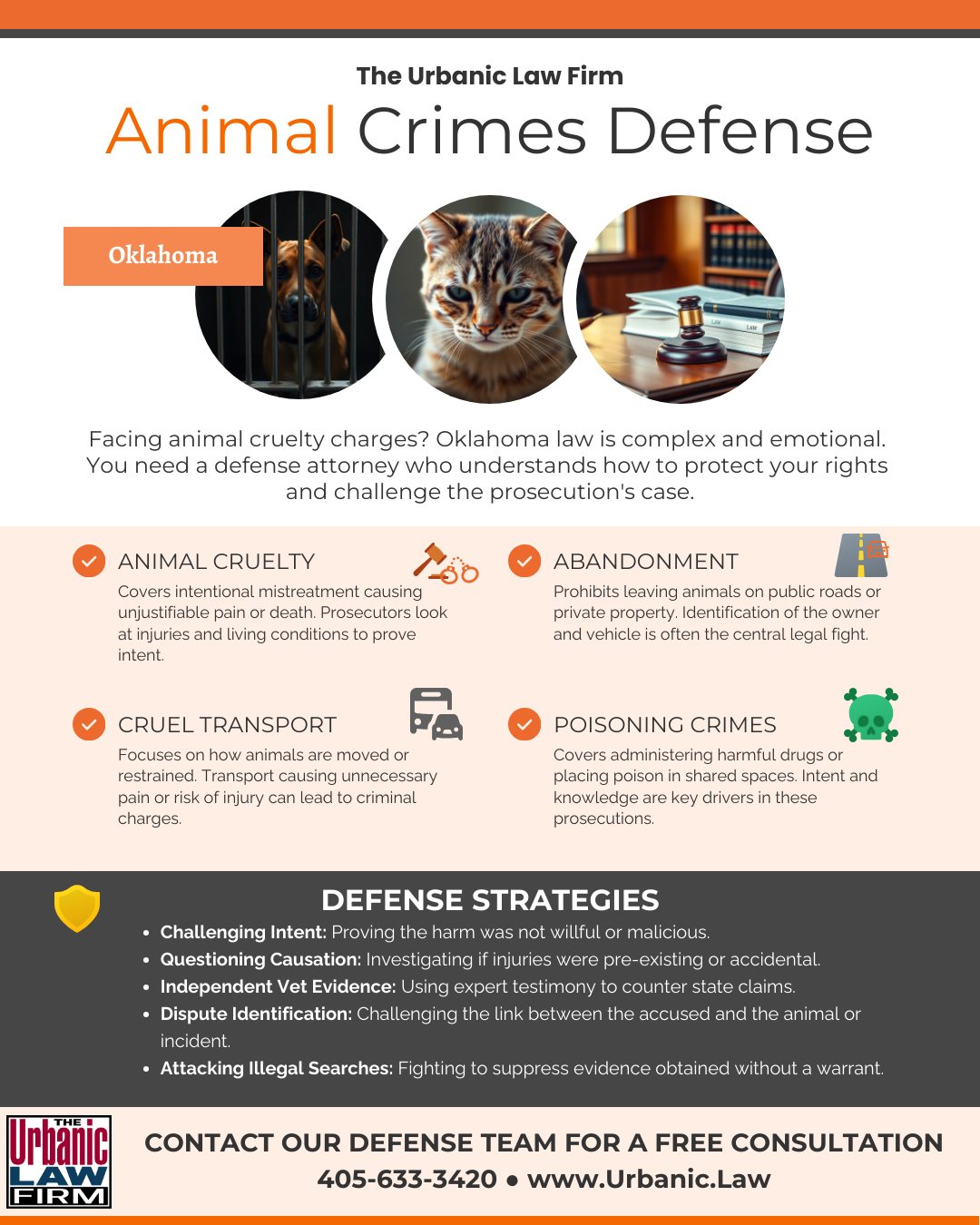
Prosecutors often treat each affected animal as its own count, so one scene can turn into several charges. In many Oklahoma animal cruelty crimes cases, the State also adds counts for abandonment, improper transport, or poisoning based on the same set of facts. That stacking raises the pressure from the very start.
Investigators may rely heavily on what a vet or officer saw during a single visit. Later, your attorney can bring in full medical history, prior care, and witness statements that show a longer pattern of responsible ownership. Because priors and patterns influence both charging and plea offers, you need to address every count and every animal, not just the worst photographs.
These criminal cases sometimes run beside civil or administrative actions, including seizure hearings and future limits on owning animals. A smart defense strategy looks at the whole field. You want to protect your criminal record, your current animals, and your ability to have animals in the future.
Animal cruelty, neglect, and abandonment crimes
Animal cruelty
Oklahoma’s primary animal cruelty statute, 21 O.S. § 1685, covers intentional mistreatment that causes unjustifiable pain, suffering, or death. The law reaches acts like beating, torturing, maiming, or needlessly killing an animal, along with extreme neglect that shows cruelty.
Prosecutors often point to injuries, body condition scores, living conditions, and expert opinions to prove cruelty. Your defense can highlight veterinary explanations, treatment you pursued, and other people who shared control of the animals. When you push back on intent and causation, Oklahoma animal cruelty crimes charges can look far less clear-cut.
Carrying animals in a cruel manner
The law on carrying animals in a cruel manner, 21 O.S. § 1688, focuses on how you move or restrain an animal. It targets transport or handling that causes unnecessary pain, terror, or serious risk of injury, even if the animal doesn’t suffer permanent damage.
These cases often start with traffic stops, parking-lot encounters, or complaints about trailers and restraints. Officers may only see a brief moment in time. Your attorney can bring in the length of the trip, weather conditions, ventilation, and your usual transport practices to challenge a quick accusation of cruelty.
Disposal of abandoned animals
Disposal of abandoned animals appears in 21 O.S. § 1686 and deals with what certain people may do when they find animals that seem abandoned on their property. The statute sets conditions for lawful disposal so that animals don’t simply get killed or dumped without process and notice.
Cases under this section often turn on whether the animal was truly abandoned or still under someone’s control. Another key question involves whether the person who took action followed the statute’s steps. Documentation about notices, efforts to locate the owner, and conversations with authorities can make or break the State’s theory.
Abandoning animals along streets or highways
Oklahoma law, at 21 O.S. § 1691, prohibits abandoning animals along streets, highways, or other public places. The focus rests on leaving an animal where it’s likely to suffer, frighten the community, or trigger a traffic hazard.
Prosecutions usually grow from dashcam footage, neighbor phone videos, or surveillance from nearby businesses. Identification often becomes the central fight. Your defense can challenge the link between you and the vehicle, the timeline, and whether the animal actually came from that car or property.
Administration of poisonous drugs to animals
Administration of poisonous drugs to animals falls under 21 O.S. § 1689. This statute addresses giving an animal poisonous substances or harmful drugs directly, often through food, drink, or injections, without a lawful medical or safety reason.
Intent and knowledge drive many of these cases. Prosecutors may claim you meant to injure or kill the animal. You may show that you followed professional advice, used a labeled product, or had no idea that a substance could harm that species. Expert testimony about dosage, labeling, and standard veterinary practice often shapes the outcome of this type of Oklahoma animal cruelty crimes charge.
Poisoning animals
The separate offense of poisoning animals appears in 21 O.S. § 1681. The statute covers placing poison where animals are likely to encounter it, such as yards, alleys, or shared spaces, even when the State can’t point to one specific target.
Investigations usually focus on bait, residue, and lab results. However, many people may have access to the same property or supplies. A strong defense looks at chain of custody, alternative sources of toxins, product labeling, and whether the substance actually meets the legal definition of poison under Oklahoma law.
Duty of veterinarians to report animal abuse
The duty of veterinarians to report suspected animal abuse appears in 21 O.S. § 1680.3. When a vet reasonably believes an animal has suffered abuse, neglect, or abandonment, the law may require a report to law enforcement or an animal-welfare agency.
Those reports often trigger the first contact you have with officers or investigators. Vets can misread signs of illness, age, or accidents as abuse, especially during a short appointment. Your defense may involve an independent veterinary review, prior medical records, and a close look at how and why the original report came together.
Wounding or trapping birds within a cemetery or burying ground
Oklahoma criminalizes wounding or trapping birds within a cemetery or burying ground in 21 O.S. § 1684. The law protects birds in locations tied to grief, remembrance, and public respect, even when those birds might count as pests in other places.
Charges can involve traps, firearms, or attempts to remove birds from monuments and grave markers. Defenses often focus on the exact location, the type of conduct involved, consent from cemetery authorities, and whether the State can prove every required element beyond a reasonable doubt.
Defense strategies for Oklahoma animal cruelty crimes
Oklahoma animal cruelty crimes cases create intense emotions, but the State still has to prove every element. Effective defenses focus on intent, causation, and the reliability of the evidence the prosecutor wants to use against you.
- Challenge intent. Many statutes require proof that you acted willfully, maliciously, or with clear disregard for an animal’s welfare, and the State often overreads ordinary hardship.
- Question causation. An animal’s condition can come from age, illness, prior injuries, or environmental factors that existed long before you got involved.
- Use independent veterinary evidence. A second opinion can dispute alleged abuse, timelines of injuries, and claims that weight or scars automatically prove neglect.
- Dispute identification. In abandonment and poisoning cases, prosecutors must link you to the vehicle, property, or substance through solid proof, not just suspicion or rumor.
- Attack searches and seizures. Animals, photographs, and medical records often come from entries, warrants, or subpoenas that may not follow constitutional rules.
Key terms in animal cruelty cases
Animal
Any mammal, bird, fish, reptile or invertebrate, including wild and domesticated species, other than a human being (21 O.S. § 1680.1).
Animal facility
An animal facility is any vehicle, building, structure, farm, ranch or other premises where an animal is kept, handled, transported, housed, exhibited, bred, offered for sale or used in any lawful scientific test, experiment, investigation or educational training (21 O.S. § 1680.1).
Owner
Owner means a person who has title to the property, possession of the property, or a greater right to the possession of the animal or property than another person (21 O.S. § 1680.1).
Effective consent
Effective consent means consent by the owner or a person legally authorized to act for the owner, and consent is not effective if induced or given by force or fear, by a person the offender knows is not legally authorized to act for the owner, or by a person who by reason of youth, mental disease or defect, or influence of drug or alcohol is known by the offender to be unable to make reasonable decisions (21 O.S. § 1680.1).
Culpable negligence
Culpable negligence means failing to do something a reasonably careful person would do. It also includes doing an act without the ordinary care and caution that such a person usually uses in similar circumstances and conditions (jury instruction 4-104).
FAQs about animal cruelty in Oklahoma
What counts as animal cruelty under Oklahoma law?
Animal cruelty in Oklahoma usually means intentionally causing unjustifiable pain, suffering, or death to an animal. Examples include beating, torturing, maiming, or needlessly killing an animal, or denying basic food, water, or shelter. The State must still prove your actions and your intent, not just rely on photos or emotional reactions.
Can a simple mistake lead to animal cruelty charges in Oklahoma?
A simple mistake or accident can trigger an investigation, especially when someone sees an injured or thin animal. That situation doesn’t automatically mean you committed cruelty. Your defense can show medical problems, prior injuries, or normal aging, and explain the steps you took to help.
What happens to my animals during an Oklahoma animal cruelty case?
Officers or animal-welfare agencies may seize animals and move them to shelters, foster homes, or rescue groups. Courts often hold separate hearings to decide whether animals return to you or stay in other placements. Your lawyer can push for conditions that protect your rights while still addressing the court’s concerns about care.
Are all animal cruelty charges in Oklahoma felonies?
No, Oklahoma animal cruelty crimes range from misdemeanors to felonies. The level depends on the statute, the animal’s injuries, your history, and how the prosecutor chooses to file. A careful review of the charge sheet and the cited laws shows your true sentencing exposure.
How can a lawyer help with Oklahoma animal cruelty charges?
A defense lawyer investigates the facts, gathers vet and witness evidence, and compares everything to the exact statutes. Your attorney can challenge illegal searches, weak opinions, and unreliable identifications that link you to the allegations. The lawyer also negotiates with the prosecutor and prepares you for hearings or trial so you can make informed choices.
This page is for informational purposes only and is not legal advice. Every case is unique; consult an attorney about your specific situation. Page last updated March 7, 2026. Consult the statutes listed above for the most up-to-date law.