Third Degree Burglary in Oklahoma: Law, Penalties, & Defenses
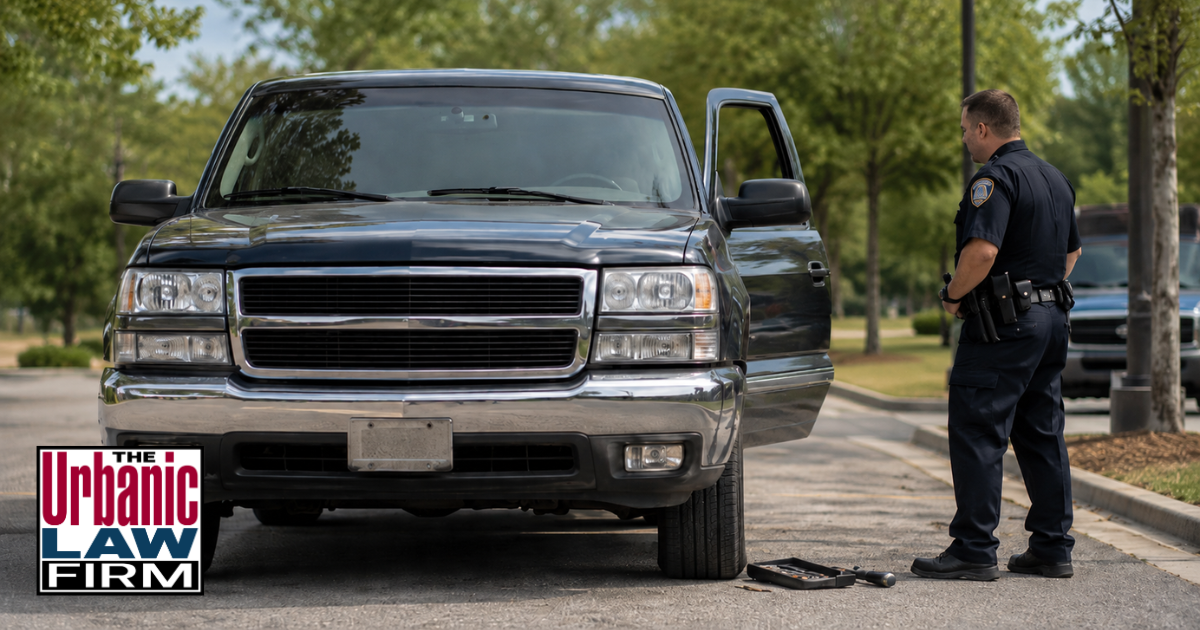 Third degree burglary, technically called burglary in the third degree, usually involves the breaking and entering of a vehicle, truck, trailer, or vessel. The accusation involves property inside it or property attached to it.
This guide is for people accused of third degree burglary in Oklahoma and trying to understand the charge, possible punishment, and defense options before court. It explains what the State must prove, where the evidence may fail, and what usually happens next.
Quick links
Talk with The Urbanic Law Firm
If you’ve been accused of third degree burglary in Oklahoma, reach out for a free consultation before making statements or decisions about the case. An Oklahoma third degree burglary defense attorney can review the vehicle evidence, alleged entry, claimed intent, and search issues.
Call us at 405-633-3420 or use our secure online form.
Is burglary in the third degree a felony in Oklahoma?
Yes. Burglary in the third degree is a felony. A first conviction carries 0–5 years in prison. The fine is up to $5,000. Prior felony convictions can raise the prison range, so your criminal history matters.
Explanation of the law
Under 21 O.S. § 1435(B), the State may allege that you broke and entered, climbed under, or used jack stands or another item to raise a vehicle. The covered property must be an automobile, truck, trailer, or vessel belonging to another person. Property must also be kept in it.
The State must connect your conduct to a prohibited intent. Prosecutors may claim you intended to steal property inside, steal property attached to the vehicle, or commit another felony. An actual completed taking isn’t always required because the alleged intent can supply that part of the charge.
The statute reaches catalytic converters, tires, and wheels. It also covers other attached property. That’s why a person found beneath a vehicle may face this charge even without entering the passenger compartment.
This offense belongs in Oklahoma’s burglary crimes guide. You can also review the broader burglary and trespass crimes group. Unlike second degree burglary, this offense focuses on vehicles and similar conveyances rather than buildings or vending machines.
Prosecutors may add related counts when one event supports several theories. Depending on the property and conduct, those counts can include petit larceny or grand larceny under 21 O.S. § 1704 and 21 O.S. § 1705. A vehicle-taking allegation may also produce unauthorized use of a vehicle under 47 O.S. § 4-102(A).
Key elements the state must prove
The exact elements depend on how prosecutors say you approached the vehicle. For the traditional break-and-enter theory, jury instruction 5-14A, identifies the core trial elements. The current statute also adds climbing-under and vehicle-raising theories.
- Prohibited conduct
- Breaking and entering the covered vehicle
- Climbing under the covered vehicle
- Using jack stands or another item to raise the covered vehicle
- Covered object
- An automobile, truck, trailer, or vessel
- The object must be of another person
- Property kept there
- Property must be kept in the automobile, truck, trailer, or vessel
- Required intent
- Intent to steal property inside
- Intent to steal property attached to it
- Intent to commit another felony
A missing element can defeat the charged theory. Presence near a vehicle doesn’t automatically prove entry or criminal intent.
Penalties
Third degree burglary is a Class D1 felony. The class appears in 21 O.S. § 20N, while 21 O.S. § 1436 supplies the fine.
- Prison
- First conviction: 0–5 years
- One or two prior Class C or Class D felony convictions: 1–7 years
- Three prior Class C or Class D felony convictions, or at least one prior Class Y, Class A, or Class B felony conviction: 2–10 years
- Fine
- Up to $5,000
- Minimum time served
- At least 20% for the first-conviction range
- At least 20% with one or two prior Class C or Class D felonies
- At least 30% with the higher prior-felony category
- Enhancement issues
- The prior convictions’ classes and number can change the sentencing range
- Review our Oklahoma sentence enhancement guide for more context
The base penalty can change sharply when prior felonies qualify. The defense should verify each prior judgment, classification, and sequence before sentencing.
Collateral consequences
The statutory penalties don’t show every risk. A felony record can affect your life long after the court case ends.
- Employment: Background checks may affect jobs involving vehicles, tools, property, cash, or customer access.
- Housing: Landlords may deny applications because of a felony property conviction.
- Professional licenses: Licensing boards may review the facts, sentence, and claimed dishonesty.
- Firearm rights: A felony conviction can restrict firearm possession under state and federal law.
- Financial obligations: The court may order restitution for stolen property, damaged windows, locks, wiring, or vehicle parts.
How prosecutors prove third degree burglary
These cases usually depend on circumstantial evidence tied to access and intent. Prosecutors often combine several sources rather than rely on one witness.
- Surveillance video: Home, business, parking-lot, dashcam, or doorbell footage may show movement around the vehicle.
- Physical evidence: Fingerprints, DNA, glass fragments, tool marks, cut wiring, or damaged locks may connect someone to the scene.
- Recovered property: Officers may rely on recently removed parts or items found in a car, home, bag, or pawn transaction.
- Digital records: Phone location data, messages, marketplace posts, and search history may support the State’s timeline.
- Statements and conduct: Prosecutors may use admissions, inconsistent explanations, flight, concealment, or alleged efforts to sell property.
Practical guide if you’re charged with this crime
What we look for first in a third degree burglary case
We start with the alleged method of access and the proof of intent. Then we compare video, property records, statements, tool evidence, and the timeline for gaps or contradictions.
Defenses
- No prohibited conduct: The evidence doesn’t prove breaking, entering, climbing under, or raising the covered vehicle.
- No criminal intent: Presence, curiosity, repair work, retrieval of your own property, or another innocent purpose can undermine intent.
- Consent or authority: Permission from the owner, possessor, employer, or authorized user can defeat an unlawful-access theory.
- Wrong person: Poor video, covered faces, similar clothing, weak eyewitness identification, or shared vehicles can create reasonable doubt.
- Suppression: An unlawful stop, search, phone seizure, interrogation, or warrant can support exclusion of key evidence.
How we fight these charges
- Preserve surveillance footage, access logs, repair records, messages, and location data before they’re lost.
- Reconstruct the scene to test visibility, lighting, camera angles, vehicle condition, and alleged points of contact.
- Test identification evidence against clothing, height, timing, vehicle records, and alternative suspects.
- Challenge intent by separating suspicious circumstances from proof of a plan to steal or commit a felony.
- Litigate unlawful searches, seizures, statements, warrants, and digital-evidence collection through targeted motions.
How The Urbanic Law Firm helps
- Explain the charge, court setting, evidence, sentencing range, and realistic choices in direct language.
- Communicate case updates, deadlines, hearing results, and next steps so you aren’t left guessing.
- Organize reports, videos, photographs, property lists, witness information, and digital records into a usable case file.
- Prepare you for court, testimony decisions, hearings, and interactions with pretrial or supervision personnel.
- Coordinate investigators, experts, subpoenas, records requests, and courtroom presentation when the case requires them.
Questions to ask your attorney
- What evidence shows the alleged access method?
- What facts does the State claim prove intent at that moment?
- Could a suppression motion remove important evidence?
- Do prior convictions change the sentencing range or minimum time served?
- What video, records, or witnesses should be preserved now?
Things you can do if you’re arrested for this crime
- Use your right to remain silent instead of trying to explain the accusation.
- Preserve texts, receipts, location history, repair records, and photographs without editing them.
- Identify witnesses who know why you were there or who had access to the vehicle.
- Avoid contacting the vehicle owner, alleged victim, or witnesses about changing their account.
- Follow release conditions and attend every court date while the defense investigates.
What happens next
A felony case usually begins with booking, an initial court appearance, and charging paperwork. A judge may address bail and release conditions. Then the prosecution provides reports, video, photographs, witness statements, and property records through discovery.
Because this offense uses state felony law, prosecutors ordinarily file it in county district court rather than an Oklahoma municipal court. City police may investigate the incident, but the district attorney generally controls the state filing.
Many felony cases include a preliminary hearing unless the right is waived. The court then addresses motions, trial settings, and other pretrial issues. An Oklahoma third degree burglary defense lawyer from The Urbanic Law Firm can guide you through each stage and explain the choices tied to your facts.
For a more detailed overview of the criminal process in Oklahoma, you can read our Oklahoma criminal process guide.
Comparison to other crimes
Classification changes the available custody range and the issues the State must prove. Related offenses carry different punishments, even when they arise from the same encounter.
| Offense | What the State focuses on | Classification and custody | Common defense issues |
|---|---|---|---|
| Third degree burglary | Breaking and entering, climbing under, or raising an automobile, truck, trailer, or vessel with prohibited intent | Felony with up to five years on a first-conviction range | No covered conduct, no intent, consent, wrong person, unlawful search |
| Unlawful entry with intent to commit a crime under 21 O.S. § 1438(A) | Entry into a building, booth, tent, warehouse, railroad car, vessel, structure, or erection without the breaking element | First conviction: misdemeanor; up to one year in county jail; fine up to $500 | Permission, no entry, no intent, mistaken location, weak identification |
| Possession of implements of burglary | Possession of listed or similar tools plus intent to break and enter a covered place and commit a felony | Misdemeanor; up to one year in county jail; fine up to $500 | Lawful tool use, no burglary intent, shared possession, unlawful search |
Key terms
Property attached thereto
Property attached to the vehicle includes, but isn’t limited to, tires, wheels, and catalytic converters. (21 O.S. § 1435(C)) Attached parts matter because the law doesn’t require entry into the passenger area when that theory applies.
Breaking
Breaking means any act of physical force, however slight, by which obstructions to entering are removed. (jury instruction 5-18) Opening a closed vehicle door or moving an obstruction may satisfy this concept.
Entering
Entering occurs when any part of a person’s body is within the named object or structure. A tool inserted inside can also count when it can complete the intended crime. (jury instruction 5-18) Camera angle and physical reach can become central issues.
Intent to steal
Intent to steal means intent permanently to deprive the person in rightful possession of property without that person’s consent. (jury instruction 5-18) The State must connect that intent to the time of the alleged access.
Of another
Of another means of any person who is in rightful possession of the property. (jury instruction 5-18) A title dispute doesn’t always decide who had rightful possession at the relevant time.
FAQs
Does Oklahoma third degree burglary require an actual theft?
No. The State can pursue the charge by claiming you had the required intent when you broke and entered, climbed under, or raised the vehicle. Evidence that nothing was taken can still help challenge intent and the prosecution’s account.
Can Oklahoma charge third degree burglary if the vehicle was unlocked?
Possibly. An unlocked door can weaken a breaking theory, but the facts still matter. Prosecutors may argue that opening a closed door removed an obstruction, or they may rely on a climbing-under or vehicle-raising theory.
Can Oklahoma charge third degree burglary for taking a catalytic converter?
Yes. Oklahoma law expressly includes catalytic converters within property attached to a vehicle. The State still must prove the covered conduct and the required intent.
What happens after an Oklahoma third degree burglary arrest?
The case usually moves through booking, an initial appearance, charging, discovery, and felony pretrial proceedings. A preliminary hearing may occur unless it’s waived. Motions and trial preparation follow if the case doesn’t resolve earlier.
Can an Oklahoma third degree burglary charge be expunged?
Sometimes. Eligibility depends on the outcome, sentence, prior record, and waiting period. Dismissed cases and some completed sentences may qualify, but felony results need close review under Oklahoma expungement law.
Important cases
Williams v. State, 1988 OK CR 221, 762 P.2d 983, held that even slight force can satisfy breaking and that opening a closed automobile door can qualify. The court also explained that an actual completed taking isn’t an element, although later possession of stolen property may support intent. The offense carried a different degree label then, but the automobile-burglary reasoning remains directly relevant.
This crime in the news
On July 5, 2023, KTUL reported that police arrested Robby Harvey at an auto lot in Tulsa, Tulsa County. Officers said they found him beneath a vehicle and located a grinder, jack, and power tools. Harvey faced seven third-degree burglary counts tied to alleged catalytic-converter incidents. The report illustrates why the law covers climbing under a vehicle and targeting attached property. An arrest or charge remains an allegation unless proven in court.
This page is for informational purposes only and is not legal advice. Every case is unique; consult an attorney about your specific situation. Law last reviewed on July 26, 2026 by attorney Frank Urbanic. Page last updated July 26, 2026. Review the statutes cited on this page for the most current version of the law.

Oklahoma Bird Law Attorneys: The Urbanic Law Firm v. Charlie Kelly

Banging More Than the Gavel! Another Judge Sex Scandal Raises Oklahoma Criminal Law Questions

Stick a fork in him! Brent Swadley convicted: Oklahoma post-trial sentencing procedure explained

When Workplace Retaliation Leads To Harm

Brent Swadley Trial Analysis: False Claims & Conspiracy to Defraud State Explained
| THIS OFFENSE IN THE NEWS |