Boat Passenger Safety Crimes Defense in Oklahoma
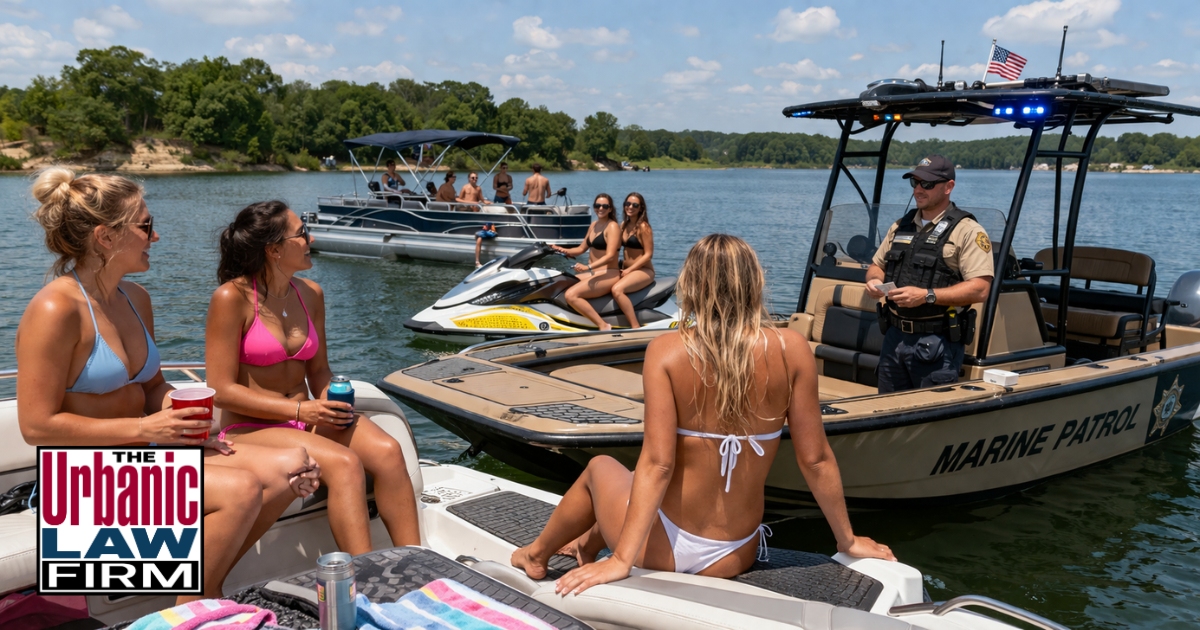 A normal lake day can turn into a criminal case when an officer says someone rode in the wrong place, ignored a diving flag, floated too far from shore, or towed a person unsafely. These cases often look minor at first. However, they can still affect your record, your license to operate safely on the water, and the way prosecutors view an accident.
This guide is for people accused of boat passenger positioning and recreational-use safety crimes in Oklahoma. It helps you understand what the State may need to prove, what the statutes cover, and what defenses may matter before you walk into court.
Quick links for this guide
Talk with a boating defense lawyer early
If you’ve been accused of boat passenger safety crimes in Oklahoma, reach out for a free consultation. The right defense can protect photos, witness names, vessel-design details, and officer notes before those details get lost.
Call us at 405-633-3420 or use our secure online form.
What counts as a boat passenger safety crime in Oklahoma?
Boat passenger safety crimes usually involve where people sit, stand, ride, dive, float, ski, parasail, or get towed on Oklahoma waters. In many cases, the State focuses on the operator’s decisions. However, the facts can turn on vessel design, speed, distance, visibility, warning equipment, and whether the officer identified the right rule.
How passenger positioning and water recreation cases work
What these offenses have in common
These offenses share a basic safety theory. They regulate risky passenger placement, missing protective features, diver-warning zones, swimmer flotation distance, and towing conduct. In addition, these cases sit inside Oklahoma’s broader boating crimes framework.
Depending on the facts, prosecutors may pair these allegations with Boating Under the Influence, negligent homicide, or attempting to elude an officer. However, each charge still needs its own proof.
Evidence that usually matters
Officers often rely on what they saw from a patrol boat, dock, shoreline, or nearby vessel. Still, distance and angle can change what an officer thinks happened. Photos, video, GPS data, vessel specifications, and witness statements can matter a lot.
For towing cases, we also look at mirrors, observers, lighting, the tow line, the rider’s path, and any event permit. For diving or floating cases, we look at measurements, shoreline distance, buoy placement, and whether the water conditions made the State’s version doubtful.
Boat passenger positioning and recreational-use safety offenses
Prohibited sitting, riding, or standing in a vessel
Prohibited sitting, riding, or standing in a vessel focuses on unsafe passenger placement while a vessel is underway. The law covers sitting or riding on the side or back of a seat while moving above idle or trolling speed. It also covers riding on a covered bow, placing an appendage outside the rail, and standing on a covered bow while moving above idle or trolling speed, with an exception for an operator on a vessel designed for standing operation (63 O.S. § 4210.6).
A defense often starts with the exact position, speed, and vessel layout. For example, a case can change if the boat was at idle speed, the person wasn’t on a covered bow, or the officer mistook a designed standing area for a prohibited position.
Failure to provide or maintain required safety rails or lines
Failure to provide or maintain required safety rails or lines applies when an operator allows someone to occupy a front or back deck while moving above idle or trolling speed without qualifying seating or access protections. The statute allows factory-installed seating. It also addresses side walkways or factory walk-through access to a flat deck when life rails, deck rails, stern rails, bow rails, or a protective enclosure rise at least twenty-four inches (63 O.S. § 4210.7).
Because this law depends on vessel design, photos can be critical. We look at factory features, rail height, deck access, seating layout, and whether the person actually occupied the deck while the vessel moved above the covered speed level.
Diving flag violations
Diving flag violations involve submerged divers and the warning markers used around them. Subsection A requires a diver’s flag or buoy to be displayed on the water during diving operations. Subsection B makes it unlawful to operate a vessel within one hundred fifty feet of a diving buoy, except when the vessel performs rescue operations (63 O.S. § 4211).
These cases often depend on distance, visibility, and what warning device was actually present. However, a rescue purpose, a disputed measurement, poor marker placement, or a mistaken identification of the operator can change the defense.
Inner tubes, air mattresses, and floating chairs too far from shore
This offense covers swimmers using inner tubes, air mattresses, floating chairs, or similar devices. The law requires those devices to stay within fifty feet from shore when a swimmer uses them (63 O.S. § 4211.1).
Distance is usually the central issue. Because lake shorelines can curve, officers may estimate from an angle. A defense may use photos, maps, shoreline markers, wind direction, current, and witness accounts to test the State’s measurement.
Improper operation of a towing vessel
Improper operation of a towing vessel covers parasailing, water skiing, and towing another person on similar devices. Subsection A addresses observers, mirrors, and personal watercraft designed for at least two people. Subsection B limits towing from sunset to sunrise and during dangerous low-visibility conditions. Subsection C provides exceptions for professional exhibitions and permitted regattas, races, marine parades, tournaments, or exhibitions. Subsection D prohibits operating, permitting operation, or manipulating the vessel, tow rope, or device so a collision occurs. Subsection E addresses remote-controlled personal watercraft, kill-switch equipment, lanyard attachment, and lighting for nighttime personal watercraft operation (63 O.S. § 4212).
These cases can be fact-heavy. For example, a defense may focus on the observer’s age, mirror placement, lighting, visibility, a permitted event, the rider’s movement, or whether the operator actually controlled the collision path.
Defense strategies for Oklahoma boat passenger safety cases
We first look for a mismatch between the officer’s description and the actual statute. Then we compare that report to the boat, the waterway, the speed, and the measurements.
- Challenge whether the cited rule fits the facts. The State must connect the conduct to the right statute and the right subsection. However, officers sometimes describe unsafe boating generally instead of proving the exact rule.
- Use vessel design and factory features. Rail height, factory seating, walk-through access, deck layout, and designed standing areas can matter. Because these details are physical, photos and manufacturer information can be powerful.
- Test speed, distance, and visibility claims. Many allegations depend on idle speed, trolling speed, shoreline distance, buoy distance, sunset, or visibility. Still, those facts often come from estimates.
- Compare officer observations with video and witnesses. Nearby passengers, dock cameras, patrol video, GPS tracks, and phone videos can contradict a short citation narrative. In addition, those sources may show safer conduct than the report suggests.
- Raise exceptions and lawful-purpose arguments. Rescue operations, permitted events, professional exhibitions, and proper equipment can change a case. Finally, the defense should force the State to address those facts.
Key terms for these boating cases
Buoy
A buoy means an anchored marker for marking a position on the water, or a hazard, shoal or mooring, or any other prohibitive activity area. This term matters when the State claims a vessel came too close to a diving area. (63 O.S. § 4201)
Diver’s flag
A diver’s flag means a red flag not less than twenty inches by twenty-four inches, with a four-inch white stripe extending from the upper corner to the diagonal lower corner, and used to indicate a submerged diver. This term shapes whether a diving-warning allegation starts with a valid warning marker. (63 O.S. § 4201)
Manipulate
Manipulate means to guide, steer, or otherwise control. This word can matter in towing cases because the State may focus on control of the vessel, tow rope, or towing device. (63 O.S. § 4201)
Personal watercraft
A personal watercraft means a vessel powered by an inboard motor powering a jet pump as its primary propulsion source and designed for a person to operate by sitting, standing, or kneeling on the vessel rather than inside it. This definition matters when a towing case involves observer rules, kill-switch equipment, lanyards, or lighting. (63 O.S. § 4201)
Willful
Willful means purposeful. It also means a willingness to commit the act or omission referred to, but it doesn’t require any intent to violate the law or acquire an advantage. This term can matter when a related officer-response allegation turns on whether your conduct was purposeful. (21 O.S. § 92 & jury instruction 4-40D)
FAQs
Is a boat passenger positioning offense a crime in Oklahoma?
Yes. Oklahoma treats several unsafe passenger-positioning and recreational-use rules as boating offenses. The exact allegation matters because each rule focuses on a specific kind of conduct.
Can Oklahoma prosecutors file more than one boating charge from the same stop?
Yes. One boating stop can lead to more than one charge. For example, the State may allege an unsafe passenger-positioning rule and a separate impairment, eluding, or accident-related offense if the facts support it.
What evidence matters most in an Oklahoma diving flag or towing case?
The most important evidence usually includes distance measurements, photos, video, witness statements, visibility, vessel speed, buoy placement, equipment, and the officer’s exact viewing angle.
Can an Oklahoma boat passenger safety charge be dismissed?
Yes, dismissal may be possible when the State can’t prove the right statute, the right subsection, the correct operator, the required distance, or the required speed. The result depends on the facts and the court.
Can an Oklahoma boat passenger safety crime be expunged?
It may be eligible for expungement depending on the charge, outcome, waiting period, and your record. The firm’s Oklahoma expungement law guide explains the basic paths for clearing a criminal record.
Recent boating report and what it shows
In a recent OKC Fox and KTUL report, Oklahoma Highway Patrol described a Lake Eufaula crash where passengers were ejected and investigators noted alcohol-related observations. For this page, the lesson is evidence. Passenger location, speed, visibility, alcohol observations, and vessel condition can all shape whether a safety citation stays limited or appears beside a more serious boating allegation.
This page is for informational purposes only and is not legal advice. Every case is unique; consult an attorney about your specific situation. Law last reviewed on May 6, 2026 by attorney Frank Urbanic. Page last updated May 6, 2026. Consult the statutes listed above for the most up-to-date law.

Legislative Payback or Public Safety? Sara Polston’s Shocking Constitutional Fight!

Tulsa’s “Serial Defecator” Case: Legal Analysis of a Messy Situation

Oklahoma Discovery Law Changes: 2026–2027 Guide

Oklahoma Domestic Abuse Law Updates Nov. 1: Five Big Changes

Oklahoma Stalking Case Reversed: When a Post Isn’t Enough
| THESE OFFENSES IN THE NEWS |