Dogfighting Crimes Defense in Oklahoma
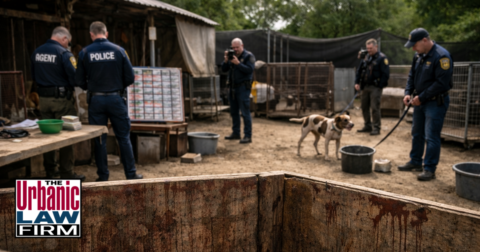 Dogfighting accusations move fast and feel overwhelming. When officers see injured dogs, betting slips, or a ring in a barn, they often assume a criminal enterprise. A dirt circle in a backyard or warehouse can suddenly become the center of a felony investigation.
Oklahoma treats organized dogfighting as a separate group of animal crimes with harsh penalties. These laws cover promoters, property owners, trainers, helpers, and even people who just watch. This guide explains how dogfighting crimes fit within broader Oklahoma animal crimes and how each statute shows up in real cases.
Because these cases often involve undercover work, long investigations, and emotional evidence, prosecutors tend to push for aggressive charges. However, the law still requires proof of specific roles and intent. When you understand how each dogfighting crime works, you can start to see where defenses may exist.
Quick links for dogfighting crimes
Use these quick links to jump to the parts of this guide that matter most to your situation.
Get help early for Oklahoma dogfighting charges
If you’ve been accused of dogfighting crimes in Oklahoma, you don’t have to face the process alone. Early legal help can reduce your exposure, protect your rights during searches, and shape how prosecutors file charges. Call us at 405-633-3420 or use our secure online form.
What dogfighting crimes have in common
Shared patterns and elements
All dogfighting crimes center on the same core concept: an illegal “dogfight” involving at least two dogs for amusement or gain. Each statute uses that definition to reach different roles, from the person who sets up the match to the person who stands in the crowd. Because the law targets a full operation, prosecutors try to link everyone on the property to that one core event.
Most of these crimes require that you acted knowingly or willfully. So the State usually tries to show planning, repeated visits, prior events, or money changing hands. When evidence only shows a one-time visit, confusion about what was happening, or innocent dog training, the prosecution’s narrative starts to weaken.
Common charging patterns and add-on counts
In many dogfighting investigations, the State doesn’t file just one count. Instead, prosecutors may stack a separate felony for each alleged role, event, or location. They might also charge related animal cruelty counts, gambling offenses, weapons crimes, conspiracy, or even child endangerment if minors were present.
Because the statutes reach property, equipment, and spectators, different people at the same scene may face different combinations of charges. For example, a landowner could face “keeping place or equipment” counts while someone running the bracket board faces “servicing or facilitating” counts. When you understand this pattern, you can see how attacking one key link in the chain can affect several charges at once.
Dogfighting crime list under Oklahoma law
Instigating or encouraging dogfight
Instigating or encouraging a dogfight is the core dogfighting offense (21 O.S. § 1694). It covers starting, provoking, or encouraging a fight between dogs for sport, betting, or entertainment. That can include organizing matches, bringing dogs to fight, or directing an attack for amusement rather than genuine protection of life or property.
Prosecutors often use this count for people they see as ring leaders or promoters. However, the State still has to prove that your actions moved the event toward an actual dogfight, not just rough play, training, or lawful protection of yourself or your property.
Keeping place, equipment, or facilities for dogfighting
Keeping a place, equipment, or facilities for dogfighting targets locations and gear used to host fights (21 O.S. § 1695). The law reaches barns, yards, sheds, or warehouses, as well as cages, pens, pits, and other structures set up for fights.
So prosecutors may try to charge property owners, tenants, or managers even when they never touch a dog. A strong defense often focuses on who actually controlled the space, how often events happened, whether the owner knew about the fights, and whether the same equipment can serve innocent uses.
Servicing or facilitating dogfight
Servicing or facilitating a dogfight reaches the support roles around a fight, not just the match itself (21 O.S. § 1696). The statute covers people who supply concessions, parking, security, timekeeping, or other services that help the event run.
Because the language is broad, prosecutors sometimes charge family members, friends, or helpers who never planned to support dogfighting at all. However, the State still needs to show that the service connected directly to a dogfight, not just to a normal gathering, cookout, or legal dog event on the same property.
Owning, possessing, keeping, or training dog for fighting
Owning, possessing, keeping, or training a dog for fighting focuses on what you do with the animal itself (21 O.S. § 1697). It targets people who breed, condition, or maintain dogs with the goal of using them in fights.
In real cases, the State might point to scars, treadmills, spring poles, or bite-work equipment as signs of fighting. A defense can highlight alternative explanations, like rescue work, behavioral rehab, protection training, or sports that don’t involve illegal fights.
Spectator at a dogfight
Spectator at a dogfight reaches people who attend or watch an illegal match (21 O.S. § 1698). The law focuses on knowing attendance, especially when someone pays admission, places bets, or stays long enough to see fights begin.
Because this offense often involves people who never touch a dog or handle money, prosecutors try to prove intent through location, timing, and what’s happening around you. A defense can focus on how you arrived, what you knew, whether you tried to leave, and whether the scene even met the legal definition of a dogfight.
Defense strategies for dogfighting charges
Not every messy scene with dogs, cash, and equipment meets Oklahoma’s strict dogfighting definitions. Because of that, several defense themes show up again and again in these cases.
- Challenge whether the event legally counts as a dogfight at all, based on how many dogs were involved, what actually happened, and whether the activity was for amusement or gain.
- Attack proof of intent and knowledge, especially for people accused of supporting, training, or spectating when they may have believed they were at a show, meetup, or training session.
- Dispute control over places and equipment by showing that you didn’t own, rent, or manage the property, or that the gear had innocent uses unrelated to fighting.
- Suppress evidence from illegal searches, raids, or surveillance when officers entered land without a valid warrant, exceeded a warrant’s scope, or relied on unreliable information.
- Expose weaknesses in informant or undercover testimony, including hidden deals, prior lies, misidentification, or pressure to exaggerate your role in the dogfighting operation.
Every case turns on details like where the dogs were kept, who handled money, and how officers entered the property. When a defense team digs into those details early, it can often narrow your exposure or position the case for dismissal, reduction, or a more realistic resolution.
Key legal terms in dogfighting cases
Dogfight
Dogfight means any fight between two or more dogs, with or without an audience, and with or without wagering. The fight is an exhibition for amusement or gain and isn’t recognized or sanctioned by any agency or association chartered to organize or regulate animal shows or contests. (21 O.S. § 1693)
Equipment used to stage a dogfight
Equipment used to stage a dogfight includes any pen, pit, cage, or other structure built or adapted to hold dogs or spectators during a fight. It also includes materials or tools intended to construct, maintain, or repair those structures for dogfighting events. (21 O.S. § 1693)
Equipment used to promote or advertise a dogfight
Equipment used to promote or advertise a dogfight includes printing equipment, paper, ink, photography equipment, and similar items intended for making or distributing announcements or ads for a dogfight. It also includes equipment used to transport those promotional items. (21 O.S. § 1693)
Fighting dog
Fighting dog includes any dog trained, being trained, or intended to be used in dogfighting. The term covers dogs kept for matches, practice sessions, or exhibitions that fall within the legal definition of a dogfight. (21 O.S. § 1693)
Knowingly
Knowingly means being personally aware of the facts of the act or situation. It describes a state of mind where someone understands what they’re doing and the circumstances around it, not just being present. (21 O.S. § 96 & jury instruction 6-49)
Dogfighting crimes FAQs
What counts as a dogfighting crime in Oklahoma?
In Oklahoma, dogfighting crimes include starting or encouraging a dogfight, keeping a place or equipment for fights, servicing or facilitating events, training dogs to fight, and knowingly watching a fight. The statutes focus on organized activity done for amusement, gain, or gambling. So a key question is whether the State can prove a legally defined “dogfight” and connect you to it in a specific role.
Is watching a dogfight in Oklahoma always a felony?
Watching a dogfight in Oklahoma is a separate offense for spectators. However, spectator cases don’t always carry the same level of punishment as core promotion or training felonies. Courts still look at what you knew, how you got there, whether you paid to enter, and whether the event met the legal definition of a dogfight. Those details often shape both the charge and the negotiation range.
How do Oklahoma prosecutors try to prove someone owned or trained a fighting dog?
Oklahoma prosecutors often rely on physical signs like scars, medical records, or specialized conditioning equipment to argue that a dog was kept or trained for fighting. They may also point to messages, videos, or statements about matches or winnings. Because many tools overlap with sports training or rescue work, a defense can highlight legitimate reasons for the dog’s condition and the equipment on site.
Can police search rural property for suspected dogfighting in Oklahoma without a warrant?
Officers in Oklahoma usually need a warrant to search homes, fenced yards, and many rural structures. However, they sometimes claim exceptions, such as consent, exigent circumstances, or open-fields doctrine. Whether a search was legal depends on where they went, what they saw from public areas, and what they knew before entering. If a court finds the search illegal, key evidence can be excluded.
What defenses often help in Oklahoma dogfighting cases?
Helpful defenses in Oklahoma dogfighting cases usually focus on intent, knowledge, and the definition of a dogfight. Lawyers may argue that dogs were being trained for legal sports or protection, not matches for gain. They may challenge whether the accused controlled the property or equipment. They also often attack unreliable informants, flawed warrants, and gaps in how officers tied each person to the alleged event.
This page is for informational purposes only and is not legal advice. Every case is unique; consult an attorney about your specific situation. Page last updated March 9, 2026. Consult the statutes listed above for the most up-to-date law.