Oklahoma Hunting & Wildlife Crimes Defense
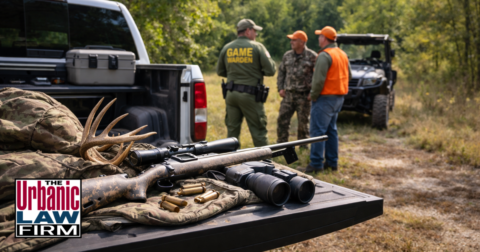 Oklahoma hunting and wildlife crimes cover much more than classic poaching cases. These charges can start with a spotlight on a county road, a shot fired across a right-of-way, a deer taken on the wrong land, a trap set in the wrong place, or fish taken with a banned method. They can also start with what officers find later, like a carcass, antlers, a mount, feathers, fish eggs, a freezer full of meat, or a truck and rifle tied to the scene.
Because these cases often grow out of field stops and seized property, they can escalate fast. A simple wildlife count can turn into a bigger fight over consent, land boundaries, identity, equipment, and what you actually intended to do. So, if you’re facing this kind of allegation, you need to know how Oklahoma treats these cases and where the weak points usually are.
Quick links
- How these cases usually work
- Get legal help early
- Crime groups in this category
- Hunting trespass, road hunting, and interference
- Unlawful hunting methods and spotlighting
- Big-game, trophy, and waste-of-wildlife cases
- Fishing, paddlefish, and aquatic-wildlife cases
- Wildlife possession, sale, and commercial wildlife cases
- Small-game, bird, and furbearer season cases
- Protected-species cases
- Defense strategies for these cases
- Key terms
- FAQs
Talk to an Oklahoma criminal defense lawyer early
If you’ve been accused of Oklahoma hunting & wildlife crimes in Oklahoma, reach out for a free consultation as early as you can. Early action can matter because officers may seize property, photograph evidence, collect statements, and start paperwork that affects licenses, equipment, and later charges.
Call us at 405-633-3420 or use our secure online form.
How Oklahoma hunting and wildlife cases usually work
Common ways these cases begin
Most of these cases begin in the field. A game warden, sheriff, deputy, or landowner sees a truck on a section line, a light sweeping a pasture, a shot fired from a road, a boat in closed water, or people crossing onto private land. In other cases, the investigation starts later. Officers may follow up after a complaint, a social-media post, a taxidermy issue, a freezer search, or a tip about wildlife being sold or traded.
These charges also tend to involve real-world details, not just a citation. Officers often focus on where you were, who had permission, what time it was, what weapon or device was used, what animal or fish was involved, and what was found in the truck, ATV, boat, trailer, cooler, or camp. Because of that, small facts can decide the whole case.
What evidence usually matters
Evidence in these cases is often physical and location-based. That can include shell casings, firearms, spotlights, laser devices, traps, nets, fish eggs, hides, antlers, mounts, freezers, tags, licenses, GPS data, phone photos, trail cameras, and maps that show property lines, roads, rights-of-way, or closed-water boundaries. Landowner statements also matter. So do officer observations about time of day, the direction of shots, and whether the animal, fish, or gear was lawfully possessed.
Because these cases often depend on proof drawn from the scene, prosecutors may also rely hard on circumstantial evidence. They may try to connect you to the act through a vehicle, a light, a boat, a carcass, or the location of your gear. However, that kind of proof still has to link you to the charged conduct in a reliable way.
What these charges usually have in common
At a high level, these cases usually revolve around method, place, season, species, and possession. The State often claims you took or tried to take wildlife in a forbidden way, in a forbidden place, during the wrong season, involving the wrong species, or while possessing wildlife that was not lawfully taken. Some statutes also turn on whether the conduct was knowing, willful, or intentional. That can create real room to fight the charge.
These cases also overlap with other counts more often than people expect. A wildlife case can sit next to trespass allegations, road-related firearm allegations, obstruction issues, or separate possession and sale counts. In addition, some cases bring seizure fights over guns, lights, traps, boats, trucks, meat, antlers, mounted trophies, or licenses. So the case is often bigger than the ticket itself.
Crime groups in Oklahoma hunting and wildlife cases
Hunting trespass, road hunting, and interference
This is one of the most common entry points into an Oklahoma hunting and wildlife case. It usually starts with a claim that you crossed onto someone else’s land without permission, fired from or across a road, or disrupted someone else’s lawful hunt. Those issues line up with hunting on another person’s land without consent under 29 O.S. § 5-202(A), shooting from or across a road, highway, or railroad right-of-way under 29 O.S. § 5-204, and obstructing lawful shooting, hunting, fishing, or trapping under 29 O.S. § 5-212.
These cases often turn on boundaries, consent, and location. Was the land clearly marked? Did you actually know where the line was? Were you on a public road, a right-of-way, or private ground? Did the landowner give permission, and if so, to whom? Because these facts can get messy fast, this group often rises or falls on maps, signage, witness credibility, and where officers say you were standing or driving.
Unlawful hunting methods and spotlighting
Another common group centers on how wildlife was being taken or pursued. In practical terms, that can mean using a banned method under 29 O.S. § 5-201, using artificial light or hunting at night or with a motor-driven conveyance under 29 O.S. § 5-203.1, or using a device that puts or reflects a beam of light onto wildlife under 29 O.S. § 5-203.2. These are the cases people often describe as spotlighting, headlighting, or road-side night hunting.
Because method cases move fast, officers usually focus on what they saw and what they seized. They may tie a person to a truck, spotlight, rifle, laser device, or trail route and argue that the setup itself proves unlawful intent. However, that is not always enough. The defense may come down to identity, whether wildlife was actually illuminated or pursued, whether an exception applies, or whether the officer’s observations support the full accusation.
Big-game, trophy, and waste-of-wildlife cases
These are the cases that often feel the most serious to the accused because the consequences can hit both reputation and property. They usually involve unlawful taking, possession, purchase, or sale of major game animals under 29 O.S. § 5-411, seizure issues tied to mounted specimens and trophies under 29 O.S. § 5-413, or claims that a person took only the trophy part and abandoned the rest, wasted the animal, or failed to dispose of the body properly under 29 O.S. § 7-205(A)–(E).
These cases often depend on what officers found after the fact. Meat, antlers, hides, taxidermy pieces, photos, tags, transport records, and statements can all become central proof. So can evidence about where the animal was taken and what parts were removed. Because the State may also seek seizure of gear or raise license consequences, these cases often need a defense that looks beyond the charge itself and addresses the property side of the case too.
Fishing, paddlefish, and aquatic-wildlife cases
This group covers allegations that fish or aquatic wildlife were taken in a forbidden way or from the wrong place. Common examples include prohibited methods of taking fish under 29 O.S. § 6-301, taking fish by poison, explosives, or electricity under 29 O.S. § 6-301a, and paddlefish product offenses under 29 O.S. § 6-303.1. In real life, these cases may also involve closed waters, blocked fish movement, commercial-minnow issues, or extra counts based on what was found during transport or storage.
These cases can be technical. The fight may center on what method was actually used, whether the water was lawfully open, whether the product was raw or processed, who possessed it, and whether the amount or condition matched the statute. Because aquatic cases often involve boats, coolers, containers, and product handling, chain-of-custody and identification issues can matter more than people expect.
Wildlife possession, sale, and commercial wildlife cases
Some Oklahoma hunting and wildlife cases are not about the original taking at all. Instead, they focus on what happened afterward. That includes unlawful possession, buying, bartering, trading, or selling protected fish or wildlife under 29 O.S. § 7-503 and importation, sale, or possession for sale of certain wild-bird parts under 29 O.S. § 7-504. These cases can reach hunters, sellers, buyers, transporters, and anyone accused of knowingly holding onto protected wildlife that was not lawfully obtained.
Because this group often involves possession rather than an in-the-field stop, the State may rely on what was found in homes, freezers, shops, vehicles, or business records. Officers may also use photos, messages, or social-media posts to suggest a sale or trade. So the defense often turns on lawful origin, actual possession, who controlled the property, and whether the State can prove a commercial or sale-related purpose instead of mere proximity.
Small-game, bird, and furbearer season cases
This group usually involves timing, species, and allowed methods. Common examples include furbearer-season and related fur-animal rules under 29 O.S. § 5-405, migratory-bird violations under 29 O.S. § 5-406, and quail hunting restrictions under 29 O.S. § 5-407. In day-to-day enforcement, these cases often come down to whether the animal involved fits the regulated class, whether the season was open, and whether the person used the right equipment during the right hours.
These cases may look minor at first, but they still require proof. Officers must connect the person, the species, the season, and the method. Because many small-game and bird cases involve split-second observations in open country, the defense may focus on identification, distance, legal method, and whether the officer can prove the specific regulated conduct instead of just suspicious circumstances.
Protected-species cases
This group covers wildlife that Oklahoma treats with extra protection. In practice, that includes taking or destroying nests or eggs of game birds under 29 O.S. § 5-207, harming or molesting hawks, falcons, owls, or eagles under 29 O.S. § 5-410, and taking, chasing, harassing, capturing, trapping, or killing endangered or threatened species without written permission under 29 O.S. § 5-412. These charges usually do not depend on whether the animal had trophy value. They depend on the protected status of the species or related nest, egg, or young.
Because protected-species cases often use words like knowingly, willfully, or harass, intent and proof matter. The State still has to show what species was involved and what the accused actually did. In some cases, species identification, lawful authority, and officer interpretation become the main fight. That is especially true when the conduct happened fast or the evidence comes from a distance, a photo, or a follow-up report instead of a direct seizure at the scene.
Defense strategies for these types of cases
- Challenge the location. Many cases depend on exact property lines, road status, right-of-way limits, or whether the water or land was actually closed, public, private, or posted.
- Contest consent issues. A landowner dispute is not always a criminal trespass case. Permission, custom, prior access, and unclear boundaries can change the analysis.
- Attack identity. Officers may know a truck, a boat, or a camp was present. That does not always prove who fired, trapped, illuminated, possessed, or sold the wildlife.
- Question the method proof. The State must prove the banned method it charged. Suspicion about a light, weapon, trap, or net is not the same as proof of the full offense.
- Test species and possession proof. Species identification, lawful origin, control over the property, and chain of custody can all matter in possession and sale cases.
- Raise permits, exceptions, and lawful authority. Some cases turn on written permission, licensing status, lawful transport, season exceptions, or specific authorization from wildlife officials.
- Suppress illegally obtained evidence. Stops, searches, seizures, and statements still have constitutional limits, even in outdoor and game-warden investigations.
Key terms
Fishing
Fishing means taking, killing, capturing, snagging, or attempting to take, kill, capture, or snag fish of any species by any means. That matters because a fishing case does not always require proof that you successfully kept fish if the State says you were already trying to take them in a prohibited way. (29 O.S. § 2-110)
Furbearer
Furbearer means any wild animal hunted primarily for its fur, including badger, beaver, bobcat, gray fox, red fox, mink, muskrat, opossum, otter, raccoon, ringtailed cat, striped skunk, and weasel. This term can control whether the State places an animal inside a furbearer season or trapping rule in the first place. (29 O.S. § 2-111)
Public road
Public road means any road or highway open to vehicular travel and maintained by the state, county, or any city. That definition is important when the accusation is that a shot was fired from or across a road or right-of-way. (29 O.S. § 2-133.1)
Laser sighting device
Laser sighting device means any artificial light of any form that casts or reflects a beam of light onto or otherwise illuminates wildlife. That term matters in spotlighting and night-hunting cases because the State often focuses on what the light did, not on what the device was called. (29 O.S. § 5-203.2(C))
Corroborating evidence
Corroborating evidence is supplementary evidence which tends to connect the defendant with the commission of the crime charged. In wildlife cases, prosecutors often try to use tracks, tags, shell casings, trail-camera images, maps, coolers, or location data as that extra link. (jury instruction 9-27)
FAQs about Oklahoma hunting and wildlife charges
What counts as an Oklahoma hunting and wildlife crime?
An Oklahoma hunting and wildlife crime can involve where you hunted, how you hunted, what species was involved, whether the season was open, whether the landowner consented, or whether wildlife was later possessed, transported, traded, or sold unlawfully.
Can an Oklahoma hunting and wildlife case be more than a ticket?
Yes. Some Oklahoma hunting and wildlife cases stay small, but others can bring misdemeanor or felony exposure, property seizure fights, and license problems that matter long after the court date.
Does permission matter in Oklahoma hunting cases?
Yes. In many Oklahoma hunting cases, permission is a central fact. A dispute over who gave consent, what land was covered, and where the boundary actually sat can change the whole case.
Do Oklahoma wildlife cases turn on proof of intent?
Often, yes. Some Oklahoma wildlife charges focus on knowing, willful, or intentional conduct, while others focus more on place, method, season, or possession. That is why the exact statute matters.
What evidence matters most in an Oklahoma wildlife case?
The most important evidence in an Oklahoma wildlife case usually includes location proof, officer observations, physical evidence from the scene, seized gear or wildlife, ownership or permission records, and any statements made during the stop or follow-up investigation.
This page is for informational purposes only and is not legal advice. Every case is unique; consult an attorney about your specific situation. Page last updated March 24, 2026. Consult the statutes listed above for the most up-to-date law.