Obstructing an Officer in Oklahoma: Law, Penalties, & Defenses
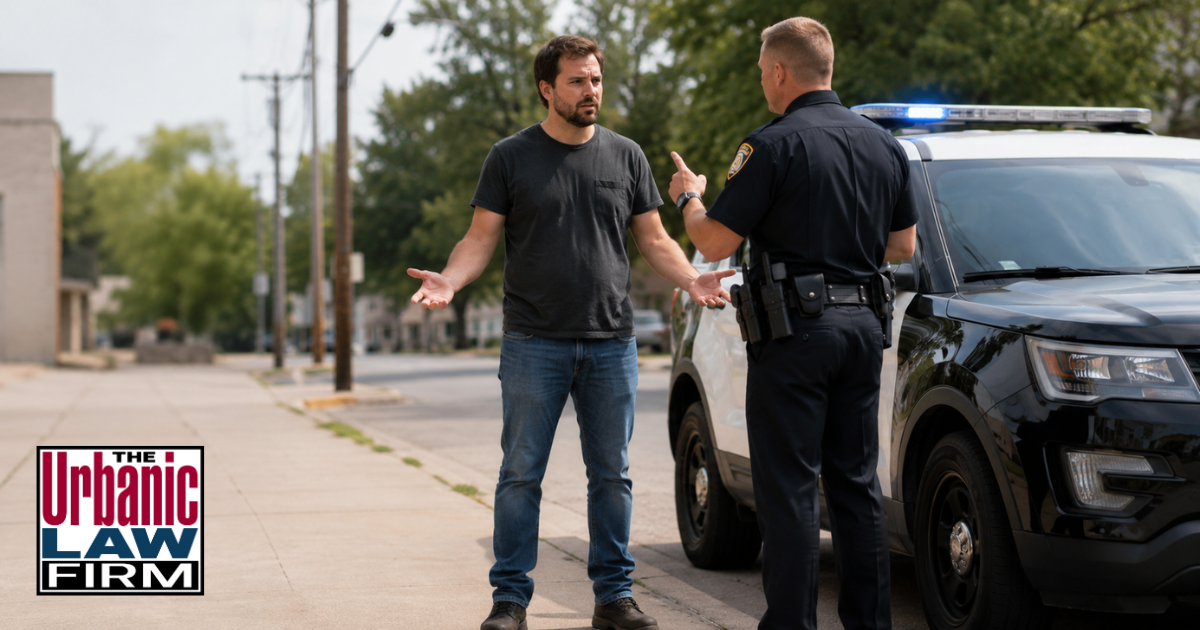 An obstructing an officer accusation often begins during a tense stop, arrest, welfare check, or investigation. Police may claim that your words, movement, delay, recording, or refusal to cooperate interfered with an official duty. However, disagreement alone doesn’t automatically prove this charge.
This guide is for people accused of obstructing an officer in Oklahoma and trying to understand the charge, possible punishment, and defense options before court.
Quick links
- What is obstructing an officer in Oklahoma?
- Key elements the state must prove
- Penalties for obstructing an officer in Oklahoma
- Collateral consequences
- How prosecutors prove obstructing an officer
- Practical guide if you’re charged with this crime
- What happens next
- Obstructing an officer compared with related Oklahoma charges
- Key terms
- FAQs
- Important cases
- Example of this crime in the news
Talk with The Urbanic Law Firm
Early review can preserve video, identify witnesses, and prevent avoidable mistakes. If you’ve been accused of obstructing an officer in Oklahoma, reach out for a free consultation with an Oklahoma obstructing an officer defense attorney.
Call us at 405-633-3420 or use our secure online form.
Can words alone count as obstructing an officer?
Yes, words alone can support an allegation, but speech isn’t automatically obstruction. Prosecutors must connect what you said to an actual delay or obstruction of an official duty. Criticism, questions, silence, or refusing consent shouldn’t become criminal merely because an officer disliked the response.
What is obstructing an officer in Oklahoma?
The law targets willful conduct that delays or obstructs a public officer who’s performing, or trying to perform, an official duty. 21 O.S. § 540 makes that conduct a misdemeanor.
The law protects public recording of law enforcement. You may record officers in a public area, as long as the recording activity doesn’t delay or obstruct their duties. So, the camera itself isn’t the offense. Instead, the State must focus on conduct that allegedly interfered with the officer’s work.
Obstruction doesn’t require physical contact. The State must prove more than annoyance or noncompliance. Specifically, it must show a willful act or omission that actually hindered an identified duty.
This charge often appears beside resisting arrest, eluding an officer, or assault and battery upon a police officer. Importantly, those counts involve different conduct and proof. Police sometimes add obstruction during an underage possession, purchase, or social-host case or another alcohol-related allegation.
This accusation appears under city ordinances in municipal court. Examples include Tulsa, Edmond, Norman, and Midwest City. However, a city ordinance may use different wording or sentencing limits.
Key elements the state must prove
The prosecution must prove a willful obstruction of a known public officer during an official duty. Under jury instruction 6-48, the required elements are:
- Willfully: You acted with a purpose or willingness to do the alleged act or omission.
- Delay or obstruction: Your conduct delayed or obstructed the officer, rather than merely frustrating or upsetting the officer.
- A specified public officer: Specifically, the State must identify the public officer involved.
- Knowledge of status: You knew the person was the specified public officer.
- Official duty: The officer was discharging, or attempting to discharge, a duty of the office.
No physical force is required. The dispute often centers on context, timing, knowledge, and whether the officer’s task was truly delayed.
Penalties for obstructing an officer in Oklahoma
A state-law conviction is a misdemeanor. Because the offense statute doesn’t state its own jail or fine range, Oklahoma’s general misdemeanor rule controls.
- Jail
- 0–1 year in county jail under 21 O.S. § 10
- Fine
- $0–$500
- Court costs and conditions
- Additional court costs, assessments, and case-specific conditions may apply
- City-ordinance cases
- The ordinance and city code control the available jail and fine limits
These penalties apply to a state-law filing. Municipal charges may have different penalties.
Collateral consequences
A misdemeanor conviction can affect much more than the sentence. As a result, a collateral penalty may continue after the court case ends.
- Employment: For example, background checks may show a conviction involving alleged interference with law enforcement.
- Professional licensing: Also, a licensing board may ask for records, explanations, or proof of rehabilitation.
- Security-sensitive work: Military, government, aviation, and clearance-related employers may review the incident closely.
- School and housing: Applications may require disclosure, depending on the question asked and the record’s status.
- Immigration: Noncitizens should get advice about how the facts and final disposition may affect immigration status.
How prosecutors prove obstructing an officer
Most cases turn on recordings, timing, and the officer’s description of the interrupted duty. Prosecutors commonly rely on:
- Officer testimony and reports: The officer explains the duty, your alleged conduct, and the claimed delay.
- Body-camera and dash-camera video: Recordings may show commands, tone, movement, distance, and elapsed time.
- Dispatch records: Radio traffic, call logs, and timestamps can show what officers were doing and when.
- Witness accounts: Bystanders may confirm or contradict the officer’s version.
- Your statements: Prosecutors may use admissions, explanations, texts, posts, or recorded comments to argue willfulness and knowledge.
Practical guide if you’re charged with this crime
The defense should begin with the exact conduct, duty, timeline, and available recordings. Broad accusations often become more precise once the evidence is reviewed.
What we look for first in an obstructing-an-officer case
First, we identify what the officer was trying to do and how your conduct allegedly delayed that task. Then, we compare the report with video, dispatch records, witnesses, and the actual timeline.
Defenses
- Lack of willful conduct: Confusion, panic, physical limitations, language barriers, or an unclear command may defeat the required mental state.
- No actual delay or obstruction: Mere disagreement, criticism, or refusal to consent may not have hindered any official duty.
- Missing official duty: The State may fail to show what duty the officer was performing or attempting to perform.
- Unknown officer status: Plain clothes, poor lighting, an unmarked vehicle, or a chaotic scene may create a real knowledge issue.
- Protected recording or speech: Public recording remains lawful unless the recording activity itself creates the delay or obstruction.
How we fight these charges
- Secure body-camera, dash-camera, surveillance, cellphone, and dispatch evidence before it disappears.
- Reconstruct the sequence of commands, responses, pauses, and officer actions second by second.
- Compare reports with recordings and witness accounts to expose omissions or contradictions.
- Challenge statements obtained without required warnings or through coercive questioning when suppression law applies.
- Prepare focused cross-examination showing that the claimed duty continued without meaningful interference.
How The Urbanic Law Firm helps
- Explain the charge, court schedule, likely evidence, and available paths in clear terms.
- Collect records, videos, photographs, messages, and witness information tied to the incident.
- Coordinate communication so you know what the court requires and what information the defense still needs.
- Prepare you for hearings, testimony decisions, court expectations, and possible outcomes.
- Update you as evidence arrives, motions develop, and the case moves toward resolution or trial.
Questions to ask your attorney
- Which specific act or statement does the prosecution claim caused the obstruction?
- What official duty does the officer claim was delayed?
- Have all body-camera, dispatch, surveillance, and bystander recordings been preserved?
- Could any statement or seized evidence be excluded?
- How could each possible disposition affect my record, work, license, or immigration status?
Things you can do if you’re arrested for this crime
- Stay calm and use your right to remain silent after providing any information the law requires in that setting.
- Don’t post, message witnesses, or argue about the incident online.
- Preserve videos, photos, call logs, receipts, and names of everyone who saw the encounter.
- Follow every court date and bond condition.
- Write a private timeline for your attorney while the details remain fresh.
What happens next
Usually, your case begins with a citation, arrest, booking, or notice to appear. Next, the court advises you of the charge and sets future dates. Then, the defense requests reports, video, dispatch records, witness information, and other discovery.
After review, the defense may file motions, challenge statements, or prepare for trial. Depending on the facts and your record, a final outcome may include dismissal, acquittal, a deferred sentence, a suspended sentence, or probation.
Available punishments depend on the filing court, the final disposition, and case-specific facts. For a more detailed overview of the criminal process in Oklahoma, you can read more in our Oklahoma criminal process guide.
Obstructing an officer compared with related Oklahoma charges
| Offense | Core conduct | State of mind | Typical setting | Classification and exposure | Common defense issue |
|---|---|---|---|---|---|
| Obstructing an officer | Delaying or obstructing a known public officer who’s performing or attempting an official duty | Willfully | Stops, arrests, investigations, scene control, questioning, or public recording | Misdemeanor with 0–1 year in county jail and $0–$500 | No actual delay, no willful act, no knowledge of officer status, or protected recording |
| Resisting arrest (21 O.S. § 268) | Using force or violence to resist an executive officer who’s performing a duty | Knowingly | Handcuffing, physical restraint, removal from a vehicle, or active struggle | Misdemeanor with 0–1 year in county jail and $0–$500 | Whether movement was force or violence rather than reflex, balance loss, or confusion |
| Eluding an officer (21 O.S. § 540A) | Driving after an officer gives the required visual and audible signal and attempting to get away | Willfully | Vehicle stops and pursuits | The basic version is a misdemeanor while more serious versions of that same offense are felonies | Signal visibility, siren use, driver identity, knowledge, or a safe-place stop |
Key terms
Peace officer
A peace officer means a sheriff, police officer, federal law enforcement officer, tribal law enforcement officer, or another law enforcement officer whose duty is to enforce and preserve the public peace. (21 O.S. § 99) A uniform, badge, marked vehicle, verbal identification, or the surrounding circumstances may show that you knew the person was an officer.
Executive officer
An executive officer is an officer in the executive branch of government. (jury instruction 6-49) That definition helps distinguish the related resisting offense from the broader public-officer language used for obstruction.
Resisting
Resisting means opposing actively, withstanding, or exerting oneself firmly against a proposed action. (jury instruction 6-49) Active resistance requires more than the delay-or-obstruction concept used on this page.
FAQs
How much jail can I get for obstructing an officer in Oklahoma?
Generally, a state-law conviction can carry 0–1 year in county jail and a $0–$500 fine. A municipal ordinance may use different limits, so you must check the exact charge and court.
Can I record police without committing obstructing an officer in Oklahoma?
Yes. Oklahoma law protects recording law-enforcement activity in a public area, as long as the recording activity doesn’t delay or obstruct the officer’s duties.
Is refusing consent to a search obstructing an officer in Oklahoma?
Not by itself. A lawful refusal of consent doesn’t automatically delay or obstruct an official duty. However, separate conduct during the encounter may still become the focus of the charge.
Can an obstructing an officer charge in Oklahoma be dismissed when the command was unclear?
It can be a strong defense issue. An unclear, contradictory, or unheard command may undermine willfulness, knowledge, or proof that you caused an actual delay.
Can an obstructing an officer charge in Oklahoma be expunged?
Possibly. Eligibility depends on the outcome, your record, pending cases, and the applicable waiting period. Review our Oklahoma expungement guide for the main pathways.
Important cases
Oklahoma appellate decisions show that words can qualify, but the State still needs proof of willful interference with an officer’s duty.
Trent v. State, 1989 OK CR 36, 777 P.2d 401, upheld a conviction where repeated angry interference hindered a trooper’s vehicle-removal work and delayed alcohol testing. The case also explains that physical force isn’t required.
Marsh v. State, 1988 OK CR 206, 761 P.2d 915, upheld a conviction based on a false statement that impeded a police investigation. The court focused on willfulness, actual delay or obstruction, the officer, and the officer’s duty.
Example of this crime in the news
A July 20, 2026 report shows how prosecutors may treat alleged informational interference as obstruction. KTUL reported that police arrested Matthew Puza in Tulsa, Tulsa County. According to the report, officers alleged that he refused to provide information about himself during their investigation. The report illustrates why the defense must examine whether the alleged response actually delayed an identified duty, rather than merely frustrating investigators.
This page is for informational purposes only and is not legal advice. Every case is unique; consult an attorney about your specific situation. Law last reviewed on July 25, 2026 by attorney Frank Urbanic. Page last updated July 25, 2026. Review the statutes cited on this page for the most current version of the law.

Legislative Payback or Public Safety? Sara Polston’s Shocking Constitutional Fight!

Tulsa’s “Serial Defecator” Case: Legal Analysis of a Messy Situation

Oklahoma Discovery Law Changes: 2026–2027 Guide
Oklahoma Domestic Abuse Law Updates Nov. 1: Five Big Changes

Oklahoma Stalking Case Reversed: When a Post Isn’t Enough
| THIS OFFENSE IN THE NEWS |