Protected-species hunting violations crimes defense in Oklahoma
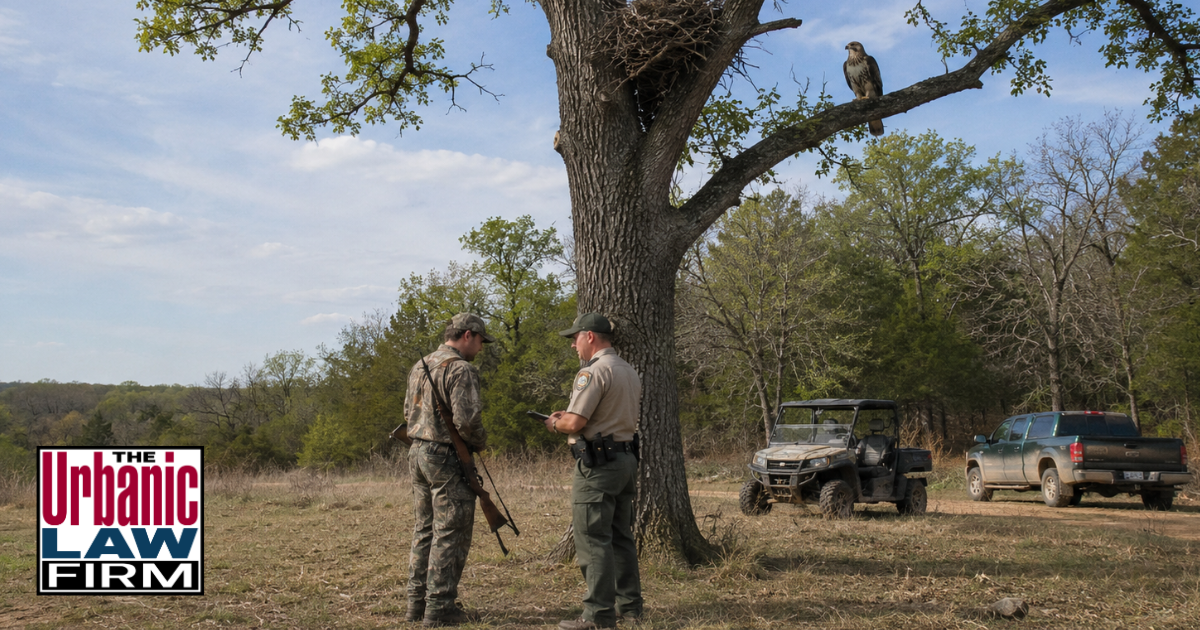 Protected-species hunting violations in Oklahoma involve wildlife the law treats differently because of species status, nesting protection, season rules, bag limits, permission requirements, or special restrictions on birds and mammals. These cases may begin as a game warden contact, traffic stop, property complaint, social media post, taxidermy issue, or field investigation.
This guide is for people accused of these types of crimes in Oklahoma who are trying to understand what the State may claim was protected, what permission or season rules may matter, what evidence game wardens may use, and what defenses may apply. A wildlife citation can become more serious when the State alleges multiple animals, nests, eggs, weapons, trespass, unlawful methods, false statements, or other related counts.
Talk to an Oklahoma wildlife-crimes defense lawyer
If you’ve been accused of protected-species hunting crimes in Oklahoma, reach out for a free consultation. The Urbanic Law Firm can review the citation, report, photographs, officer notes, body-camera footage, license records, season rules, and any claimed animal-identification evidence.
Call us at 405-633-3420 or use our secure online form.
What counts as a protected species hunting violation in Oklahoma?
A protected species hunting violation can involve taking, possessing, injuring, killing, harassing, trapping, shooting at, or disturbing wildlife that Oklahoma law protects by species, season, nest, egg, bag limit, or written-permission requirement. The key issues usually include what species was involved, whether the animal was actually protected under the charged law, whether the conduct was intentional or knowing when required, whether an exception applies, and whether the officer can prove the alleged act beyond a reasonable doubt.
How protected-species hunting cases work
These cases often turn on identification and context. The State may rely on photographs, carcasses, feathers, nests, eggs, taxidermy items, GPS data, trail cameras, social media posts, hunting licenses, tag records, witness statements, or a game warden’s field observations. A defense starts by separating what the officer actually saw from what was later assumed.
Protected-species hunting charges can be filed with related counts such as unlawful possession of wildlife, hunting out of season, exceeding bag limits, hunting without a license, trespass, unlawful methods, obstruction, false information, drug charges from an unrelated stop, or firearm-related counts. For a broader look at Oklahoma hunting and wildlife offenses, see our Oklahoma hunting and wildlife crimes guide.
The same facts can also raise civil, administrative, restitution, license, or forfeiture concerns. That means the defense should look beyond the ticket and examine whether the government can prove the animal, location, season, mental state, possession theory, chain of custody, and any claimed confession.
Crimes in this group
Taking or destroying nests or eggs of game birds
Taking or destroying nests or eggs of game birds is aimed at conduct involving the nest or eggs of a game bird, not just the bird itself. Oklahoma law makes it unlawful, except as specifically permitted, to willfully and intentionally take or destroy the nest or eggs of any game bird at any time (29 O.S. § 5-207).
A defense may focus on whether the item was actually a game bird nest or egg, whether the accused person acted willfully and intentionally, whether the person knew what was being disturbed, whether the conduct was accidental, and whether any permission or lawful activity explains what happened. These cases may involve landowner activity, farm work, brush clearing, hunting preparation, or an officer’s interpretation of what was found in the field.
Squirrel violations
Squirrel violations can involve season, bag-limit, possession-limit, and den-tree issues. Oklahoma law limits squirrel possession after the second day’s hunt, provides that squirrel season dates and bag limits are set by the Wildlife Conservation Commission, and prohibits cutting or removing a tree that is being used as a squirrel den or nest unless the person has specific permission from the owner or lessee of the land (29 O.S. § 5-409).
The defense may examine the number of squirrels, whether they were taken during a lawful season, whether possession was tied to more than one person, whether the State can prove when the squirrels were taken, and whether the tree at issue was actually a den or nest tree. If the allegation involves land access or tree removal, written permission, lease status, and the identity of the landowner can become important.
Hawks, falcons, owls, and eagles violations
Hawks, falcons, owls, and eagles violations focus on raptors, their nests, their eggs, and their young. Oklahoma law prohibits a person from knowingly and willfully, by device, molesting, injuring, or killing any species of hawk, falcon, owl, or eagle, or their nests, eggs, or young, subject to listed exceptions (29 O.S. § 5-410).
This type of case may turn on whether the bird was correctly identified, whether the accused person knowingly and willfully caused the injury, whether a device was involved, whether the alleged conduct involved a protected nest, egg, or young bird, and whether a statutory exception applies. Falconry, livestock, domestic fowl, predator-control claims, and federal-law issues can also affect how the evidence should be evaluated.
Endangered or threatened species violations
Endangered or threatened species violations are among the broadest protected-wildlife charges in this group. Except as otherwise provided, Oklahoma law prohibits possessing, hunting, chasing, harassing, capturing, shooting at, wounding, killing, taking, attempting to take, trapping, or attempting to trap endangered or threatened species or subspecies without specific written permission of the Director, and that permission cannot conflict with federal law (29 O.S. § 5-412).
A defense may focus on the species identification, the exact conduct alleged, whether the animal was actually endangered or threatened under the applicable list, whether written permission existed, whether the accused person merely encountered the animal rather than took or harassed it, and whether federal or state rules have been correctly applied. Because this law includes attempts and several different action verbs, the charging language matters.
Defense strategies for protected species hunting cases in Oklahoma
When The Urbanic Law Firm defends these cases, we first look at the citation language, the exact statute charged, the species proof, the officer’s observations, the client’s statements, photos or seized items, license and permission records, the season and bag rules, and whether the evidence was lawfully obtained. The goal is to identify weak assumptions before they become the foundation of the case.
- Challenge the species identification. The State must connect the alleged animal, bird, egg, nest, or remains to the law being charged.
- Attack the required mental state. Some offenses require proof that the conduct was willful, intentional, knowing, or willful and knowing, which can be very different from an accident or misunderstanding.
- Look for permission, license, or statutory exceptions. Written permission, landowner permission, falconry rules, domestic-bird protection issues, or other lawful explanations may change the case.
- Test possession and chain of custody. Wildlife cases often depend on who possessed the animal, where it was found, how it was stored, and whether the government preserved the evidence correctly.
- Review searches, stops, and statements. A traffic stop, field contact, vehicle search, phone search, or interview may create suppression issues if officers exceeded lawful limits.
Key terms
Endangered
“Endangered” refers to any wildlife species or subspecies in the wild or in captivity whose prospects of survival and reproduction are in immediate jeopardy and includes species listed as endangered by the federal government, as well as any species or subspecies identified as threatened by Oklahoma statute or Commission resolution. This term is central when the accusation depends on the legal status of the animal involved. (29 O.S. § 2-109)
Threatened
“Threatened” refers to any wildlife species or subspecies in the wild or in captivity that, although not presently threatened with extinction, are in such small numbers throughout their range that they may become an endangered species within the foreseeable future or may be endangered if their environment deteriorates. The classification matters because the charge may depend on a current threatened-species listing. (29 O.S. § 2-135)
Game bird
This is a bird species normally sought after by sportsmen, and includes only all species of brant, cranes, doves, ducks, gallinules, geese, grouse, partridge, pheasant, quail, prairie chickens, rails, snipes, swans, tinamous, wild turkeys, woodcock, and any part thereof. This definition matters when the allegation involves nests or eggs rather than a harvested bird. (29 O.S. § 2-114)
Hunting or taking
“Hunting or taking” includes pursuing, killing, capturing, trapping, snaring, and netting wildlife, plus lesser acts such as disturbing, harrying, worrying, or using a net, trap, or other device used to take wildlife. This term can broaden a case beyond a completed harvest. (29 O.S. § 2-118)
Attempt
Attempt. An attempt generally requires intent to commit the crime, an act toward committing it, and failure to complete it, with the act being more than mere preparation. This concept matters because some protected-species laws expressly cover attempted taking or attempted trapping. (OUJI-CR 2-14)
FAQs about protected species hunting charges
Can I be charged in Oklahoma for disturbing a nest or eggs if I did not shoot a bird?
Yes. Some Oklahoma wildlife laws protect nests, eggs, and young birds separately from adult animals. The State still has to prove the required facts for the specific charge, including the type of bird or protected item involved and the conduct alleged.
What does Oklahoma have to prove in a protected species hunting case?
The State generally has to prove the charged act, the protected status or species category, the required mental state, the location and timing, and that no applicable permission or exception defeats the charge.
Can an Oklahoma wildlife case involve both state and federal law?
Yes. Some wildlife is protected by both Oklahoma law and federal law. A state case may still raise federal-law issues when the animal is an eagle, migratory bird, endangered species, or federally protected species.
Can Oklahoma game wardens use photos or social media in a hunting case?
Yes. Photos, videos, text messages, social media posts, GPS data, and taxidermy records can all become evidence. The defense should review how the evidence was obtained, whether it proves the charged act, and whether it accurately identifies the animal.
Is accidental contact with protected wildlife a crime in Oklahoma?
Accidental contact is different from intentional, knowing, or willful conduct. The answer depends on the statute charged, the facts, and whether the State can prove the required mental state and prohibited act.
Protected species hunting violations in the news
A report from FOX 13 News described a Glenpool traffic stop where officers said they found a baby squirrel in a passenger’s purse and the passenger was arrested for possessing a wild animal during a closed season. The report illustrates how a squirrel-related wildlife issue can arise outside a traditional hunting stop and why facts such as possession, season rules, animal status, and what the person told officers can matter in a protected-species hunting defense.
This page is for informational purposes only and is not legal advice. Every case is unique; consult an attorney about your specific situation. Law last reviewed on May 7, 2026 by attorney Frank Urbanic. Page last updated May 7, 2026. Consult the statutes listed above for the most up-to-date law.

Legislative Payback or Public Safety? Sara Polston’s Shocking Constitutional Fight!

Tulsa’s “Serial Defecator” Case: Legal Analysis of a Messy Situation

Oklahoma Discovery Law Changes: 2026–2027 Guide

Oklahoma Domestic Abuse Law Updates Nov. 1: Five Big Changes

Oklahoma Stalking Case Reversed: When a Post Isn’t Enough
| THESE OFFENSES IN THE NEWS |