Great Bodily Injury Defense While DUI in Oklahoma
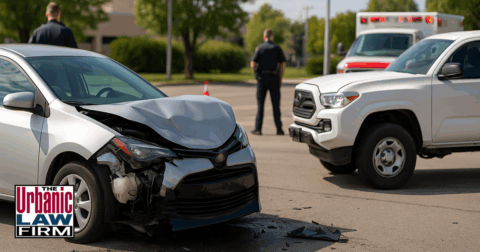 Being accused of driving under the influence (DUI) is serious. When the State claims that you caused an accident that resulted in great bodily injury, everything becomes more intense. You now face a felony charge with long prison exposure, huge financial risk, and a permanent record that can follow you for life.
If you’re dealing with an allegation that you caused great bodily injury while DUI in Oklahoma, you do not have to go through this alone. With the right legal strategy, you can challenge the State’s assumptions, attack weak spots in the evidence, and work to protect your freedom and your future.
At The Urbanic Law Firm, we focus on Oklahoma criminal defense and DUI cases. We understand how prosecutors build these serious injury DUI charges, and we know how to push back.
What Oklahoma Law Says About Great Bodily Injury While DUI
Under 47 O.S. § 11-904(B)(1), you can be charged with a felony if you:
- Cause an accident;
- While driving a motor vehicle within Oklahoma;
- Are in violation of Oklahoma’s DUI law in 47 O.S. § 11-902(A); and
- The accident results in great bodily injury to another person.
If you are convicted of this offense, you face:
- Four to twenty years in the custody of the Oklahoma Department of Corrections; and
- A fine of up to $5,000.
In addition to these statutory penalties, you can also face post-imprisonment supervision, driver’s license revocation, and other court conditions after release.
Contact an Oklahoma DUI Defense Attorney Today
If you’re facing a charge of DUI causing great bodily injury in Oklahoma, time is working against you. Evidence can disappear, witnesses can forget details, and deadlines for challenging license actions or filing motions can pass quickly. The sooner you get a defense team involved, the better your chances of protecting your rights.
Call The Urbanic Law Firm at 405-633-3420 or fill out our confidential online contact form to schedule a free consultation. You can talk with an attorney about what happened, what you are facing, and what can be done to help.
Stay informed, stay proactive, and do not face serious Oklahoma DUI injury charges without strong legal representation.
Key Definitions Under Oklahoma DUI Injury Law
Great Bodily Injury
Under Oklahoma law, “great bodily injury” is not just any injury. It means bodily injury that creates a substantial risk of death, causes serious and permanent disfigurement, or causes a protracted loss or impairment of the function of any bodily member or organ. In plain language, the injury must be very serious, long lasting, or life threatening.
Under the Influence
You can be considered under the influence in Oklahoma if your blood alcohol concentration is 0.08 percent or higher, or if alcohol, drugs, or a combination of both impair your ability to safely operate a motor vehicle. In many cases the State relies on a chemical test, but your behavior, driving pattern, and other observations can also be part of the picture.
Elements the State Must Prove
Oklahoma’s jury instructions for causing an accident while under the influence require the prosecutor to prove each of the following beyond a reasonable doubt:
- You caused an accident;
- The accident resulted in great bodily injury to another person;
- You were driving a motor vehicle;
- You were on a public road, street, highway, turnpike, or other place covered by the statute; and
- You were under the influence of alcohol, an intoxicating substance, or a combination of both, or your blood alcohol concentration was 0.08 or more.
If the State fails to prove even one of these elements, you should not be convicted of this charge.
How Oklahoma Prosecutors Try to Prove DUI With Great Bodily Injury
Prosecutors typically try to build a strong narrative that connects your alleged impairment to the accident and the claimed injuries. To do that, they often focus on:
- Chemical test results showing a blood or breath alcohol concentration at or above 0.08 or the presence of drugs;
- Field sobriety test performance, including any claimed clues of impairment on standardized tests;
- Accident reconstruction evidence, such as skid marks, crash diagrams, and expert opinions about speed, reaction time, and fault;
- Statements you allegedly made to law enforcement, medical personnel, or other witnesses at the scene or at the hospital; and
- Medical and documentary proof of injury, such as hospital records, imaging, surgery reports, and testimony from doctors or treating providers.
In more serious cases, they may also execute search warrants for your medical blood, obtain black box data from vehicles, or use surveillance footage and cell phone evidence to try to reconstruct what happened before the crash.
Collateral Consequences of a Conviction in Oklahoma
A conviction for DUI causing great bodily injury does much more than expose you to prison and fines. It can affect almost every part of your life. Common collateral consequences include:
- Driver’s license problems – You can face lengthy revocations, restrictions, and ignition interlock requirements that make daily life much harder.
- Permanent felony record – A felony conviction can limit job opportunities, affect housing applications, and interfere with professional licensing or security clearances.
- Higher insurance costs – Your insurance rates can skyrocket, or you can be dropped entirely, making it expensive or difficult to drive legally in the future.
- Civil lawsuits – Injured parties or their insurance companies may sue you for money damages, which can be financially devastating.
- Travel and personal restrictions – Felony records can cause problems with travel, firearm possession, and other personal and civic rights.
These collateral consequences are part of why it is so important to take a DUI with great bodily injury case seriously from day one.
Key Oklahoma Cases on This Crime
State v. Salathiel addressed how prior DUI offenses can be used to enhance later DUI charges. The Court held that changes to 47 O.S. § 11-902 allowed prior pleas of guilty or nolo contendere to count as convictions for enhancement purposes, but only when those pleas occurred after the effective date of the amendment. This decision confirms that the Legislature can expand enhancement rules, but that those changes generally apply prospectively rather than retroactively.
Atchley v. State dealt with death caused by criminal negligence while driving. The Court concluded that the specific motor vehicle homicide provisions in Title 47, including the DUI related death statutes, supersede the more general manslaughter statutes in 21 O.S. § 716 when a death results from the driving of an automobile. That holding reinforces that DUI injury and death offenses are treated as distinct crimes with their own statutory framework and penalties.
Common Defense Strategies in Oklahoma DUI Great Bodily Injury Cases
No two cases are the same, but many defenses appear frequently in DUI with great bodily injury cases. Common defense strategies include:
- Challenging the traffic stop or detention – If the officer did not have a lawful reason to stop or detain you, key evidence may be suppressed.
- Attacking the chemical test – Breath or blood tests can be questioned based on calibration, handling, timing, medical issues, or improper procedures.
- Disputing causation of the accident – Even if you had alcohol or drugs in your system, you can argue that something else actually caused the crash.
- Questioning the existence of great bodily injury – You can challenge whether the injuries meet the legal definition of great bodily injury rather than being less serious harm.
- Exposing weaknesses in witness testimony – Inconsistencies, bias, and poor recollection from witnesses and officers can be used to undermine the State’s story.
A Practical Guide for People Facing These Charges
If you’re facing an allegation of DUI with great bodily injury in Oklahoma, you need practical steps you can take right now and a clear plan for moving forward. The following guide gives you concrete questions, actions, and expectations.
Questions to Ask Your Attorney If You Are Arrested
- What specific evidence does the State claim proves that I caused the accident and the injuries?
- How strong is the chemical test evidence, and are there legal grounds to challenge or suppress it?
- What are the possible outcomes in my case, including trial, dismissal, and different plea options?
- How will this charge affect my Oklahoma driver’s license and my ability to work or support my family?
- What steps will you take immediately to preserve evidence that could help my defense?
Things to Do If You’re Arrested for This Crime
- Stay calm and exercise your right to remain silent instead of trying to explain the situation to police.
- Ask clearly and firmly for a lawyer, and do not answer questions about drinking, drugs, or driving after that.
- Write down everything you remember about the stop, the accident, and your interactions with officers and medical staff.
- Collect and preserve contact information for any witnesses, passengers, or bystanders who may have seen what happened.
- Contact The Urbanic Law Firm as soon as possible and schedule a free consultation to review your case.
What The Urbanic Law Firm Will Do for You
- Conduct a thorough investigation of the crash scene, vehicles, reports, and all physical evidence in your case.
- Obtain and review body camera, dash camera, 911 recordings, and any available video or digital evidence.
- Analyze chemical testing methods and results with a critical eye and, when needed, consult with independent experts.
- Negotiate aggressively with prosecutors to seek dismissals, charge reductions, or alternative resolutions when appropriate.
- Prepare your case for trial and stand ready to present a strong defense to a jury if that is in your best interest.
Frequently Asked Questions About DUI With Great Bodily Injury in Oklahoma
What is considered great bodily injury under Oklahoma DUI law?
Great bodily injury under Oklahoma DUI law means bodily injury that creates a substantial risk of death, causes serious and permanent disfigurement, or results in a long term loss or impairment of the function of a body part or organ. It is more serious than typical or minor injuries from a car accident.
What are the penalties for DUI with great bodily injury in Oklahoma?
The penalties for DUI with great bodily injury in Oklahoma include a felony conviction, a prison sentence of four to twenty years, and a fine of up to five thousand dollars. You can also face license revocation, probation conditions, and other long term consequences.
What happens to my driver’s license if I’m charged with DUI causing great bodily injury in Oklahoma?
Your license may be revoked by Service Oklahoma. You have 30 days from the date of the receipt of the revocation notice from Service Oklahoma to apply for the Impaired Driver Accountability Program (IDAP) and 30 days after the notice of revocation has been mailed to the you by Service Oklahoma to file a petition challenging the license revocation. Failing to act within that time usually results in automatic suspension.
Can a DUI with great bodily injury charge be reduced to a lesser offense?
In some cases, yes. Depending on the evidence, your attorney may be able to negotiate a plea to a lesser felony or misdemeanor, such as aggravated DUI or DUI causing personal injury. Reductions often depend on the extent of the injuries, your criminal history, and the strength of the State’s case.
How can an Oklahoma lawyer defend me in a DUI with great bodily injury case?
An Oklahoma lawyer can defend you in a DUI with great bodily injury case by challenging the stop, the testing, accident causation, and the claimed level of injury. Your attorney can also negotiate with prosecutors, present expert witnesses, and take your case to trial when that is the best option.
Contact The Urbanic Law Firm
If you’ve been charged with DUI with great bodily injury or any other criminal offense in Oklahoma, contact The Urbanic Law Firm today. Call 405-633-3420 or fill out our form.
Based in Oklahoma City and serving clients statewide.
This page is for informational purposes only and is not legal advice. Every case is unique; consult an attorney about your specific situation. Page last updated November 9, 2025. Consult the statutes listed above for the most up-to-date law.

Oklahoma Bird Law Attorneys: The Urbanic Law Firm v. Charlie Kelly

Banging More Than the Gavel! Another Judge Sex Scandal Raises Oklahoma Criminal Law Questions

Stick a fork in him! Brent Swadley convicted: Oklahoma post-trial sentencing procedure explained

When Workplace Retaliation Leads To Harm

Brent Swadley Trial Analysis: False Claims & Conspiracy to Defraud State Explained
Oklahoma DUI News
Rogers County deputy arrested and placed on administrative leave for DUI
Man arrested following alleged DUI car crash involving school bus in Glenpool
Commerce student killed in UTV accident, Miami man arrested for alleged DUI