Offer, Solicit, Attempt, Endeavor, or Conspire to Commit a Drug Offense Defense in Oklahoma
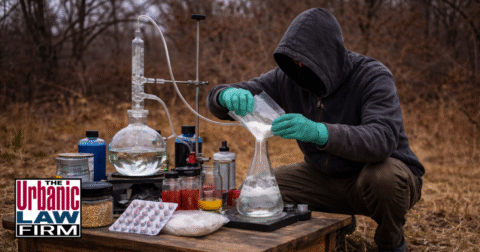 If the State says you offered, solicited, attempted, endeavored, or conspired to commit a drug crime, you are facing an “inchoate” drug charge. You may not have been caught with any drugs at all, yet prosecutors still try to treat the case as if the underlying drug crime happened.
Because these charges focus on intent and planning, the evidence often comes from texts, calls, informants, and surveillance instead of drugs seized. That creates real room for challenge if you move quickly and understand what the law actually requires.
Quick links
Early help for Oklahoma inchoate drug charges
If you’ve been accused of offering, soliciting, attempting, endeavoring, or conspiring to commit a drug offense in Oklahoma, reach out for a free consultation before you make any decisions or agree to talk to law enforcement.
The sooner The Urbanic Law Firm is involved, the sooner someone can start protecting your rights, preserving evidence, and pushing back on how police and prosecutors are framing the case.
Call us at 405-633-3420 or use our secure online form.
What is an inchoate drug offense under Oklahoma law?
When the State says you “offer, solicit, attempt, endeavor, or conspire” to commit a drug offense, it is saying you moved toward one of those defined drug crimes, even if the underlying crime never finished.
What “offer, solicit, attempt, endeavor, and conspire” mean
These plain-language explanations track how Oklahoma law, jury instructions, and cases use each term in drug prosecutions. The parenthetical notes show the sources.
Offer usually means you communicate a willingness to take part in a drug crime, such as telling someone you’ll sell, deliver, or help manufacture a CDS.
Solicit means you seriously ask or urge someone else to commit a drug crime, such as asking another person to sell drugs for you or to buy drugs on your behalf.
Attempt means you intend to commit a specific drug offense and take a substantial step toward it that goes beyond simple preparation, even if the crime does not happen. Attempt requires three things: intent to commit the crime, an act toward its commission, and failure to complete it. In drug cases, that might look like traveling to a planned deal spot with cash, or mixing precursor chemicals, but being stopped before the deal or the cook happens. (jury instruction 2-14)
Endeavor means making any effort aimed at carrying out the harmful purpose the drug law is designed to prevent, even if that effort is small. Very little is needed to satisfy “endeavor,” so prosecutors often point to steps like buying a single precursor chemical, gathering glassware, or driving toward a meeting spot as enough. A person can be “endeavoring” if they’re taking meaningful steps toward the crime, even if those steps are small and the crime is never completed. (jury instruction 6-16)
Conspire means you agree with at least one other person to commit a drug offense and at least one of you does something to move that plan forward. In the drug setting, that can mean two or more people agree to manufacture, distribute, or traffic a CDS, and someone then does anything to move that plan forward, such as buying supplies, scouting a location, or contacting potential buyers. (21 O.S. §§ 421 and 423)
Common examples of inchoate drug charges
In real cases, prosecutors often file inchoate drug counts for situations like these:
- Text messages where you supposedly agree to buy or sell drugs, even if the deal never happens.
- Driving to a meeting spot with cash after messages about a drug buy, even when police arrest you before any exchange.
- Working with others to arrange a delivery, where police claim a “conspiracy” based on group chats or surveillance.
- Allegations of endeavoring to manufacture a controlled dangerous substance when officers find precursor chemicals, glassware, or notes and argue those items show an early-stage lab.
- Talking with an undercover officer about future drug deals, where the State claims you offered or solicited a crime.
Because these cases rely on words, plans, and partial steps, the facts are often messy and open to more than one interpretation. That’s exactly where a strong defense can make the biggest impact.
Penalties and sentencing for inchoate drug offenses in Oklahoma
The inchoate drug statute, 63 O.S. § 2-408, says that anyone who offers, solicits, attempts, endeavors, or conspires to commit a drug offense under the Uniform Controlled Dangerous Substances Act “shall be subject to the penalty prescribed for the offense” that was the object of the conduct. In plain English, the punishment for the inchoate drug charge matches the punishment for the completed drug crime.
Collateral consequences of an inchoate drug conviction
The formal sentence is only part of the story. A conviction for an inchoate drug offense can follow you long after probation or prison ends.
- Employment roadblocks – Background checks can flag drug-related convictions, which can shut you out of certain jobs and promotions.
- Professional licenses – Nurses, teachers, CDL drivers, and other licensed professionals can face discipline, suspension, or loss of license.
- Housing and rentals – Landlords often treat drug-related convictions as red flags and may refuse to rent or renew leases.
- Immigration problems – Non-citizens can face visa issues, denial of relief, or removal proceedings when a case involves drugs.
- Firearms rights and forfeiture – Felony convictions can affect your ability to possess firearms and can lead to forfeiture of money, cars, or other property tied to alleged drug activity.
How prosecutors try to prove an inchoate drug case
Because these cases focus on offers, plans, and agreements, prosecutors lean heavily on interpretation of words and conduct. The evidence often leaves real room for doubt.
- Recorded calls and texts – Police use wiretaps, controlled calls, and phone downloads to argue that messages show offers, solicitations, or agreements.
- Confidential informants – Cooperating witnesses may claim you asked them to help with a drug deal while they try to reduce their own charges.
- Undercover stings – Officers may pose as buyers or suppliers and then frame conversations as serious drug deals, not testing or bragging.
- Surveillance and travel patterns – Trips to certain locations, short visits, or meetings in parking lots can be described as acts in furtherance of a conspiracy.
- Precursor items and tools – In “endeavoring” cases, prosecutors often point to chemicals, glassware, scales, or packaging as proof of an effort to commit a drug crime.
The Urbanic Law Firm focuses on how each piece of evidence was gathered and how much it really proves, not just how the State wants to spin it.
A practical guide if you’re facing inchoate drug charges in Oklahoma
Questions you should ask your attorney
- What specific drug offense do prosecutors say I was trying to commit, and what class and range does it carry?
- Which texts, calls, or documents do they claim show an offer, solicitation, attempt, endeavor, or conspiracy?
- What search warrants, wiretaps, or phone extractions did police use, and can we challenge any of them?
- Are any co-defendants or informants testifying against me, and what deals or benefits did they receive?
- What are my realistic options for dismissal, suppression, reduced charges, or alternative sentencing in this case?
Things you can do if you’re arrested for this crime
- Exercise your right to remain silent and politely decline to answer questions without an attorney present.
- Avoid discussing your case on the phone from jail because many calls are recorded and can be used as evidence.
- Write down what happened as soon as you can, including who was present, what was said, and what police did.
- Gather contact information for potential witnesses who can speak to your character, your whereabouts, or context for messages.
- Save any texts, emails, or social media messages that help explain or contradict the State’s story.
Defenses under Oklahoma law
- Lack of specific intent – The State must prove you intended to commit the underlying drug crime; casual talk or vague plans are not enough.
- No true agreement or overt act – For conspiracy, prosecutors need an actual agreement and at least one act in furtherance, not just association.
- No qualifying endeavor or substantial step – Even with Oklahoma’s broad “endeavoring” concept, there must be some real effort tied to a drug offense.
- Illegal search or seizure – If police violated the Fourth Amendment in searches, wiretaps, or phone downloads, key evidence can sometimes be suppressed.
- Entrapment and overreach – When officers or informants push or pressure you into conduct you weren’t otherwise ready to commit, entrapment may apply.
Defense strategies in inchoate drug cases
- Rebuild the timeline to show that messages or meetings never went beyond talk and never became real steps toward a drug crime.
- Scrutinize digital evidence by reviewing phone records, downloads, and extraction reports for gaps, errors, or alternative meanings.
- File targeted suppression motions that attack weak warrants, bad traffic stops, and overbroad searches that swept in texts or calls.
- Expose informant motives by digging into criminal histories, cooperation deals, and inconsistent statements to undercut their credibility.
- Leverage element weaknesses in negotiation to push for dismissals, charge reductions, or outcomes focused on treatment instead of prison.
What The Urbanic Law Firm does to help with this type of case
- Explain the charge, the underlying drug offense, and the possible ranges in clear language so you can make informed choices.
- Organize all discovery, including digital files and reports, into a plan that highlights weaknesses and missing pieces.
- Communicate regularly by phone, text, email, or secure online portal so you always know what’s happening next.
- Coordinate with investigators and, when helpful, experts to review lab work, phone records, and financial documents.
- Prepare you for court appearances, plea discussions, and trial, including what questions to expect and how to respond calmly.
Key defined terms for inchoate drug cases
Controlled dangerous substance (CDS)
A controlled dangerous substance is any drug, substance, or immediate precursor that appears in Schedules I through V of the Uniform Controlled Dangerous Substances Act, which are set out in the CDS statutes and include common illegal drugs and many prescription medications (63 O.S. § 2-101).
Possession
In Oklahoma drug cases, possession means more than being near a drug. It requires knowing the substance is present and having the power and intent to control it, whether the drug is on your person or in a place you control such as a car, room, or container (jury instruction 6-16).
Distribution or delivery
For CDS crimes, distribution and delivery refer to transferring a controlled dangerous substance to another person, other than by administering or dispensing it as a medical professional would. Oklahoma’s CDS definitions treat “distribution” as a type of delivery, which is any actual, constructive, or attempted transfer from one person to another (63 O.S. § 2-101).
Case examples involving inchoate drug offenses
In Davis v. State, 1990 OK CR 20, 792 P.2d 76, the Oklahoma Court of Criminal Appeals explained that a drug conspiracy requires an agreement and an act in furtherance, and allowed prosecutors to prove both with circumstantial evidence such as coordinated conduct and supporting details rather than only direct admissions.
In Tidmore v. State, 2004 OK CR 26, 95 P.3d 176, the Court described “endeavoring” to commit a drug offense as any effort to do or accomplish the harmful purpose the statute targets, and noted that the law does not require an overt act or completed transaction, which makes careful scrutiny of every alleged “effort” especially important in these cases.
FAQs about inchoate drug offenses in Oklahoma
What does it mean to be charged with offering or soliciting a drug crime in Oklahoma?
It means prosecutors say your words or messages showed a serious proposal or request to commit a drug offense, even if no drugs changed hands, and they will try to use those communications as proof of intent and planning.
Is an inchoate drug offense in Oklahoma a felony or a misdemeanor?
That depends on the underlying drug offense the State ties to the inchoate charge, because the punishment follows that base crime, so some counts are misdemeanors while many others are serious felonies with prison exposure.
Can you go to prison in Oklahoma if no drugs were found in an inchoate drug case?
Yes, you can, because Oklahoma law lets prosecutors charge offers, solicitations, attempts, endeavors, and conspiracies based on evidence of plans and efforts rather than actual drugs, but that structure also gives room to challenge what those facts really prove.
How long does an inchoate drug case take to resolve in Oklahoma?
Some cases resolve in a few months, while more complex investigations with multiple defendants, large amounts of digital evidence, or serious felony ranges can take longer as motions, negotiations, and trial preparation unfold.
Should you talk to police about an inchoate drug charge in Oklahoma?
You have the right to remain silent, and it is usually safer to politely decline questioning and ask for an attorney before you decide whether to share any information about your case.
This page is for informational purposes only and is not legal advice. Every case is unique; consult an attorney about your specific situation. Page last updated February 18, 2026. Consult the statutes listed above for the most up-to-date law.

Is Every “Dangerous” DUI Now Aggravated in Oklahoma?

Can I Carry a Gun in My Vehicle in Oklahoma?

From 8 Years to 70 Days: Sara Polston’s Shocking Early Release!

“Treatment” vs “Statement”: New Oklahoma Miranda Case Analysis

MAGA dad kills daughter—Would Oklahoma charge him?
| THIS OFFENSE IN THE NEWS |
14 indicted in southern Oklahoma on drug conspiracy charges
Mustang couple arrested on drug trafficking charges in Garvin County
Rogers Co. woman charged with first degree murder after allegedly selling drugs that led to deadly overdose