Counterfeit Controlled Dangerous Substance Defense in Oklahoma
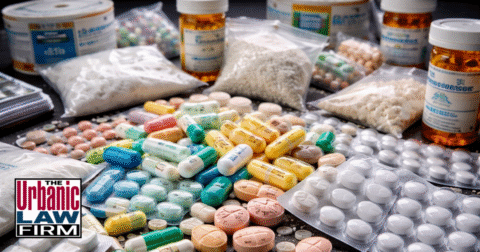 Police don’t treat “fake drugs” like a joke. If you’re accused of creating or distributing a counterfeit controlled dangerous substance, you’re facing a serious felony drug charge with real prison exposure and long-term fallout.
On this page, you’ll see how Oklahoma law handles counterfeit controlled dangerous substances, how penalties change by drug schedule, how this charge differs from imitation controlled substances, and what you can start doing now to protect yourself.
Quick links
Accused of counterfeit CDS in Oklahoma? Talk to a defense lawyer early.
If you’ve been accused of creating, distributing, or possessing a counterfeit controlled dangerous substance in Oklahoma, reach out for a free consultation before you make statements, accept a deal, or agree to “just plead to something.” Early advice often changes the outcome.
Call us at 405-633-3420 or use our secure online form.
What is creating or distributing a counterfeit controlled dangerous substance in Oklahoma?
Oklahoma’s Uniform Controlled Dangerous Substances Act makes it a crime to knowingly create, distribute, transport with intent to distribute or dispense, or possess with intent to distribute a counterfeit controlled dangerous substance. The State has to prove you acted knowingly and intentionally, not by accident or mistake.
A controlled dangerous substance is any drug, substance, or immediate precursor placed in Schedules I through V under Oklahoma law (63 O.S. § 2-101). Those schedules include everything from heroin and fentanyl to many prescription medications. The schedule that applies to the drug the counterfeit is supposed to imitate matters a lot for punishment.
To convict on a “with intent to distribute” theory, prosecutors must show more than simple possession. Because intent is rarely admitted outright, they lean on circumstantial evidence such as quantity, packaging, cash, scales, and text messages that look like drug deals, along with any statements or undercover recordings that suggest a plan to move the product rather than just use it.
This same statute also covers distributing real controlled dangerous substances and selling imitation controlled substances. So prosecutors sometimes stack counterfeit counts with related charges like simple possession, possession with intent to distribute, or drug paraphernalia when they believe the facts support more than one theory.
Counterfeit vs imitation controlled substances
Counterfeit and imitation controlled substances sound similar, but Oklahoma law treats them differently. A counterfeit substance involves an actual controlled dangerous substance that’s been packaged or labeled to look like a different drug, manufacturer, or distributor. The problem is the false branding or labeling attached to a real scheduled drug.
An imitation controlled substance is different. It’s usually a noncontrolled substance that has a similar shape, size, color, markings, or packaging to a real controlled drug, or it’s presented in a way that would make a reasonable person think it’s a controlled dangerous substance. Street slang, price, and how the product is offered can all matter.
Because counterfeit charges involve a real controlled dangerous substance, they’re tied to the schedule of the drug being imitated and punished under the same core statute that governs distribution of real drugs. Imitation controlled substance cases, by contrast, carry a separate penalty structure that’s usually lower but still felony-level in many situations.
Penalties for counterfeit controlled dangerous substance charges in Oklahoma
Creating, distributing, transporting with intent to distribute, or possessing with intent to distribute a counterfeit controlled dangerous substance is punished under Oklahoma’s main distribution statute (63 O.S. § 2-401). The exact range depends on which schedule the underlying drug falls into and whether you have prior felony convictions, because the statute ties imprisonment to the general punishment provisions in Title 21.
Schedule I or II (not including marijuana)
When the counterfeit substance involves a Schedule I or II drug other than marijuana, the law treats it most harshly.
- Felony class
- Class C2 felony (imprisonment as provided in 21 O.S. § 20M).
- Imprisonment range
- First felony: up to 7 years in the Department of Corrections.
- Second felony under the classification scheme: about 2–10 years.
- Third or more: about 2–12 years, depending on prior record and how 21 O.S. § 20M applies.
- Fine range
- Fine up to $100,000, even on a first conviction.
Schedule III, IV, V or marijuana
When the counterfeit substance involves a Schedule III, IV, or V drug, or marijuana itself, the base penalty is still a felony but with slightly lower imprisonment and fine caps.
- Felony class
- Class D1 felony (imprisonment as provided in 21 O.S. § 20N).
- Imprisonment range
- First felony: up to 5 years in the Department of Corrections.
- Second felony under the classification scheme: about 2–7 years.
- Third or more: about 2–10 years, depending on 21 O.S. § 20N and your prior record.
- Fine range
- Fine up to $20,000.
Second or subsequent drug convictions under the Uniform Controlled Dangerous Substances Act can trigger enhanced punishment beyond these base ranges through separate enhancement statutes, especially if you’ve already been sentenced for prior drug felonies.
Collateral consequences
- Losing civil rights such as firearm possession and jury service.
- Damaged employment prospects, especially in health care, transportation, education, or government work.
- Professional licensing problems for nurses, teachers, CDL holders, and other regulated professions.
- Immigration consequences for noncitizens, including possible removal or denial of future relief.
- Housing and credit issues, because landlords and lenders often treat felony drug convictions as high risk.
How prosecutors try to prove these cases
Because intent and the nature of the substance are key elements, prosecutors usually build counterfeit CDS cases around several types of evidence.
- Laboratory testing that shows the substance actually contained a controlled dangerous substance.
- Packaging, stamps, logos, or labels that imitate a particular brand name or manufacturer.
- Quantity of the substance, scales, baggies, or ledgers that suggest distribution rather than personal use.
- Recorded buys, text messages, or social media chats that look like arrangements to sell or trade drugs.
- Statements made to officers or informants that suggest knowledge of both the drug and the fake branding.
Practical guide if you’re facing counterfeit controlled dangerous substance charges
Questions to ask your attorney about a counterfeit CDS case
- What evidence does the State claim shows the substance was counterfeit rather than an imitation or something legal?
- How is the alleged drug scheduled, and how does that schedule affect the potential sentencing range?
- What specific facts is the prosecutor using to argue I had intent to distribute instead of simple possession?
- Were the stop, search, and any warrant handled in a way that allows a strong motion to suppress?
- What options exist in this court for dismissal, amendment to a lesser offense, diversion, or a deferred sentence?
Things you can do after a counterfeit CDS arrest
- Write down what happened before, during, and after the arrest while details are still fresh.
- Gather names and contact information for any witnesses who saw the encounter or handled the substance.
- Avoid talking about the case by text, social media, or jail calls, because those conversations may be recorded.
- Collect paperwork from prior cases, treatment, or employment that could help in negotiations or sentencing.
- Meet with a defense lawyer quickly so deadlines for discovery requests and suppression motions don’t slip by.
Defenses under Oklahoma law
- No qualifying counterfeit substance – The State can’t prove the substance contained a controlled drug with labeling or markings that meet the statutory definition of a counterfeit substance, so the charge doesn’t fit.
- No knowing possession or control – Evidence of dominion, control, and knowledge is too weak under the standards for possession, especially when others had equal access to the area where the substance was found.
- No intent to distribute or dispense – Circumstantial factors like quantity, packaging, and cash don’t support a jury finding of specific intent to distribute, which can reduce the case toward simple possession.
- Illegal stop, search, or seizure – Officers may have lacked reasonable suspicion, probable cause, or a valid warrant, so key evidence can be suppressed under constitutional search and seizure rules.
- Entrapment or overreaching sting tactics – Undercover tactics may have gone beyond offering an opportunity and instead pushed someone without a predisposition into a counterfeit transaction they wouldn’t have started.
Defense strategies we use in counterfeit CDS cases
- Use independent lab review and photographs of packaging to challenge whether the substance actually contained a controlled drug and whether the branding really matches the statutory idea of a counterfeit.
- Break down quantity, packaging, cash, and communications to argue there isn’t enough reliable evidence of intent to distribute and to position the case for a lesser charge.
- File targeted motions to suppress based on how officers stopped the vehicle, entered the home, or searched phones so that critical drug or message evidence may be excluded.
- Use weaknesses in the counterfeit definition, schedule classification, and intent proof to press for dismissals, reductions to imitation or simple possession, or workable plea structures.
- Prepare a clear narrative for trial, including cross-examination of officers and lab analysts, that highlights reasonable doubt about both the nature of the substance and any plan to distribute it.
How The Urbanic Law Firm helps in these cases
- Reviewing discovery – go through reports, videos, lab results, and digital evidence to spot holes, contradictions, and missing context.
- Tracking deadlines – monitor filing dates for motions, responses, and hearings so suppression and other key issues are raised on time.
- Explaining options – walk you through sentencing ranges, enhancement risks, and local plea practices so decisions are informed, not rushed.
- Coordinating mitigation – help you pursue treatment, employment documentation, and character support that can matter in negotiations and at sentencing.
- Staying in contact – keep you updated about court dates, new offers, and strategic shifts so you’re never guessing about what comes next.
Key legal terms in counterfeit CDS cases
Controlled dangerous substance
A controlled dangerous substance is a drug, substance, or immediate precursor that appears in one of Oklahoma’s Schedules I through V under the Uniform Controlled Dangerous Substances Act (63 O.S. § 2-101).
Counterfeit substance
A counterfeit substance is a controlled dangerous substance, or its container or labeling, that bears without authorization the name, symbol, or other identifying mark of a manufacturer, distributor, or dispenser, so that it appears to have been produced or distributed by someone who didn’t actually make or supply it (63 O.S. § 2-101).
Imitation controlled substance
An imitation controlled substance is a substance that isn’t a controlled dangerous substance but is shaped, colored, marked, packaged, or represented in a way that would lead a reasonable person to believe it is a controlled dangerous substance, taking into account appearance, how it’s sold, and statements made about it (63 O.S. § 2-101).
How Oklahoma courts have interpreted this statute
In Goodner v. State, 1976 OK CR 29, 546 P.2d 653, the Court of Criminal Appeals explained that “distribute” under Oklahoma’s drug statute includes sharing or delivering drugs, with or without payment, so the State doesn’t have to prove a classic sale to secure a distribution-type conviction under this law.
In McIntosh v. State, 2010 OK CR 17, 237 P.3d 800, the Court clarified that subsection (B)(1) of the main drug statute applies only to Schedule I or II substances other than marijuana, while subsection (B)(2) applies to Schedule III, IV, and V drugs and marijuana, reinforcing that the penalty scheme depends on correct schedule classification for each case.
FAQs about counterfeit controlled dangerous substance charges
What counts as a counterfeit controlled dangerous substance under Oklahoma law?
Under Oklahoma law, a counterfeit controlled dangerous substance involves a real controlled drug that’s packaged, labeled, or marked to look like it came from a different source or brand without that company’s authorization, rather than a harmless look-alike with no controlled ingredients.
What are the penalties for counterfeit drug distribution in Oklahoma?
Penalties in Oklahoma depend on the schedule of the drug the counterfeit is tied to, with Schedule I and II (other than marijuana) bringing higher Class C2 felony ranges and fines up to $100,000, while Schedule III, IV, V, and marijuana cases fall under a Class D1 felony framework with lower imprisonment caps and fines up to $20,000.
Can you be convicted in Oklahoma if the substance didn’t contain any real narcotics?
If the substance truly contained no controlled dangerous substance, the facts may fit better under the separate imitation controlled substance laws rather than counterfeit provisions, but Oklahoma still allows felony charges for selling convincing fake drugs, so the exact chemistry and how the product was presented both matter.
How do prosecutors prove intent to distribute counterfeit drugs in Oklahoma?
Prosecutors in Oklahoma usually rely on factors like quantity, individual packaging, scales, money, and communications that look like drug deals to argue you meant to distribute counterfeit drugs, and they often pair that with any admissions or undercover recordings when available.
Will a counterfeit controlled substance conviction in Oklahoma affect expungement or professional licenses?
A felony counterfeit controlled substance conviction in Oklahoma can complicate both expungement eligibility and professional licensing, because many boards and expungement statutes treat drug distribution offenses as more serious than simple possession, so timing, prior record, and how the case is resolved all become important.
This page is for informational purposes only and is not legal advice. Every case is unique; consult an attorney about your specific situation. Page last updated February 18, 2026. Consult the statutes listed above for the most up-to-date law.

Brent Swadley Trial Analysis: False Claims & Conspiracy to Defraud State Explained

Click, caught, charged! OKC News 9 photographer charged with 21 clandestine photo felonies!

Memorabilia Mess! Desmond Mason’s Arrest & Oklahoma’s Embezzlement Law Explained

What Counts as Actual Physical Control (APC) in Oklahoma?

Immigration Consequences of a Criminal Charge in Oklahoma
| THIS OFFENSE IN THE NEWS |
Woman arrested for selling drugs laced with fentanyl in Tulsa
Several arrests made in connection to Lawton drug trafficking
Alleged supplier of fake Oxycodone pills laced with fentanyl is arrested in Oklahoma City