Jail & Prison Contraband Charges Defense in Oklahoma
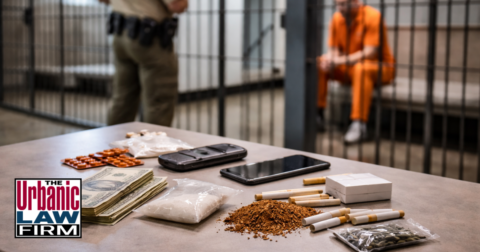 Jail and prison contraband charges can escalate fast. A phone, cash, tobacco, or a package passed in the wrong place can turn into a felony case fast. Because these allegations usually arise inside secure settings, officers often write fast reports. Prosecutors then assume the conduct was deliberate.
Still, these cases are rarely as simple as they first sound. You may have a real dispute about knowledge, authority, possession, or who actually controlled the item. And when the accusation involves a juvenile facility, the rules shift in important ways. This page gives you a broad guide to this part of the Contraband & Unauthorized Entry category. It explains the offenses that tend to appear in this cluster.
Quick Links
Get answers early
If you’ve been accused of jail or prison contraband charges in Oklahoma, reach out for a free consultation as early as you can. Early review matters because surveillance, booking records, visitor logs, mail records, and phone data can shape the whole case. Call us at 405-633-3420 or use our secure online form.
What these cases have in common
These offenses all focus on control of restricted items inside secure settings or around people in custody. So, the real fight often centers on authority, knowledge, and possession. The State still has to connect you to the item, the place, and the required mental state. That can be harder than the charging document makes it sound.
These cases also show up with concrete companion charges. Depending on the facts, prosecutors often add Unauthorized Entry Into a Penal Institution, Escape From a Penal Institution, Aiding or Assisting Escape, or Conspiracy. They also may add separate drug counts such as possession or distribution of a controlled dangerous substance. Repeated defenses also show up across the group. For example, lawyers often challenge whether you knew about the item and whether the area was actually secure. They also test whether the item belonged to someone else and whether officers can prove a reliable chain from seizure to courtroom.
Jail & prison contraband offenses in Oklahoma
Bringing Contraband Into a Jail or Prison / Possession of Contraband in a Jail or Prison
Bringing Contraband Into a Jail or Prison / Possession of Contraband in a Jail or Prison (57 O.S. § 21(A)) covers more than homemade weapons or drugs. The statute also reaches alcohol, money, and certain financial documents. It does so when a person lacks authority to bring or possess them in a jail, prison, or other place where prisoners are located. So, a case may grow out of a visit, a work assignment, a delivery, or a drop. It also may start with an item found during a search.
Even so, the label “contraband” does not prove the case by itself. The State still must tie you to the item and the place. It also has to prove lack of authority. In many cases, the real issues are access, control, and whether the item was actually yours. Those issues matter because people often share vehicles, bags, workspaces, or common areas around a facility.
Inmate in Possession of Contraband
Inmate in Possession of Contraband (57 O.S. § 21(B)) focuses on the person already in custody. If an inmate is found with an item prohibited by Section 21, the State may file a separate felony count. That count can rest on that possession alone. Because of that, the case often turns on where the item was found. It also turns on whether the State can show actual control instead of mere proximity.
That distinction matters in dorms, pods, shared cells, and work areas. An item discovered under a bunk, inside a common wall vent, or near several inmates does not always point cleanly to one person. So, these cases often rise or fall on search reports, witness statements, and video. The details of who had access to the location before the item was found also matter.
Habitual Contraband Possession in a Jail or Prison
Habitual Contraband Possession in a Jail or Prison (57 O.S. § 21(C)) is a repeat-offender allegation tied to the same section. It applies when the State claims the person possessed prohibited contraband and had two or more prior felony offenses. It also depends on the statute’s timing rules. So, this charge is not really about a new kind of item. Instead, it is about the State using criminal history and timing to push the case into a much harsher posture.
Because of that, the defense may have two fronts. First, you can still contest the new possession claim itself. Second, you can examine whether the prior convictions qualify and whether the timing language really fits. Small mistakes in records, dates, or identity can matter here. And when they do, they can change the whole exposure of the case.
Bringing Tobacco Into a Jail or Prison
Bringing Tobacco Into a Jail or Prison (57 O.S. § 21(D)) deals with cigarettes, cigars, snuff, chewing tobacco, and other forms of tobacco product. On paper, that can sound minor. In practice, though, these cases still raise the same hard questions seen in other contraband prosecutions. Officers still have to prove authority, possession, and location.
Tobacco cases also arise from ordinary-looking situations. A pack in clothing can trigger the allegation. So can a loose can in a work bag or an item passed through another person. So, context matters. You want to know where the item was found and who handled it. You also want to know whether the search was documented well and whether anyone else had equal access to it.
Bringing a Cell Phone or Electronic Communication Device Into a Jail or Prison
Bringing a Cell Phone or Electronic Communication Device Into a Jail or Prison (57 O.S. § 21(E)) targets any cellular phone or electronic device capable of sending or receiving electronic communication in a secure area. The statute uses stronger mental-state language than some of the other counts. It says the act must be done knowingly, willfully, and without authority. So, prosecutors usually focus hard on intent, location, and use.
These cases can move quickly. Officers and prosecutors often assume a phone was meant to help outside contact, witness pressure, or escape planning. But that assumption is not proof. The State still must show the area was secure. It also must show the device qualified under the statute and that you actually brought or possessed it. Video, metadata, recovery location, and access by other people can all matter.
Providing or Possessing Prohibited Items in a Juvenile Detention or Secure Facility
Providing or Possessing Prohibited Items in a Juvenile Detention or Secure Facility (10A O.S. § 2-7-611(B)(2)) applies in certified secure facilities and certified juvenile detention facilities. It reaches guns, knives, bombs, other dangerous instruments, controlled dangerous substances, intoxicating beverages, low-point beer, phones, other electronic devices, money, and certain financial documents. The statute also applies to a resident of the facility, not just an outside visitor.
Juvenile-facility cases often need careful attention to the setting itself. The State must prove the place was a certified secure facility or a certified juvenile detention facility. It also must prove the person acted knowingly, willfully, and without authority. Because staff, residents, contractors, and visitors all move through these spaces in different ways, the facts can get crowded fast. That makes records, logs, and exact location evidence especially important.
Providing or Possessing Tobacco Products in a Juvenile Detention or Secure Facility
Providing or Possessing Tobacco Products in a Juvenile Detention or Secure Facility (10A O.S. § 2-7-611(C)) is the tobacco-specific version of the juvenile-facility rule. It covers cigarettes, cigars, snuff, chewing tobacco, and other tobacco products in certified secure facilities and certified juvenile detention facilities. So, even when the item seems less serious than a weapon or a drug, the accusation can still trigger a real criminal case.
These prosecutions often depend on small facts. Where was the tobacco found. Who handled it first. Was it discovered on a person, in a shared room, or in a common area. Those details can decide whether the State can prove knowing possession or unauthorized providing. And because juvenile settings have their own certification rules and staffing patterns, the physical layout often matters more than people expect.
Defense strategies for Oklahoma contraband charges
- Challenge possession. Force the State to prove actual control, not just presence near the item.
- Dispute knowledge. A hidden item in a shared space does not automatically show you knew it was there.
- Attack the records. Search logs, surveillance, chain of custody, visitor records, and incident reports can expose gaps or contradictions.
- Examine prior-conviction allegations. In repeat-offender cases, dates, identity, and qualifying priors can change the shape of the charge.
Key terms
Electronic communication
Electronic communication means any transfer of signs, signals, writings, images, sounds, data, or intelligence of any nature transmitted in whole or part by a wire, radio, electromagnetic, photo-electronic, or photo-optical system. It also includes the transfer of that communication through the Internet. (10A O.S. § 2-7-611(A); 57 O.S. § 21(G)) That definition matters because phone and device cases often turn on whether the seized item could actually send or receive the type of communication the statute covers.
Juvenile detention facility
Juvenile detention facility means a facility secured by locked rooms, buildings, and fences that meets the Office’s certification standards. It also must be entirely separate from any prison, jail, adult lockup, or other adult facility and be used for the temporary care of children. (10A O.S. § 2-1-103(21)) This term ties directly to the juvenile contraband counts because the State must prove the alleged conduct happened in a qualifying facility.
Secure detention
Secure detention means the temporary care of juveniles who require secure custody in physically restricting facilities. It covers detention while the child remains under court jurisdiction pending disposition or pending placement by the Office of Juvenile Affairs after adjudication. (10A O.S. § 2-1-103(30)) That concept helps explain why juvenile cases focus so heavily on the exact status of the placement and the physical nature of the setting.
Secure facility
Secure facility means a state-maintained facility used exclusively for the care, education, training, treatment, and rehabilitation of delinquent juveniles or youthful offenders. It relies on locked rooms, buildings, and fences for physical restraint to control resident behavior. (10A O.S. § 2-1-103(31)) This matters because the juvenile prohibited-item statute applies to certified secure facilities, not just any residential placement.
Knowingly
Knowingly means personally aware of the facts. (21 O.S. § 96; jury instruction 6-45) That short definition matters in contraband cases because the State often tries to infer awareness from location alone, even when several people had access to the same space or property.
FAQs about Oklahoma contraband charges
Is a cell phone in a jail or prison a felony in Oklahoma?
It can be. Oklahoma law treats a cell phone or similar electronic device as a serious contraband issue in secure jail or prison areas. Still, the State must prove the required mental state, lack of authority, and the right location.
Can Oklahoma prosecutors charge me if contraband was found near me but not on me?
Yes, they can try. But proximity alone should not end the case. Oklahoma contraband charges often turn on possession, control, and knowledge. So, shared cells, common rooms, work areas, and borrowed property can create real defense issues.
Are tobacco products treated differently from other contraband in Oklahoma jails or prisons?
Yes. Oklahoma separates tobacco allegations from many other jail and prison contraband allegations. Even so, a tobacco charge still depends on proof of unauthorized bringing or possession in the covered setting.
Do juvenile facility contraband charges in Oklahoma work the same way as adult jail charges?
Not exactly. The juvenile-facility statute uses its own certified secure facility and juvenile detention facility framework. It also covers some of the same item categories, including phones and other electronic devices. So, the setting and certification status matter a great deal.
What is the best defense to Oklahoma jail contraband charges?
There is no single best defense for every case. In Oklahoma, strong defenses often focus on knowledge, possession, authority, location status, and the reliability of the search and evidence handling. The best defense depends on the item, the setting, and the records the State can actually prove.
This page is for informational purposes only and is not legal advice. Every case is unique; consult an attorney about your specific situation. Page last updated March 21, 2026. Consult the statutes listed above for the most up-to-date law.