Assault or Battery on a Medical Care Provider Defense in Oklahoma
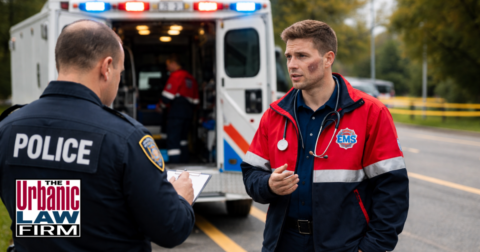 A charge like this gets serious fast. You’re not dealing with a routine shove, argument, or scuffle anymore. Instead, the State is claiming you intentionally tried to hurt, or did hurt, someone who was providing medical care. That changes how prosecutors look at the case, how judges often react to it, and what kind of record you’re risking if you’re convicted.
Still, these cases aren’t automatic wins for the prosecution. Intent matters. Timing matters. The alleged victim’s job duties matter. So do witness statements, ambulance video, dispatch records, hospital records, and your own statements. If you want broader context first, you can also read our Emergency Medical Provider charges page and our Assault, Battery & Domestic Abuse category page.
Quick Links
- What this charge means
- What the State has to prove
- Penalties
- Collateral consequences
- How prosecutors prove it
- Practical guide
- What happens next
- Key terms
- FAQs
Get ahead of the case
If you’ve been accused of assault and battery on an medical care provider in Oklahoma, reach out for a free consultation before you lock yourself into bad facts, bad statements, or bad strategy.
Call us at 405-633-3420 or use our secure online form.
What this charge means in Oklahoma
Under 21 O.S. § 650.4, the State has to prove more than a tense medical call or a chaotic scene. It has to prove an assault, a battery, or both, that happened without justifiable or excusable cause, with intent to do bodily harm, and while the alleged victim was performing medical care duties.
That last part matters. These cases often turn on whether the provider was actually giving care at the time, whether the contact was intentional, and whether the situation involved panic, confusion, self-protection, intoxication, or a medical crisis. Prosecutors also often stack this charge with related counts like interference with emergency medical care, public intoxication, drug possession, DUI, resisting, or weapon-based assault charges when the facts give them room to do it.
What the State has to prove
Oklahoma’s jury instruction breaks this offense into five parts. The State must prove beyond a reasonable doubt:
- There was an assault, a battery, or an assault and battery.
- The alleged victim was a medical care provider.
- The act happened without justifiable or excusable cause.
- You acted with intent to do bodily harm.
- The provider was performing medical care duties at the time.
One detail stands out. The State doesn’t have to prove you knew the person was a medical care provider. Even so, it still has to prove intent to do bodily harm and that the person was performing medical care duties when the incident happened.
Penalties
For sentencing purposes, this offense is a Class B6 felony under 21 O.S. § 20K.
- Prison exposure.
- Up to 2 years in the Oklahoma Department of Corrections.
- Fine exposure.
- Up to $1,000.
- Combined punishment.
- The court can impose prison time and a fine.
- Charge escalation risk.
- If the facts involve a weapon, serious injury, or stronger aggravating facts, prosecutors may file a more serious related felony instead.
Collateral consequences
- A felony conviction can damage jobs, licensing, and background checks.
- Bond conditions can get stricter, especially if the case allegedly happened during a medical response.
- Protective-style no-contact conditions can limit where you go and who you speak with.
- A conviction can hurt plea leverage in later cases and make later sentencing worse.
- If the case gets paired with drug, DUI, or weapon allegations, the practical fallout gets much bigger fast.
How prosecutors build these cases
- Testimony from the provider, partner, firefighters, officers, or bystanders.
- Ambulance video, body-camera footage, hospital footage, or dash-cam recordings.
- Dispatch records, run sheets, and reports showing what duties were being performed.
- Photos, medical records, and injury descriptions used to show force and intent.
- Your statements, intoxication evidence, or conduct before and after the incident.
However, these cases often have weak spots. Witnesses may see only part of the event. Medical scenes are chaotic. Video may start late. And reports often flatten a messy struggle into a clean story that sounds stronger than the real evidence.
Practical guide
Questions to ask your attorney
- Can the State really prove intent to do bodily harm from these facts?
- Was the alleged victim actually performing medical care duties at that moment?
- What video, dispatch, EMS, or hospital records should be preserved right now?
- Are there suppression issues with statements, searches, or identifications?
- Is this a case to dismiss, reduce, or set for hearing and trial?
Things you can do if you’re arrested for this crime
- Use your right to remain silent and stop explaining the event.
- Write down the timeline while it’s still fresh.
- Save texts, call logs, photos, and names of witnesses.
- Stay off social media and don’t try to contact the alleged victim.
- Follow every bond condition and every court date.
Defenses
- No intent to do bodily harm. A reflexive movement, panic response, or chaotic medical episode may not prove the required intent.
- No qualifying medical-duty moment. If the provider wasn’t actually performing medical care duties, the felony theory may fail.
- Justifiable or excusable cause. Self-protection, confusion during restraint, or other legally recognized circumstances can undercut the charge.
- Identity and proof problems. Fast-moving scenes, multiple responders, and partial video can leave real doubt about what happened and who did what.
- Suppression issues. Unlawful questioning, bad searches, or weak foundation for video and records can shrink the State’s case.
How we fight these charges
- Pin down the exact timeline and whether medical care was really being performed when the contact happened.
- Lock down ambulance video, body-cam footage, dispatch audio, and hospital records before they disappear.
- Challenge intent with the real-world context of intoxication, panic, medical distress, restraint, or confusion.
- Pressure-test witness accounts against recordings, reports, and timing gaps.
- Push for dismissal, reduction, or a smarter resolution when the State can’t cleanly prove every required part.
What The Urbanic Law Firm does to help
- Explain. Break the charge down so you know what matters and what doesn’t.
- Review. Go through reports, video, records, and witness accounts with a defense-first lens.
- Prepare. Get you ready for court dates, bond conditions, and the decisions that affect the case.
- Communicate. Keep you updated on strategy, risk, leverage, and next steps.
- Position. Build the case for dismissal, reduction, negotiation, or trial from the start.
What happens next in an Oklahoma case
Because this is a felony, your case may move through bond settings, arraignment, discovery, preliminary-hearing litigation, motion practice, plea talks, and possibly trial. That process can move quickly in some counties and drag in others. Either way, the early record matters. What gets preserved, what gets said, and what gets challenged first can shape the rest of the case.
For a more detailed overview of the criminal process in Oklahoma, you can read more in our Oklahoma criminal process guide.
Key terms
Medical care provider
“Medical care provider” means the listed class of protected medical workers and related personnel, including doctors, nurses, paramedics, emergency medical technicians, technicians, chaplains, volunteers, pharmacists, students, hospital security personnel, certain employees, and certain independent contractors. (21 O.S. § 650.4) That definition drives this charge, because the State has to prove the alleged victim fits inside that protected group.
Assault
“Assault” means any willful and unlawful attempt or offer with force or violence to do a bodily or corporal hurt to another. (21 O.S. § 641; jury instruction 4-2) So, even without completed contact, Oklahoma law can still treat the conduct as part of this offense.
Battery
“Battery” means any willful and unlawful use of force or violence upon the person of another. (21 O.S. § 642; jury instruction 4-3) That matters here because prosecutors may charge this offense as a battery or as an assault and battery, depending on the proof.
Willfully
“Willfully” implies simply a purpose or willingness to commit the act or omission referred to, and it does not require any intent to violate the law. (21 O.S. § 92) That definition often becomes important when the defense is arguing panic, reflex, confusion, or accidental contact.
Knowingly
“Knowingly” imports only a knowledge that the facts exist which bring the act or omission within the code. (21 O.S. § 96) It still matters in this charge cluster because some related assault-on-protected-person offenses use a knowing mental-state requirement even though this one doesn’t.
FAQs about this charge in Oklahoma
Can you be charged in Oklahoma if the EMT or paramedic wasn’t badly hurt?
Yes. This charge doesn’t require a severe injury. The State still has to prove an assault, a battery, or both, plus intent to do bodily harm and that the provider was performing medical care duties.
Does Oklahoma have to prove you knew the person was a medical care provider?
Not necessarily. The bigger fights are usually over intent, whether the provider was actually performing medical care duties, and whether the situation was justified, excusable, or overstated.
Can self-defense apply to an Oklahoma charge involving a medical care provider?
It can, depending on the facts. A defense may exist if the contact happened during a restraint struggle, a panic response, or another situation where the State can’t disprove justifiable or excusable cause.
What happens after an Oklahoma arrest for assault and battery on a medical care provider?
You’ll usually face bond conditions, felony court dates, discovery, and negotiations or litigation over the evidence. Early work on video, dispatch records, and statements can make a major difference.
Can Oklahoma prosecutors add other charges to assault and battery on a medical care provider?
Yes. Depending on the facts, they may add interference, public intoxication, drug charges, DUI, resisting allegations, or more serious assault counts if they claim a weapon or greater injury was involved.
This page is for informational purposes only and is not legal advice. Every case is unique; consult an attorney about your specific situation. Page last updated April 6, 2026. Consult the statutes listed above for the most up-to-date law.

Legislative Payback or Public Safety? Sara Polston’s Shocking Constitutional Fight!

Tulsa’s “Serial Defecator” Case: Legal Analysis of a Messy Situation

Oklahoma Discovery Law Changes: 2026–2027 Guide
Oklahoma Domestic Abuse Law Updates Nov. 1: Five Big Changes

Oklahoma Stalking Case Reversed: When a Post Isn’t Enough
| THIS OFFENSE IN THE NEWS |