Police Animal Crimes Defense in Oklahoma
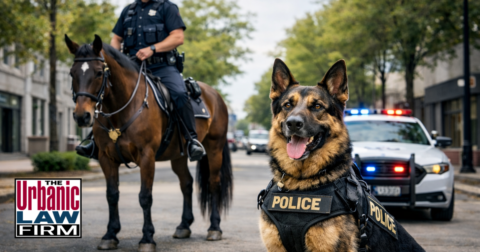 Police animal crimes in Oklahoma cover accusations that you harmed, interfered with, or killed a police dog or horse. These cases feel personal because officers often see these animals as partners, not just equipment.
Prosecutors treat these cases as attacks on law enforcement itself, so charges escalate fast and can stack with other counts. Your case might also involve related Oklahoma animal crimes, property damage, or resisting-related allegations, which makes a clear defense strategy critical.
Quick links
- Overview of police animal laws
- Types of Oklahoma police animal crimes
- Defense strategies
- Key legal terms
- FAQs
Overview of police animal laws
Oklahoma law gives special protection to police dogs and horses because they work directly with officers in the field. The statutes focus on willful conduct, so the State usually has to show you acted on purpose, not by accident.
Because these animals help with arrests, searches, and crowd control, prosecutors often treat any harm as an assault on the broader investigation. They may charge you both for the underlying crime and for the police animal offense, which increases the pressure to plead quickly.
Jury instructions for these crimes break each offense into specific elements that the State must prove beyond a reasonable doubt. That structure gives your defense team several pressure points, including intent, justification, ownership, and whether the animal actually qualified as a protected police dog or horse.
Talk with a defense lawyer about Oklahoma police animal charges
If you’ve been accused of police animal crimes in Oklahoma, you’re probably worried about prison time, fines, and your future record. You don’t have to figure this out by yourself or accept the first offer that appears.
A focused defense can challenge the facts, limit charge stacking, and highlight your side of the story before things spiral. If you’ve been accused of police animal crimes in Oklahoma, reach out for a free consultation so you can understand your options before the next court date. Call us at 405-633-3420 or use our secure online form.
Types of Oklahoma police animal crimes
Mistreating or interfering with a police dog or horse
Oklahoma law makes it a crime to willfully strike, torment, mistreat, or interfere with a police dog or police horse that a law enforcement agency uses in its work (21 O.S. § 649.1). The State often relies on officer testimony, bodycam footage, and vet records to claim that your conduct crossed the line from accidental contact to criminal mistreatment.
This offense can apply in settings like arrests, protests, traffic stops, or searches. Prosecutors may argue that even brief interference, such as grabbing a leash or blocking a horse’s path, disrupted the animal’s lawful performance. Your defense can push back on whether the contact was intentional, whether the animal was under control, and whether you acted to protect yourself or someone nearby.
Mistreating or interfering during the commission of a crime
The “during the commission of a crime” version adds a major aggravating element. Prosecutors claim you knowingly and willfully mistreated or interfered with the police dog or horse while committing another misdemeanor or felony under the same statute.
In practice, the State may charge this count along with resisting arrest, assault on an officer, drug offenses, or property crimes. That stacking lets prosecutors push for harsher outcomes even if the alleged harm to the animal seems minor. A strong defense looks closely at the timeline, the other charges, and whether the underlying “crime” actually meets its elements.
Killing or seriously injuring a police dog or horse
Another Oklahoma statute targets willfully killing, beating, torturing, poisoning, or injuring a police dog or horse in a way that disfigures or disables the animal (21 O.S. § 649.2). The law also covers setting a booby trap device or paying a bounty to injure or kill a police animal.
Cases under this section often involve intense emotional reactions from officers and the community. That pressure can drive aggressive charging decisions, even when the evidence about what actually happened is messy. Your defense may question whether the injury truly meets the standard for disfigurement or disability, or whether the State can clearly link the harm to your actions.
Killing or seriously injuring during the commission of a crime
The most serious version alleges that you knowingly and willfully killed or seriously injured a police dog or horse during the commission of another misdemeanor or felony. In these cases, prosecutors use the underlying charge to show motive, opportunity, or a broader plan.
You may face both the base killing charge and this aggravated form, along with the original offense. That combination can expose you to significant prison time and heavy restitution for veterinary care, replacement costs, and training. A focused defense can challenge each element, including ownership, training status, and whether the police animal’s injury actually occurred during the alleged crime.
Defense strategies for police animal cases
The best defense depends on your facts, your history, and the evidence the State plans to use. However, several themes show up often in police animal cases.
- Challenge intent and knowledge. Many police animal crimes require proof that you acted willfully, and some aggravated forms require that you acted knowingly and without lawful justification. Your defense can highlight confusion, split-second reactions, or unexpected movements by the animal to show that you didn’t form the required mental state.
- Raise lawful justification. In some situations, you may act to protect yourself or another person from what you reasonably believe is an immediate threat. The defense can argue that you reacted to bites, charges, or sudden contact rather than targeting the animal out of anger or spite.
- Dispute causation and injury. The State has to tie specific injuries or alleged disability to the act they blame on you. Your lawyer can question the timeline, point to preexisting conditions, or use expert review of vet records to challenge whether your conduct actually caused the claimed harm.
- Attack identification and control. The statutes focus on police dogs and horses, so the prosecution has to show the animal met the legal definitions and was under the control of a trained handler. Your defense can test whether the agency followed its own policies and whether the animal truly qualified as a protected police animal at the time.
- Enforce your constitutional rights. Police animal cases frequently grow out of tense arrests, searches, and crowd situations. Your attorney can challenge illegal stops, bad warrants, coerced statements, or unreliable witness identifications. If a judge suppresses key evidence, the State’s case can weaken or collapse.
Key legal terms for police animal crimes
Police dog
Police dog means any dog used by a law enforcement agency of this state, a political subdivision, or a properly commissioned tribal law enforcement officer. The dog is especially trained for law enforcement work and is subject to the control of a dog handler (21 O.S. § 648).
Police horse
Police horse means any horse used by a law enforcement agency of this state, a political subdivision, or a properly commissioned tribal law enforcement officer for law enforcement work (21 O.S. § 648).
Dog handler
Dog handler means any police officer or peace officer who has successfully completed training in the handling of a police dog. The law enforcement agency’s policy or standard sets the training requirements for that officer (21 O.S. § 648).
Severe injury
Severe injury means any physical injury that results in broken bones or lacerations requiring multiple sutures or cosmetic surgery (4 O.S. § 44).
FAQs about police animal crimes in Oklahoma
What counts as mistreating a police dog in Oklahoma?
Mistreatment in Oklahoma can include striking, tormenting, giving a nonpoisonous desensitizing substance, or otherwise abusing a police dog or horse. Interfering with the animal’s lawful performance, such as grabbing a leash during an arrest, can also trigger charges. The exact line between rough contact and a crime depends on the facts, the officer’s statements, and how the dog or horse was working at the time.
Can Oklahoma police animal charges be filed if the animal wasn’t hurt?
Yes. Some Oklahoma police animal crimes focus on interference, not just physical injury. Prosecutors may file a case if they believe you disrupted the dog or horse while it was tracking, searching, or helping with crowd control. Lack of injury can still matter because it may affect the charge level, plea options, and how a judge views your intent.
How serious is killing a police dog in Oklahoma?
Killing or seriously injuring a police dog or horse in Oklahoma is treated as a very serious offense. The law allows both misdemeanor and felony outcomes, depending on the facts and whether the act happened during another crime. Courts often look closely at your history, the level of harm, and the role the animal played in the case when deciding punishment.
Can you face multiple charges for one incident with a police animal in Oklahoma?
You can. Oklahoma prosecutors often stack police animal counts with the underlying charges that brought the dog or horse to the scene. For example, a single event might lead to a drug case, a resisting charge, and a police animal offense. Your lawyer can look for ways to challenge those extra counts, argue that some charges merge, or push for a resolution that limits the long-term damage.
Do Oklahoma police animal cases ever get reduced or dismissed?
They do. Outcomes in Oklahoma depend on the quality of the evidence, the extent of the injury, your prior record, and how negotiations unfold. A strong defense can lead to reduced counts, amended charges, or even dismissals when the State can’t prove each element or when key evidence has serious problems.
This page is for informational purposes only and is not legal advice. Every case is unique; consult an attorney about your specific situation. Page last updated March 8, 2026. Consult the statutes listed above for the most up-to-date law.