Dangerous Dog & Dog Attack Crimes Defense in Oklahoma
 Oklahoma dangerous dog crimes turn a bite, a chase, or one bad moment into a high-stakes criminal case. Officers often arrive after someone’s hurt or scared, see an injured victim or shaken neighbor, and assume you ignored the law.
These laws sit inside Oklahoma’s broader animal crimes framework and focus on dogs that cause or threaten serious harm. Because the statutes use strict definitions, prosecutors try to fit your dog and your conduct into those boxes as quickly as possible.
Because Oklahoma dangerous dog crimes can involve injury, insurance issues, and local politics, the pressure builds fast. However, the State still has to prove prior incidents, dangerous classifications, notice to you, and what actually happened during the latest event. When you understand how these rules work, you can start to see real defenses.
Quick links for dangerous dog and dog attack cases
Use these quick links to jump to the parts of this guide that fit your situation.
Get help early for Oklahoma dangerous dog charges
If you’ve been accused of Oklahoma dangerous dog crimes in Oklahoma, reach out for a free consultation before you talk to investigators or insurance adjusters. Early advice can protect your statements, help you respond to animal control, and shape how prosecutors charge the case. Call us at 405-633-3420 or use our secure online form.
What dangerous dog and dog attack crimes have in common
Shared patterns and elements
All of these charges grow out of the same basic idea. A dog either caused serious harm, created an imminent threat, or had a dangerous history that triggered extra duties for the owner. Oklahoma dangerous dog crimes then focus on what you knew and what you did after earlier incidents.
Prosecutors usually try to prove a pattern. So they point to prior bites, aggressive chases, written warnings from animal control, or dangerous dog labels based on statute. When evidence shows confusion, provocation, a trespasser, or a one-time accident, their story gets much weaker.
Common charging patterns and add-on counts
In many cases, the State doesn’t stop with a single dog attack charge. Instead, prosecutors may stack counts for failure to restrain, causing death, and registration violations based on the same series of events. They might also add separate assault or battery counts, child-endangerment allegations, or city-code violations tied to leash rules.
Because several statutes rely on the same “dangerous dog” definition, one dispute about that status can affect the entire case. When a defense team challenges the prior history, the quality of notice, or the way animal control classified your dog, multiple counts can start to fall apart at once.
Dangerous dog and dog attack crime list under state law
Failure to restrain dangerous dog
Failure to restrain a dangerous dog centers on dogs with a qualifying history that are later allowed to run loose or attack again (4 O.S. § 42.4(A)). The statute looks for prior unprovoked bites, severe injuries, or incidents where the dog created an imminent threat, then asks whether you let the dog run at large afterward.
These cases often turn on details like gates, fences, leashes, and who actually had control that day. A defense may show that the dog escaped despite careful precautions, that earlier events didn’t meet the statutory definitions, or that the alleged victim wasn’t lawfully on the property.
Dangerous dog causing death
Dangerous dog causing death is one of the most serious Oklahoma dog attack crimes and can be treated as a felony (4 O.S. § 42.4(B)). It applies when a legally defined dangerous dog, or a dog that fits the prior-incident rule, attacks and causes someone’s death.
Because the stakes are so high, prosecutors push hard on this count. Strong defenses may focus on whether the dog truly met the “dangerous dog” definition, whether the victim’s actions played a role, and whether other criminal statutes, like manslaughter provisions, better fit the facts.
Releasing dog on a law enforcement officer
Releasing a dog on a law enforcement officer covers situations where someone intentionally sends or turns a dog loose on an officer during official duties (4 O.S. § 42.4(C)). The State usually tries to show you gave a command, opened a gate, or used the dog to resist arrest or interfere with an investigation.
Defenses in these cases often highlight what you actually did and said. So it matters whether the dog slipped past you, reacted on its own, or responded to fear rather than a command. It also matters what the officer did before the dog reacted and whether the officer clearly identified themself.
Certificate of registration for dangerous dog
The dangerous dog registration requirement applies after a dog meets the statutory definition and receives that label from animal control (4 O.S. § 45). Owners in that position must obtain a special certificate of registration, comply with insurance or bond rules, and often meet extra conditions set by local authorities.
Charges under this statute usually come from follow-up inspections, insurance lapses, or paperwork gaps. A defense may attack whether you actually received notice, whether the dangerous classification itself was proper, or whether the dog was exempt because of law enforcement use or other statutory exceptions.
Muzzle and restraint requirements for dangerous dog
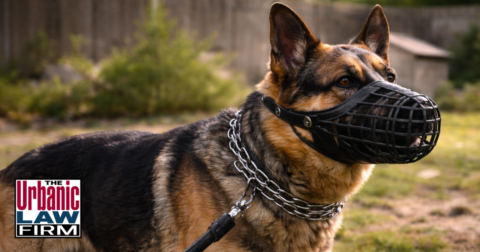
Muzzle and restraint rules govern what you must do once a dog is classified as dangerous and leaves its proper enclosure (4 O.S. § 46). The statute requires a secure muzzle, a strong leash or chain, and control by a responsible person over a set age.
In many cases, officers arrive after an incident and then judge the muzzle, leash, and handler in hindsight. A defense can show compliance with each requirement, question whether the dog truly left a proper enclosure, or argue that local rules went beyond what state law actually allows.
Dangerous dog violations and confiscation
Dangerous dog violations under the confiscation statute focus on repeat noncompliance and ongoing risks to the public (4 O.S. § 47). The law allows animal control to seize a dangerous dog when registration, insurance, or enclosure rules aren’t followed, or when new attacks or threats occur.
These cases often involve a mix of criminal exposure and the possible permanent loss of the dog. A defense may challenge the basis for confiscation, argue that you cured any violation, or push for alternatives that protect safety without destroying your bond with the animal.
Defense strategies for Oklahoma dangerous dog crimes
Not every scary incident or bite fits the strict definitions in Oklahoma’s dangerous dog laws. Because of that, several defense themes show up again and again in Oklahoma dangerous dog crimes cases.
- Challenge whether the dog actually met the “dangerous dog” or “potentially dangerous dog” definitions, based on prior incidents, provocation, and what witnesses really saw.
- Highlight provocation and trespass by showing the alleged victim threatened you, attacked the dog, or entered the property unlawfully when the incident occurred.
- Dispute ownership or control by explaining who fed, housed, and handled the dog, and by showing that another person actually managed the animal day to day.
- Attack illegal searches, seizures, and property entries when officers or animal control crossed fences, entered buildings, or took the dog without a valid warrant or exception.
- Use medical and veterinary evidence to question “severe injury” claims, connect wounds to other causes, or show that earlier incidents didn’t match the statute’s wording.
Every case turns on details like past complaints, prior warnings, fencing, and how quickly you responded once you knew about risks. When a defense team digs into those details early, it can narrow the charges, reduce the risk of a felony, or position the case for a dismissal or reasonable outcome.
Key legal terms in dangerous dog cases
Potentially dangerous dog
Potentially dangerous dog means any dog that, when unprovoked, inflicts bites on a human on public or private property, or when unprovoked attacks a dog and that attack results in the dog’s death on public or private property (4 O.S. § 44).
Dangerous dog
Dangerous dog means any dog that has inflicted severe injury on a human being without provocation on public or private property, or has previously been found potentially dangerous after written notice from the animal control authority and thereafter aggressively bites, attacks, or endangers the safety of humans, or has previously been found potentially dangerous after written notice and thereafter attacks a dog, causing that dog’s death, on public or private property (4 O.S. § 44).
Severe injury
Severe injury means any physical injury that results in broken bones or lacerations requiring multiple sutures or cosmetic surgery (4 O.S. § 44).
Proper enclosure of a dangerous dog
Proper enclosure of a dangerous dog means that, while on the owner’s property, a dangerous dog is securely confined indoors or in a securely enclosed and locked pen or structure with at least one hundred fifty square feet of space for each dog over six months of age, which is suitable to prevent the entry of children, designed to prevent the animal from escaping, has secure sides and a secure top, and provides protection from the elements (4 O.S. § 44).
Battery
Battery means any willful and unlawful use of force or violence upon the person of another (21 O.S. § 642 & jury instruction 4-3).
Dangerous dog and dog attack crimes FAQs
What counts as a dangerous dog crime in Oklahoma?
In Oklahoma, dangerous dog crimes usually involve a dog with a harmful history that bites, attacks, or seriously threatens someone again. The main statutes cover failing to restrain a qualifying dog, a dangerous dog causing death, releasing a dog on an officer, and violations of registration, muzzle, and restraint rules. The State often has to prove earlier unprovoked incidents, notice to you, and that later conduct fit the strict legal definitions.
Is every serious dog bite case in Oklahoma a dangerous dog crime?
No. Some Oklahoma dog bite cases stay in civil court as injury claims or fall under basic dog bite liability laws. Dangerous dog statutes usually require specific prior conduct, like earlier unprovoked bites or severe injuries, plus notice and later violations. A defense can argue that the facts fit standard negligence or premises theories instead of the dangerous dog framework, which can reduce criminal exposure.
How do Oklahoma prosecutors prove a dog was legally dangerous?
Oklahoma prosecutors often rely on animal control records, prior bite reports, neighbor complaints, and written notices sent to the owner. They may also use medical records to show severe injury and witness statements about unprovoked attacks or threats. A defense can challenge the accuracy of those records, question whether incidents were truly unprovoked, and point out mistakes in how the dog was labeled or how notices were delivered.
Can provocation be a defense in Oklahoma dangerous dog and dog attack cases?
Yes. Provocation plays a big role in Oklahoma dangerous dog and dog attack cases. The statutes focus on unprovoked bites and threats, so evidence that someone hit, kicked, cornered, or otherwise threatened the dog can undercut key elements. It can also connect to statutory defenses where the injured person was committing a willful criminal act on the property or assaulting the owner when the incident happened.
What defenses often help in Oklahoma dangerous dog and dog attack cases?
Helpful defenses in Oklahoma dangerous dog and dog attack cases usually focus on the dog’s legal status, provocation, and control. Lawyers may argue the dog never met the dangerous or potentially dangerous definitions, or that the victim trespassed or committed a crime on the property. They often dispute who actually owned or controlled the dog, challenge registration and notice records, and attack illegal searches, seizures, or overreaching local rules.
This page is for informational purposes only and is not legal advice. Every case is unique; consult an attorney about your specific situation. Page last updated March 9, 2026. Consult the statutes listed above for the most up-to-date law.