Cockfighting Crimes Defense in Oklahoma
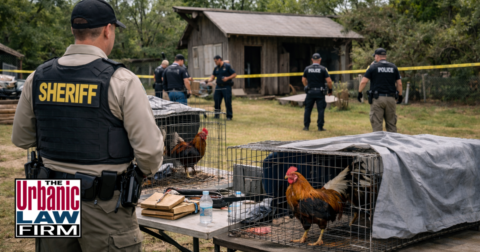 Cockfighting cases move fast and hit hard. Prosecutors often treat them as organized animal cruelty, gambling, and public-nuisance cases rolled into one. You can face charges for running fights, helping them happen, owning birds that are trained to fight, or even just showing up as a spectator.
Because these crimes sit inside Oklahoma’s broader animal crimes framework, they also tie into forfeiture rules, property seizures, and other animal-related counts. So a single investigation can turn into many charges that stack together and threaten your freedom, property, and future.
Quick links
- What cockfighting crimes cover
- Types of cockfighting crimes
- Defense strategies
- Key legal terms
- Cockfighting crimes in Oklahoma FAQs
- Talk with a lawyer
Talk to a cockfighting defense attorney early
If you’ve been accused of cockfighting crimes in Oklahoma, you’re already on the radar of law enforcement, neighbors, and sometimes the media. Early legal help can protect your rights, push back on search warrants, and start collecting defense evidence before it disappears. Call us at 405-633-3420 or use our secure online form.
What cockfighting crimes cover in Oklahoma
Cockfighting laws don’t just target the person in the ring holding two birds. They reach the entire ecosystem around a fight. That includes promoters, property owners, trainers, handlers, and spectators who help create a paying crowd.
Because of that broad reach, you might see several cockfighting counts in one case. Instigating a fight can sit next to keeping a fighting site, servicing or facilitating the event, and owning birds bred or trained for fighting. In addition, investigators may add related animal cruelty, gambling, or weapons charges when they think the facts support it.
Oklahoma law also carves out narrow exceptions for lawful activities involving birds, like hunting and raising fowl for food. However, those exemptions are limited. So you need a defense team that can show when your situation fits a legitimate use of birds rather than an illegal fight setup.
Cockfighting crimes in Oklahoma
Instigating or encouraging cockfight
Oklahoma makes it a crime to willfully start or encourage a cockfight, or to encourage birds to attack each other for sport or entertainment (21 O.S. § 1692.2). That can include organizing the card, matching birds, hyping the event, or pushing others to participate for bets or prestige.
Prosecutors often see this count as a leadership role in the operation. So they may argue you played a key part even if you never handled a bird in the pit. These charges can come with serious potential jail time, heavy fines, and intense community fallout, especially when social media spreads images of the event.
Keeping place, equipment, or facilities for cockfighting
Keeping a place, equipment, or facilities for cockfighting focuses on locations and gear that support fights, rather than the moment of the fight itself (21 O.S. § 1692.3). That might involve barns, sheds, arenas, cages, pits, bleachers, or other structures where fights happen or where equipment is stored.
Because this charge looks at how property is used, owners and tenants can get swept in based on what officers find on-site. In addition, the state may try to seize buildings, land, or equipment as part of the case. A strong defense can challenge whether the property was actually devoted to cockfighting rather than lawful animal use.
Servicing or facilitating cockfight
Servicing or facilitating cockfight charges apply to people who do acts or provide services that help a fight happen, even if they never own birds or the location (21 O.S. § 1692.4). That can include collecting admission, handling concessions, parking cars, or transporting birds and equipment.
So the state may treat workers, helpers, and go-betweens as part of the same criminal enterprise as organizers. However, there’s often room to argue that you didn’t know the true purpose of the event, or that your role looked much less involved than the charging language suggests.
Owning, possessing, keeping, or training bird for fighting
You can face charges for owning, possessing, keeping, or training birds for fighting even when no active fight is happening (21 O.S. § 1692.5). The state may point to equipment, conditioning routines, scars, or breeding records to claim the birds are fighting stock.
Because these cases often begin with a tip or rural search, they can mix in disputed facts about how you use your birds. So your defense may focus on showing lawful breeding, showing, or other legitimate bird-keeping practices. Detailed records and credible witnesses can help reframe how the birds and equipment are actually used.
Spectator at a cockfight
Simply being present as a spectator at a cockfight can still lead to criminal charges (21 O.S. § 1692.6). Prosecutors argue that a paying or cheering crowd keeps the operation profitable and encourages more fights.
However, spectator cases often involve messy facts about why someone was at the property and what they actually saw. So your defense may highlight lack of notice, confusion about the event, or the fact that you left quickly once you understood what was happening. Video, phone data, and witness statements can be crucial here.
Defense strategies for cockfighting cases in Oklahoma
Every case is unique, but many cockfighting charges share similar patterns. Because of that, several defense strategies come up again and again. Your lawyer can mix these approaches based on your facts and your goals.
- Attack the evidence. The state often relies on informants, shaky eyewitness accounts, or unclear photos and videos. So your defense can challenge how officers identified you, how they tied you to specific birds or property, and whether the images really show a cockfight instead of lawful handling.
- Challenge intent. Many cockfighting crimes require proof that you meant to promote, support, or participate in illegal fighting. However, people can gather for legal bird shows, breeding, or sales. So your lawyer can argue that your purpose never matched the criminal intent the statute requires.
- Dispute the location’s use. Keeping a place or facilities for cockfighting depends on how that property is actually used. Because barns and outbuildings often serve many purposes, your defense can show lawful uses, shared spaces, and innocent reasons for pens, cages, or lighting.
- Suppress illegal searches. These cases frequently start with tips, aerial views, or neighbor complaints. If officers cut corners on warrants, trespassed, or pushed the limits of consent, your lawyer can move to suppress what they found. That can remove key photos, seized birds, or statements from the case.
- Clarify your role. The state may overstate your involvement to make the operation look larger. So your defense can focus on the difference between organizers, workers, and people who were simply present. Narrowing your role can reduce exposure and improve plea or trial options.
Key legal terms for cockfighting cases
Cockfight or cockfighting
Cockfight or cockfighting means a fight between birds, with or without spurs, knives, or gaffs, and also includes training fights where birds are encouraged to attack or fight each other (21 O.S. § 1692.1).
Equipment used for training or handling a fighting bird
Equipment used for training or handling a fighting bird includes knives or gaffs, cages, pens, feeding gear, training pens, and similar devices that support fighting birds, and this equipment is treated as contraband subject to seizure (21 O.S. § 1692.1).
Possession
Possession means actual care, custody, control, or management of the property or animals at issue, rather than just brief contact or presence near them (21 O.S. § 1680.1).
Effective consent
Effective consent includes consent given by someone legally authorized to act for the owner, but doesn’t include consent obtained by force, threat, fraud, or from a person the actor knows lacks authority or capacity to consent (21 O.S. § 1680.1).
Emotional distress
Emotional distress means significant mental suffering, significant mental anguish, or significant mental trauma, and this definition appears in the jury instructions for stalking cases (jury instruction 4-31).
Cockfighting crimes in Oklahoma: FAQs
What counts as cockfighting under Oklahoma law?
Cockfighting in Oklahoma covers more than one violent match between birds. It includes fights with or without weapons, as well as training fights where birds are pushed to attack each other. The law doesn’t require proof of gambling, even though betting often appears in these cases.
Can you face Oklahoma cockfighting charges if no money changed hands?
Yes. The statutes don’t require the state to prove that money or bets changed hands to bring most cockfighting charges. So you can still face charges for organizing, helping, or attending fights that look like “practice” or “friendly” events. The focus stays on the fighting activity and support around it.
Are spectators at an Oklahoma cockfight treated as harshly as organizers?
Spectators in Oklahoma can still face criminal charges, but their exposure often looks different from organizers or trainers. Courts and prosecutors may weigh whether someone promoted the event, handled birds, or collected money. Because every case is fact specific, your lawyer can compare your role to others charged in the same investigation.
What happens to birds and equipment seized in an Oklahoma cockfighting case?
Law enforcement usually treats fighting birds and specialized equipment as evidence and, in many situations, as contraband. That can lead to forfeiture proceedings, even if the criminal case isn’t resolved yet. However, your attorney can challenge whether specific items qualify as fighting gear and fight overbroad seizure or destruction requests.
Can an Oklahoma cockfighting conviction ever be expunged?
Some Oklahoma convictions, including certain animal-related offenses, may qualify for expungement after strict waiting periods and other conditions. Whether a cockfighting conviction can be cleared depends on the exact statute, level of the offense, your record, and how the case was resolved. A detailed expungement review can help you understand your options after the criminal case ends.
This page is for informational purposes only and is not legal advice. Every case is unique; consult an attorney about your specific situation. Page last updated March 9, 2026. Consult the statutes listed above for the most up-to-date law.