Ultimate Guide to Oklahoma Standardized Field Sobriety Tests (SFST)
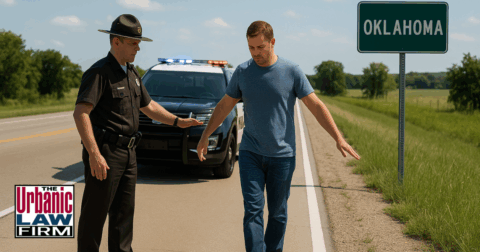 When an Oklahoma officer pulls you over for suspected DUI, the traffic stop can feel like a pop quiz you never studied for. You suddenly have bright lights in your mirrors, fast questions, and strange balancing tricks on the side of the road. Those roadside “tests” come straight from the NHTSA Standardized Field Sobriety Test (SFST) Participant Manual and Instructor Guide, and prosecutors love to treat them like science.
However, those same manuals give you powerful defenses when officers cut corners, rush instructions, or change the tests. This ultimate guide walks you through what the manuals actually say, how Oklahoma officers get trained, and how their mistakes can help your DUI defense.
Accused after an Oklahoma SFST? Talk to Urbanic Law.
If you’ve been accused of a similar offense in Oklahoma, reach out for a free consultation. You can call 405-633-3420 or use our secure contact form here: request your free case review. We’ll go through what happened during your stop and how SFST training rules might actually help you, not the State. Attorney Frank Urbanic has completed the same NHTSA SFST and ARIDE training law enforcement officers go through, and he is a qualified SFST instructor. We use this extensive SFST knowledge to pick apart every aspect of your DUI or APC case.
What are standardized field sobriety tests in Oklahoma?
Standardized Field Sobriety Tests are a set of three roadside exercises officers use to decide whether to arrest you for DUI or APC. The National Highway Traffic Safety Administration (NHTSA) created the SFST program and publishes the official Participant Manual and Instructor Guide used to train Oklahoma officers. Those manuals explain how officers should give instructions, what they should look for, and how they’re supposed to record what you do.
In Oklahoma, these tests usually happen during Phase Three of a DUI investigation, after the officer has already watched your driving and spoken with you at the window. The SFST program focuses on “divided attention” tasks, which try to force you to split your focus between physical balance and mental instructions. When officers do the tests exactly as written, NHTSA claims they can help identify drivers at or above the legal limit. When they don’t, the reliability drops fast.
Key SFST terms from the NHTSA manuals
Standardized Field Sobriety Tests (SFSTs)
SFSTs are the three NHTSA-approved roadside tests: Horizontal Gaze Nystagmus, Walk-and-Turn, and One-Leg Stand. They’re called “standardized” because the manuals require the same instructions, the same clues, and the same scoring every time. If officers change how they give or score the tests, the manuals themselves warn that the validity can be compromised.
Horizontal Gaze Nystagmus (HGN)
Horizontal Gaze Nystagmus is an eye-movement test. The officer has you follow a stimulus, like a pen or small light, only with your eyes. They watch for involuntary jerking of your eyes as they move from side to side. The manuals say alcohol and certain drugs can make that jerking appear sooner and more clearly. HGN has six standardized “clues,” and officers are expected to check each eye carefully, with specific timing and distances.
Walk-and-Turn (WAT)
The Walk-and-Turn test is a divided attention exercise. You stand heel-to-toe on an imaginary or real line while listening to detailed instructions. Then you walk nine heel-to-toe steps down the line, turn in a specific way, and walk nine steps back. Officers look for standardized clues like stepping off the line, missing heel-to-toe, using your arms for balance, or stopping mid-walk. Even small deviations can be counted against you if the officer claims you “failed” the test.
One-Leg Stand (OLS)
During the One-Leg Stand test, you stand with your arms at your sides and raise one foot about six inches off the ground. You’re told to look at your raised foot and count out loud until the officer tells you to stop. The manuals list clues such as swaying, putting your foot down, hopping, or using your arms for balance. Stress, uneven surfaces, footwear, and medical conditions can all affect how you perform, even when you’re sober.
Three phases of DUI detection
NHTSA’s SFST system breaks a DUI investigation into three phases. Phase One covers “Vehicle in Motion,” where officers watch how you drive. Phase Two is “Personal Contact,” when they talk with you, smell for alcohol, and observe your speech and coordination. Phase Three is “Pre-Arrest Screening,” where the standardized tests and any preliminary breath test come into play. Each phase builds evidence toward the arrest decision, so attacking problems in any phase can help your case.
How SFSTs were developed and why that matters for your case
NHTSA funded research in the 1970s and 1980s to figure out which roadside tests best predicted high blood alcohol concentration. Researchers tested many exercises and narrowed them down to the three SFSTs you see today. Later field studies in Colorado, Florida, and San Diego looked at how officers used these tests in real traffic stops. Those studies led NHTSA to claim that properly given SFSTs can help officers make more accurate arrest and release decisions.
However, the manuals stress that accuracy depends on strict standardization. The tests must be given exactly as written, scored with the listed clues, and interpreted using specific criteria. If an Oklahoma officer rushes instructions, demonstrates the test incorrectly, or adds extra “homemade” clues, you and your attorney can argue that the scientific backing no longer applies. That gives you leverage in negotiations and at trial.
Three phases of DUI detection in Oklahoma traffic stops
Phase One: Vehicle in Motion
During Phase One, the officer watches how you drive before the stop. They’re trained to look for cues like weaving, drifting, almost hitting objects, or braking problems. They also watch how you respond to emergency lights and whether you pull over safely. Because these observations come before any SFSTs, challenging them can weaken the officer’s entire story about why they suspected impairment in the first place.
Phase Two: Personal Contact
Phase Two starts when the officer approaches your window. They listen to how you speak, watch your hands for fumbling, and smell for alcohol or other odors. The manuals even suggest officers use simple divided attention tasks during this phase, such as asking for your license and registration at the same time. If the officer misremembers what you said or adds details that aren’t in their report, you can highlight those inconsistencies later.
Phase Three: Pre-Arrest Screening
Phase Three is where the standardized tests and preliminary breath test come into play. At this point, the officer already suspects DUI and uses SFSTs to decide whether to arrest you. The manuals tell officers to rely on the three validated tests, plus any preliminary breath test allowed by Oklahoma law. When the officer skips tests, changes the order, or cherry-picks only the worst parts of your performance, those choices can undermine their probable cause claim.
Horizontal Gaze Nystagmus in Oklahoma DUI investigations
HGN is considered the most sensitive of the three SFSTs, but it’s also the most technical. Officers should position the stimulus at the right distance, move it at a consistent speed, and hold it at the edges of your vision for a set number of seconds. They look for lack of smooth pursuit, distinct jerking at maximum deviation, and jerking that starts before your eyes reach a 45-degree angle.
Even small errors in how the officer holds the stimulus, how quickly they move it, or how they position your head can affect what they think they see. Medical conditions, contact lenses, and certain legal medications can also influence eye movement. A strong Oklahoma DUI defense often includes cross-examining the officer on each step of the HGN checklist and comparing their testimony to what the manuals actually require.
Walk-and-Turn: divided attention on the roadside
The Walk-and-Turn test puts a lot of pressure on you in a very short time. You’re asked to stand heel-to-toe while listening to detailed instructions, then perform the nine-step out and nine-step back sequence exactly as described. The officer watches for eight specific clues, including losing your balance during instructions, starting too soon, missing heel-to-toe, stepping off the line, using your arms, stopping, making an improper turn, or taking the wrong number of steps.
Real roadside conditions rarely match the clean classroom environment described in the manuals. You might be on gravel, a sloped shoulder, or near fast traffic. You could be tired, stressed, or dealing with old injuries. When the officer doesn’t ask about those issues or ignores them, your attorney can argue that your performance says more about the situation than your sobriety.
One-Leg Stand: balance, timing, and nerves
In the One-Leg Stand, you must lift one foot about six inches off the ground, keep your arms at your sides, and count out loud until the officer tells you to stop. Officers look for four clues: swaying, using your arms, hopping, or putting your foot down. According to the manuals, they should time the test and stop it after a set period, even if it feels like forever to you.
Balance tests are tough for many completely sober people, especially if they’re older, heavier, stressed, or wearing certain shoes. The manuals even tell officers to consider age, weight, and physical limitations. When they ignore those warnings and still claim that one foot hitting the ground proves you were drunk, that overreach can help your defense.
How Oklahoma officers train on SFSTs
Oklahoma officers don’t just glance at a checklist. They attend SFST training that uses the Participant Manual and Instructor Guide. During that course, they sit through lectures, watch demonstrations, practice on each other, and even run tests on drinking volunteers whose breath alcohol levels are measured. Instructors are supposed to coach them, correct mistakes, and make sure they follow the standardized procedures.
Officers are also encouraged to keep an SFST log that records the date, your name, the clues they saw on each test, and whether you were arrested. That log can become valuable evidence. If the officer claims to be highly experienced but has thin or inconsistent logs, your attorney can challenge how reliable their “gut feeling” really is. Training that looks strict on paper may turn out to be sloppy in practice.
Limits of SFSTs and common Oklahoma defense angles
Even NHTSA acknowledges limits to these tests. SFSTs were validated under certain conditions, using specific instructions and scoring, and with subjects who met certain criteria. Real traffic stops often look very different. Weather, lighting, footwear, medical conditions, injuries, and roadside distractions all affect how you perform. So do nerves, especially when you’re worried about your job, your family, or your record.
Because of those limits, Oklahoma DUI defenses often focus on how closely the officer followed the manual and whether they considered alternative explanations. Your attorney might challenge the surface you stood on, the shoes you wore, or how the officer demonstrated the tests. They can also question the officer’s timing, their note-taking, and whether any dashcam or bodycam video supports or contradicts the report.
How SFSTs connect to breath and blood tests in Oklahoma
In Oklahoma, SFSTs and chemical tests are closely linked. The SFSTs give the officer a basis to arrest you for DUI or APC. After arrest, Oklahoma’s implied consent laws come into play, and you may be asked for a breath or blood test. The standard for those tests sits in separate statutes, but the roadside exercises are usually what gets you to the station in the first place.
When the SFSTs are weak, inconsistent, or badly administered, that can affect how a judge or jury sees the chemical test results. It can also matter for driver’s license hearings and negotiations with prosecutors. Strong SFST cross-examination might support motions to suppress evidence or convince the State to reduce or dismiss charges.
Oklahoma crimes and statutes linked to SFST evidence
SFST performance usually matters most in cases involving these Oklahoma offenses:
- Driving under the influence (DUI) and actual physical control (APC) – 47 O.S. § 11-902 covers driving, operating, or being in actual physical control of a vehicle while under the influence of alcohol, other intoxicating substances, or a combination.
- Aggravated DUI – Under 47 O.S. § 11-902, a very high alcohol concentration can lead to aggravated DUI, with tougher penalties and mandatory treatment conditions.
- Child endangerment related to DUI – 21 O.S. § 852.1, combined with 47 O.S. § 11-902, can lead to separate felony charges if a child is placed at risk while you’re accused of impaired driving.
Other important Oklahoma laws that interact with SFST evidence include:
- Implied consent for chemical tests – 47 O.S. § 751 addresses when you’re deemed to have consented to breath, blood, or other tests after a DUI or APC arrest.
- Admission of chemical test results – 47 O.S. § 756 covers when test results and refusals can be admitted in court and how alcohol concentration is interpreted.
Your SFST performance often becomes the bridge between how you looked on the roadside and how prosecutors try to use these statutes against you. A detailed legal review can expose weak links in that chain.
Building a defense strategy around SFSTs
A smart Oklahoma DUI defense doesn’t ignore SFSTs. Instead, it treats the Participant Manual and Instructor Guide as tools for cross-examination. Your attorney can walk through each instruction, each clue, and each step of the tests. Then they can compare that framework to what actually happened in your stop, as shown in reports, logs, and any video.
When the officer’s actions match the manuals, your lawyer may look for other issues, such as medical conditions or alternative explanations for your performance. When the officer drifts away from the standardized procedures, your attorney can highlight that gap and argue that the “science” no longer supports the State’s claims. Either way, knowing the SFST system better than the prosecution gives you a real advantage.
Talk to an Oklahoma DUI attorney who knows the SFST manuals
You don’t have to decode these manuals on your own. Urbanic Law has spent years studying how Oklahoma officers are trained and how they actually perform SFSTs in the field. We use that knowledge to challenge SFST evidence in DUI, APC, aggravated DUI, and child endangerment related to DUI cases.
If your case involves field sobriety tests, call 405-633-3420 or contact us online through our free consultation form. We’ll review your stop, your tests, and your options for pushing back.
Oklahoma SFST FAQs
What are standardized field sobriety tests in Oklahoma?
Standardized field sobriety tests in Oklahoma are three roadside exercises officers use during DUI and APC investigations: Horizontal Gaze Nystagmus, Walk-and-Turn, and One-Leg Stand. These tests come from NHTSA manuals that require specific instructions, clues, and scoring. Officers are supposed to follow those procedures the same way every time. When they don’t, the tests become much easier to challenge.
Can you refuse field sobriety tests in Oklahoma?
In most Oklahoma cases, SFSTs are voluntary, and you can refuse them. However, refusing may still lead to an arrest if the officer believes other signs point to impairment. A refusal can sometimes limit the State’s evidence at trial but might also appear in the police report. Because the right choice depends on your situation, you should talk with an attorney as soon as possible after any arrest.
How accurate are DUI field sobriety tests in Oklahoma?
NHTSA-sponsored studies claim the standardized field sobriety tests can be reasonably accurate when officers follow the manuals exactly and use all three tests together. Real Oklahoma roadside conditions often look different from controlled research settings, though. Stress, fatigue, medical issues, and poor testing conditions can reduce accuracy. That’s why a detailed legal review of how your tests were given is so important.
What happens if you fail field sobriety tests in Oklahoma?
If an Oklahoma officer believes you failed field sobriety tests, they’ll usually arrest you for DUI or APC and may ask for a breath or blood test. The officer’s SFST notes and any video can later appear in court or at driver’s license hearings. However, an arrest isn’t a conviction, and SFST performance is only one piece of the puzzle. Your lawyer can still challenge how the tests were given and what the results really mean.
Do Oklahoma officers have to follow the SFST manual exactly?
The SFST program is designed around strict standardization, and the manuals tell officers to follow the same instructions, clues, and scoring every time. In practice, Oklahoma officers sometimes rush, skip steps, or add extra “tests.” When they deviate from the manuals, the claimed scientific reliability of the SFSTs can be attacked in court. That’s one reason experienced DUI attorneys study the same manuals officers use.
This page is for informational purposes only and is not legal advice. Every case is unique; consult an attorney about your specific situation. Page last updated November 17, 2025. Consult the statutes listed above for the most up-to-date law.