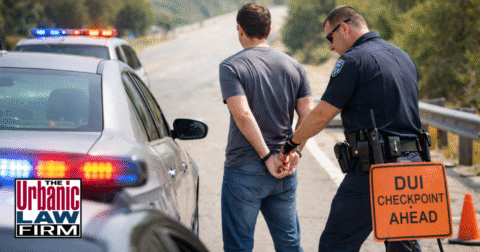
 In late 2025, Oklahoma’s DUI law went through a confusing series of changes. For a short time, prosecutors could turn a regular DUI into an aggravated DUI felony based on a long list of extra traffic violations. It didn’t depend only on a high blood alcohol level.
Then, a later law appeared to narrow aggravated DUI back down to cases with a BAC of 0.15 or more. At The Urbanic Law Firm, we’ve tracked these changes closely. This post explains what the competing versions say, how they interact with other traffic statutes, and how recent legislative history affects them. We also explain why, for arrests today, aggravated DUI in Oklahoma should mean cases with a 0.15 or higher BAC, not every “dangerous” driving allegation stacked on top of a DUI.
How We Ended Up with Two Different 2025 Aggravated DUI Definitions
Oklahoma’s main DUI statute is 47 O.S. § 11-902. In 2025, lawmakers changed it more than once in the same legislative session. One bill, commonly discussed as SB 54, created what many people now think of as the “new aggravated DUI.” A later bill, HB 2104, changed the statute again and reclassified DUI offenses into felony “classes.”
On the Oklahoma State Courts Network (OSCN) and in compiled versions of the statute, those changes show up as two key versions:
- Version 3 (SB 54, effective November 1, 2025) – adds a broad list of situations that turn a DUI into aggravated DUI.
- Version 4 (HB 2104, effective January 1, 2026) – redefines aggravated DUI as a DUI with a BAC of 0.15 or more and does not list those extra traffic violations.
Governor’s Veto, Override, and Signature Dates
The legislative history adds another layer to the analysis. The governor vetoed SB 54 on May 5, 2025. The Legislature then overrode that veto on May 29, 2025, and SB 54 took effect later that year. In contrast, the governor signed HB 2104 on June 10, 2025. That later bill both reorganized DUI penalties and restated the aggravated DUI definition.
Because both bills deal with the same statute in the same session, and HB 2104 came later in time and also received the governor’s signature, the question becomes: which aggravated DUI definition controls now?
What Version 3 Tried to Do: Turn Many Risky Driving Behaviors into Aggravated DUI
Version 3 of § 11-902 did not focus only on your blood alcohol number. It said that if you were guilty of DUI and, at the same time, did any one of several listed things, you could face a charge of aggravated DUI (a felony).
High BAC and Reportable Collisions
- High BAC – driving under the influence with a 0.15 or higher blood or breath alcohol concentration.
- Causing a “reportable” collision – Version 3 cross-referenced Oklahoma’s collision-reporting statute, 47 O.S. § 40-102. That law requires officers to prepare a report when a crash involves:
- Injury or death; or
- Property damage at or above a set dollar threshold.
Rules of the Road Violations Pulled into Aggravated DUI
Version 3 also pulled in several “Rules of the Road” provisions from Title 47. These statutes govern how you should place your vehicle on the roadway.
- Driving on the wrong side or failing to stay right – 47 O.S. § 11-301 requires most vehicles to travel on the right half of the roadway. It gives only narrow exceptions, such as passing, one-way streets, and avoiding obstructions.
- Improper meeting of oncoming traffic – 47 O.S. § 11-302 says vehicles that approach from opposite directions must pass to the right. Each driver must give the other at least half of the main-traveled portion of the roadway.
- Dangerous passing or driving left of center – 47 O.S. § 11-306 restricts driving left of center. It bans that practice near hills, curves, intersections, and railroad crossings, or where a driver’s view stays obstructed in a way that creates a hazard.
- Improper lane use – 47 O.S. § 11-309 tells drivers to stay in a single lane as nearly as practicable. It also governs safe lane changes, turn-signal use, and special two-way left-turn lanes.
- Crossing a divided highway median – 47 O.S. § 11-311 requires drivers on divided highways to remain on the proper roadway. A driver may not cross the median or barrier except at authorized openings or crossovers.
If the State claimed you violated any of these “Rules of the Road” while driving under the influence, Version 3 allowed an aggravated DUI filing. That could happen even when the BAC was under 0.15.
Other Version 3 Aggravating Factors
- Eluding a peace officer while DUI.
- Speeding 20 mph or more over the limit, or 10 mph or more over the limit in an active school zone.
- Having a passenger under 18 years old in the vehicle.
- Reckless driving in addition to DUI.
In short, Version 3 tried to turn a broad range of “extra dangerous” driving conduct into an automatic aggravated DUI felony. The State did not have to rely only on a high BAC number.
What Version 4 Did: Narrowed Aggravated DUI Back to High BAC
Just weeks after SB 54’s veto override, lawmakers passed HB 2104. That bill amended § 11-902 again and appears as Version 4, effective January 1, 2026.
Version 4 reorganized DUI penalties into new felony “classes” and rewrote the aggravated DUI subsection. Instead of listing all those extra traffic violations, it defined aggravated DUI more narrowly:
Aggravated DUI means a DUI where the driver’s blood or breath alcohol concentration is 0.15 or higher.
Under Version 4, aggravated DUI falls into the Class B3 felony category. It includes additional requirements such as treatment, supervision, and ignition-interlock. The text no longer says that a crash, a minor passenger, lane violations, crossing the median, or speeding automatically make the DUI “aggravated.”
That change creates a direct conflict between the two versions:
- Version 3 – aggravated DUI = DUI plus any of several listed “dangerous driving” factors.
- Version 4 – aggravated DUI = DUI plus BAC of 0.15 or more, with no list of extra traffic violations.
Additionally, there is conflicting language in Version 4 that makes it unclear whether a first-time aggravated DUI arrest is felony.
When Two DUI Amendments Conflict, Which One Controls?
Oklahoma law gives courts tools for dealing with conflicts between statutes from the same session.
“Conflicting Provisions” Statute – 75 O.S. § 22
75 O.S. § 22 says that when two provisions on the same subject cannot be reconciled, the later one controls for questions that arise out of that subject. Courts still try to harmonize the provisions first. But if that effort fails, the later act wins.
What Oklahoma’s Courts and Attorney General Say
In a leading case on this issue, the Oklahoma Court of Criminal Appeals in State v. District Court of Oklahoma County, 2007 OK CR 3, handled competing same-session amendments to juvenile laws. The Court said courts should first try to give effect to both statutes. If the amendments truly cannot coexist, the later-in-time act controls and the earlier one is treated as impliedly repealed.
An Attorney General opinion (89-011) reaches the same conclusion. It notes that courts strongly dislike implied repeals. Even so, when two same-session amendments to the same statute squarely conflict, the later enactment prevails.
The Rule of Lenity
Another principle matters here as well: the rule of lenity. When, after using normal tools of interpretation, a criminal statute still seems ambiguous, courts must interpret it in favor of the accused. That means they choose the narrower definition of the crime or the lighter penalty when two reasonable readings exist.
So What Counts as Aggravated DUI in Oklahoma Today?
Now we can put the pieces together and look at how the law applies to current DUI arrests.
- For conduct in the short window between November 1, 2025, and December 31, 2025, prosecutors have a stronger argument that Version 3’s broader list of aggravators applied.
- For conduct on or after January 1, 2026, Version 4 is the later-in-time amendment and it directly conflicts with Version 3’s aggravated-DUI language. Under the “conflicting provisions” statute and Oklahoma case law on same-session amendments, the better view is that Version 4’s definition controls. Version 3’s extra aggravators should not govern offenses after that date.
- Even if a court believed both versions could somehow coexist, the rule of lenity would push the court to choose the narrower definition in a criminal case. That definition is the Version 4 rule that ties aggravated DUI strictly to a 0.15 or higher BAC.
In practical terms, for a DUI arrest today in Oklahoma:
- Aggravated DUI should require:
- Proof of DUI under § 11-902, and
- A test result that shows 0.15 or higher BAC (or an equivalent blood result).
- Other facts can still make the case more serious, but they should not change the label by themselves. These include:
- Causing a reportable crash under § 40-102,
- Drifting into oncoming traffic or crossing the center line in violation of §§ 11-301, 11-302, or 11-306,
- Failing to stay in your lane or misusing a two-way left-turn lane under § 11-309,
- Crossing a divided-highway median in violation of § 11-311,
- Eluding, reckless driving, or high-speed driving,
- Having a child passenger in the vehicle.
Defending a DUI or Aggravated DUI Under the New Oklahoma Law
Because the 2025 amendments overlap and create a short “Version 3 window,” aggravated-DUI filings invite litigation. The Urbanic Law Firm looks beyond the charging language and asks several key questions in every DUI or aggravated DUI case:
- What was the exact date of the alleged offense?
- Which version of § 11-902 was in effect on that date?
- Is the State trying to use Version 3 aggravators for a post-January 1, 2026 case?
- Does the evidence really support a .15 or higher BAC under Version 4?
- Are there suppression issues with the stop, the field sobriety tests, the breath or blood test, or the officer’s investigation?
- Are there separate traffic charges such as lane violations, divided-highway violations, or collision-related offenses that the State is using to justify an aggravated label that the statute no longer clearly supports?
When prosecutors over-charge a case as aggravated DUI, we challenge that. We use the text of the statute, the “conflicting provisions” rule, same-session-amendment case law, legislative history, and the rule of lenity. Our goal is to push back on felony exposure where the law does not clearly support it and to protect our client’s rights at every stage.
What to Do If You’re Facing DUI or Aggravated DUI in Oklahoma
If you or a loved one has been arrested for DUI, the stakes may be high, especially if the paperwork mentions “aggravated DUI” or “Class B3 felony,” or references a crash, lane violations, or divided-highway driving. You may be dealing with:
- Possible felony exposure;
- Driver’s license suspension and ignition-interlock issues;
- Jail or prison time, fines, and long-term supervision;
- Serious consequences for employment, professional licenses, and immigration status.
We can review your case, identify which version of the law applies, and develop a defense strategy that fits your facts and your goals. That strategy may involve challenging the aggravated label, attacking the BAC evidence, or contesting the stop and investigation altogether.
This post provides general information only and does not create an attorney-client relationship. Every case is different. If you face a DUI or aggravated DUI charge in Oklahoma, talk directly with a lawyer about your situation. The Urbanic Law Firm is available to discuss the specifics of your case and help you understand your options.