Is it Legal to Shoot a Drone in My Backyard in Oklahoma?
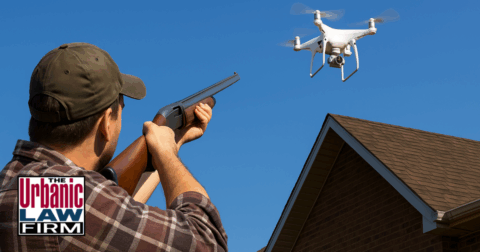 Short answer: No. Shooting at a drone is illegal under federal law because drones are treated as “aircraft.” Doing so can trigger federal felonies and separate Oklahoma charges for firing a gun and damaging property. (Asheville Citizen-Times)
Why you can’t shoot down a drone—federal law
The FAA classifies small unmanned aircraft (drones) as aircraft, and it explicitly warns that you may not shoot at them. Federal law 18 U.S.C. § 32 makes it a crime to damage or destroy an aircraft; penalties can include up to 20 years in prison in some scenarios. (Asheville Citizen-Times)
Also, most counter-drone “jamming” or “spoofing” tools are illegal for private citizens under FCC rules; don’t try them.
What Oklahoma law says about drones over homes
The Oklahoman explains that Oklahoma’s 2022 drone privacy law (21 O.S. § 1743) makes it a misdemeanor to use a drone to trespass into airspace within 400 feet over private property with the intent to surveil, eavesdrop, or record a person where they have a reasonable expectation of privacy.
Oklahoma also restricts drones around critical infrastructure under 3 O.S. § 322. These rules target the drone operator—not homeowners.
As summarized by UAV Coach’s Oklahoma Drone Laws Guide, drone operators flying under FAA Part 107 must stay below 400 feet and comply with all federal and state regulations.
Oklahoma crimes you could face if you shoot a drone
- Federal: Destruction of aircraft (18 U.S.C. § 32)
- Reckless Conduct with a Firearm (21 O.S. § 1289.11)
- Discharging a Firearm in Public/Where Others Are Endangered (21 O.S. § 1364)
- Malicious Injury to Property (21 O.S. § 1760)
- Local Ordinances — Many Oklahoma cities ban firearm discharge inside city limits, subject to narrow exceptions.
What to do if a drone is bothering you in Oklahoma
- Document what you see—time, location, photos, or video if possible.
- Do not interfere with the flight; never attempt to knock it down.
- Contact local law enforcement if you believe the drone is spying or harassing you. Police can apply Oklahoma’s drone privacy statute (21 O.S. § 1743).
- Report unsafe operations to the FAA (especially near airports or reckless flying).
Common misconceptions
“It’s over my yard, so I own the airspace.” Property rights don’t give you authority to destroy aircraft; federal airspace law controls. (UAV Coach)
“I’ll just jam it.” Radio jammers and anti-drone guns are illegal for private citizens under FCC regulations. (FCC)
Need help? Talk to an Oklahoma criminal defense attorney.
If you’re investigated or charged after a drone incident—or you want to pursue charges against a drone operator—contact The Urbanic Law Firm. We defend firearm and property-crime cases statewide.
FAQs
Is it legal to shoot down a drone over my backyard in Oklahoma?
No. Shooting at a drone is illegal under federal law and can also violate Oklahoma firearm and property-damage statutes.
What Oklahoma crimes could I be charged with if I shoot a drone?
You could face reckless conduct with a firearm (21 O.S. § 1289.11), discharging a firearm (21 O.S. § 1364), and malicious injury to property (21 O.S. § 1760), plus federal aircraft-destruction charges.
Can a drone legally fly over my Oklahoma property?
Often yes under FAA rules, but Oklahoma law (21 O.S. § 1743) prohibits drone trespass or surveillance and recording where there’s a reasonable expectation of privacy.
What should I do if a drone is harassing me in Oklahoma?
Document the incident, avoid interfering with the flight, contact local law enforcement, and report unsafe flying to the FAA.
Is it legal to use a jammer or anti-drone gun in Oklahoma?
No. FCC rules make radio jammers illegal for private citizens, and using them can bring federal penalties.
Contact The Urbanic Law Firm
If you’ve been charged with shooting down a drone, reckless conduct with a firearm, discharging a firearm in public, or any other criminal offense in Oklahoma, contact The Urbanic Law Firm today. Call 405-633-3420 or fill out our form.
Based in Oklahoma City and serving clients statewide.
This page is for informational purposes only and is not legal advice. Every case is unique; consult an attorney about your specific situation.