Explosives & Bombing Crimes Defense in Oklahoma
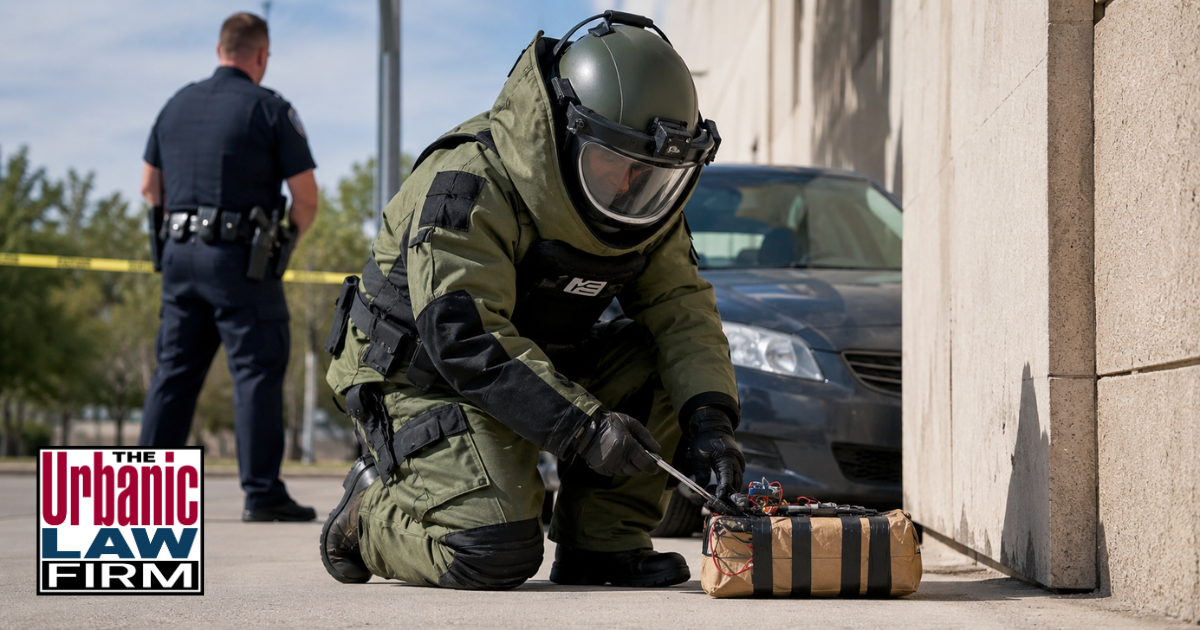 Explosives and bombing cases in Oklahoma can involve an alleged device, a threat, a vehicle, a building, a workplace, or regulated blasting materials. These cases often turn on intent, wording, device classification, lab testing, ownership, search issues, and whether the State can connect you to the item or statement. This guide is for people accused of Oklahoma explosives crimes who are trying to understand the charges, the evidence, the risks, and the defense issues that usually matter most.
Because these allegations can involve public safety, property damage, injury risk, or emergency response, prosecutors often treat them as serious felony cases. However, the label alone doesn’t prove the charge. The details matter. A defense review should separate fear, assumptions, and police shorthand from what the law actually requires.
Talk with an Oklahoma explosives crimes lawyer early
If you’ve been accused of explosives and bombing crimes in Oklahoma, reach out for a free consultation. We’ll look at the charging document, the search, the alleged device or threat, and the State’s proof of intent. Call us at 405-633-3420 or use our secure online form.
What counts as an explosives or bombing offense in Oklahoma?
An Oklahoma explosives or bombing offense can involve placing, using, making, possessing, transporting, threatening, or wiring an explosive, incendiary device, simulated bomb, or blasting agent with unlawful intent. Some cases focus on an actual device. Others focus on words, calls, messages, plans, or parts that police believe show an unlawful purpose.
How explosives and bombing cases work
These cases usually begin with a call, report, search, traffic stop, workplace complaint, bomb-squad response, or emergency scene. Then officers try to identify the device, the speaker, the sender, the owner, or the person with control over the location. In addition, investigators may collect phones, messages, lab samples, surveillance video, and witness statements.
Because the same facts can support several theories, the State may charge more than one count. Still, each count needs its own proof. A serious allegation can become weaker when the State can’t prove intent, device status, identity, or a lawful search.
What these Oklahoma charges have in common
Explosives and bombing cases share several themes. Prosecutors usually look for unlawful intent, a covered device or material, a threat to people, damage to property, or conduct tied to a vehicle, structure, workplace, or public place. These cases also sit near other Oklahoma riot and public safety crimes because the State often claims public danger or emergency disruption.
In addition, prosecutors may pair these allegations with arson, assault and battery with a dangerous weapon, burglary, possession of a controlled dangerous substance, or possession of drug paraphernalia. Those added counts can change the tone of the case, even when the explosives proof stays disputed.
Why intent and device evidence matter
Intent often drives the case. The State may claim you meant to kill, injure, intimidate, damage property, or create fear. However, a defense can challenge whether the words, materials, or conduct actually prove that purpose.
Device evidence also matters. A lab report, bomb-squad report, photo, or officer description may not answer every legal question. Therefore, the defense should review whether the item fits the statutory definition and whether the State preserved it correctly.
Crimes in this explosives and bombing group
Bombing and explosive or destructive device offenses
Oklahoma’s bombing statute covers several acts involving explosives, incendiary devices, simulated bombs, threats, and related materials (21 O.S. § 1767.1, 21 O.S. § 1767.2, and 21 O.S. § 1767.3). The law can apply to placing a device near property, causing an explosion, making certain threats, possessing covered materials with unlawful intent, or using a device during another felony.
Because this statute covers both actual devices and alleged threats, the facts can vary a lot. However, the State still has to prove the charged theory. The defense may focus on the exact words used, whether the object fits the law, who controlled the item, and whether police stretched the facts beyond the statute.
Wiring equipment, a vehicle, or a structure with explosives
Wiring any equipment, vehicle, or structure with explosives focuses on attaching or placing explosive material, a thing, or a device in or on a vehicle or occupied-type structure with intent to cause bodily injury or death (21 O.S. § 849). This is a severe felony allegation because it centers on a vehicle or structure where people may be present.
However, the State still has to prove more than a scary object or suspicious placement. It must connect you to the item and prove the required intent. Therefore, defenses often look at access, fingerprints, DNA, video, tool marks, location history, and whether the device evidence supports the State’s story.
Possession of explosives with unlawful intent after a felony conviction
Possession of explosives with unlawful intent after a felony conviction applies when a person with a felony conviction possesses explosives with unlawful intent (21 O.S. § 1368). The prior conviction matters, but possession and unlawful intent still matter too.
Because possession can mean different things in real life, the defense may challenge control, knowledge, access, and ownership. In addition, lawful work, storage, lack of intent, or a weak link between you and the item may change the case.
Using explosives or a blasting agent with intent to harm or damage property
Using explosives or a blasting agent with intent to kill, injure, intimidate, or damage property can involve violations tied to explosives, blasting agents, permits, rules, and unlawful purpose (63 O.S. § 124.8). The law also addresses permit-holder responsibility for people working under a company or corporation permit.
Because this statute can overlap with regulated blasting work, the defense should examine the permit, jobsite rules, training records, storage procedures, and who handled the material. However, if the State claims intent to harm or damage, the defense should also test every fact used to prove that intent.
Defense strategies for explosives and bombing offenses in Oklahoma
When we defend these cases, we first look at the exact charge, the alleged device or statement, the search, the timeline, and the State’s intent theory. Then we compare the police report to the lab evidence, phone evidence, witness statements, and statutory definitions. Because these cases can carry serious consequences, small factual gaps can matter.
- Challenge unlawful intent. The State may have a device, message, or suspicious item, but it still must prove the mental state required by the charged offense.
- Challenge whether the item fits the legal definition. A scary-looking object, part, or container may not satisfy the statute.
- Challenge identity, possession, and control. Shared spaces, borrowed vehicles, unlocked areas, and workplace access can create reasonable doubt.
- Challenge the search and seizure. If officers overstepped a warrant, consent, traffic stop, or emergency search, key evidence may be vulnerable.
- Challenge threat context. The defense should review tone, wording, audience, recording quality, intoxication claims, mental state, and whether the statement described a real covered device.
Key terms in explosives and bombing cases
Explosive or explosives
Explosive or explosives means a chemical compound, mixture, device, or mechanical mixture that functions by explosion or is commonly used or intended to produce an explosion. The term can include gunpowder, dynamite, bombs, and materials classified as explosives by the United States Department of Transportation. In these cases, that definition often decides whether the object was ordinary property, a dangerous device, or covered explosive evidence. (21 O.S. § 1767.3 & 63 O.S. § 121.1)
Incendiary device
Incendiary device means a chemical compound, mixture, or device whose primary purpose is to ignite on impact or as a result of chemical reaction. The definition includes a Molotov cocktail or firebomb. In this group, the term can separate a fire-related allegation from an explosive-device allegation. (21 O.S. § 1767.3)
Component parts
Component parts means separate parts which, if assembled, would form an explosive device. For an incendiary device, the parts consist of inflammable material, a breakable container, and a source of ignition. This term matters when the State claims parts show preparation, even when no completed device caused damage. (21 O.S. § 1767.3)
Simulated bomb
Simulated bomb means a device or object that appears by design, construction, content, or characteristics to be, or to contain, an incendiary device, explosive, or explosives. However, it’s actually an inoperative facsimile or imitation. For threat cases, that can matter even when the object can’t detonate. (21 O.S. § 1767.3)
Blasting agent
Blasting agent means a material or mixture of fuel and oxidizer intended for blasting, not otherwise classified as an explosive. The finished product must not detonate unconfined by the listed test cap or equivalent strength. This term matters most in permit-holder and blasting-regulation cases. (63 O.S. § 121.1)
Oklahoma explosives and bombing offenses FAQs
What is an Oklahoma bomb threat charge?
An Oklahoma bomb threat charge usually claims that you threatened, reported, or conveyed information about an explosive, incendiary device, or simulated bomb. The case may depend on the exact words used, the method of communication, who received the statement, and whether the State can prove the required intent.
Can Oklahoma explosives charges be filed if no one was hurt?
Yes. Oklahoma explosives charges may be filed even when no one was hurt. Some theories focus on threats, possession, placement, materials, or intent. However, injury or death allegations can make the case much more serious.
What defenses work in Oklahoma explosives and bombing cases?
Common defenses include lack of unlawful intent, mistaken identity, no possession or control, an item that doesn’t fit the legal definition, unreliable threat evidence, unlawful search, poor evidence handling, and missing lab proof. The best defense depends on the exact charge and facts.
Can an Oklahoma explosives or bombing offense be expunged?
Maybe. Eligibility depends on the outcome, the charge level, prior record, waiting periods, and whether the case ended in dismissal, acquittal, deferred sentence, or conviction. Oklahoma expungement law is technical, so review the current rules before assuming a record can or can’t be sealed. You can read more about Oklahoma expungement law.
Will an Oklahoma explosives case depend on expert testimony?
Often, yes. A case involving a device, parts, residue, or blasting material may depend on bomb-squad work, lab testing, chain of custody, or expert opinions. However, a threat-based case may depend more on recordings, messages, caller identity, and context.
Explosives and bombing offenses in Oklahoma news
A KSWO report about a Grady County hospital threat described an allegation that a man threatened to come to an emergency room with a bomb strapped to him. The report said he faced a telephone bomb threat charge. That kind of case shows why threat wording, caller identity, recordings, intent, and the claimed explosive device all matter in an Oklahoma explosives crimes defense.
This page is for informational purposes only and is not legal advice. Every case is unique; consult an attorney about your specific situation. Law last reviewed on May 7, 2026 by attorney Frank Urbanic. Page last updated May 7, 2026. Consult the statutes listed above for the most up-to-date law.

Oklahoma Bird Law Attorneys: The Urbanic Law Firm v. Charlie Kelly

Banging More Than the Gavel! Another Judge Sex Scandal Raises Oklahoma Criminal Law Questions

Stick a fork in him! Brent Swadley convicted: Oklahoma post-trial sentencing procedure explained

When Workplace Retaliation Leads To Harm

Brent Swadley Trial Analysis: False Claims & Conspiracy to Defraud State Explained
| THESE OFFENSES IN THE NEWS |