Hunting Trespass, Road Hunting & Interference Crimes Defense in Oklahoma
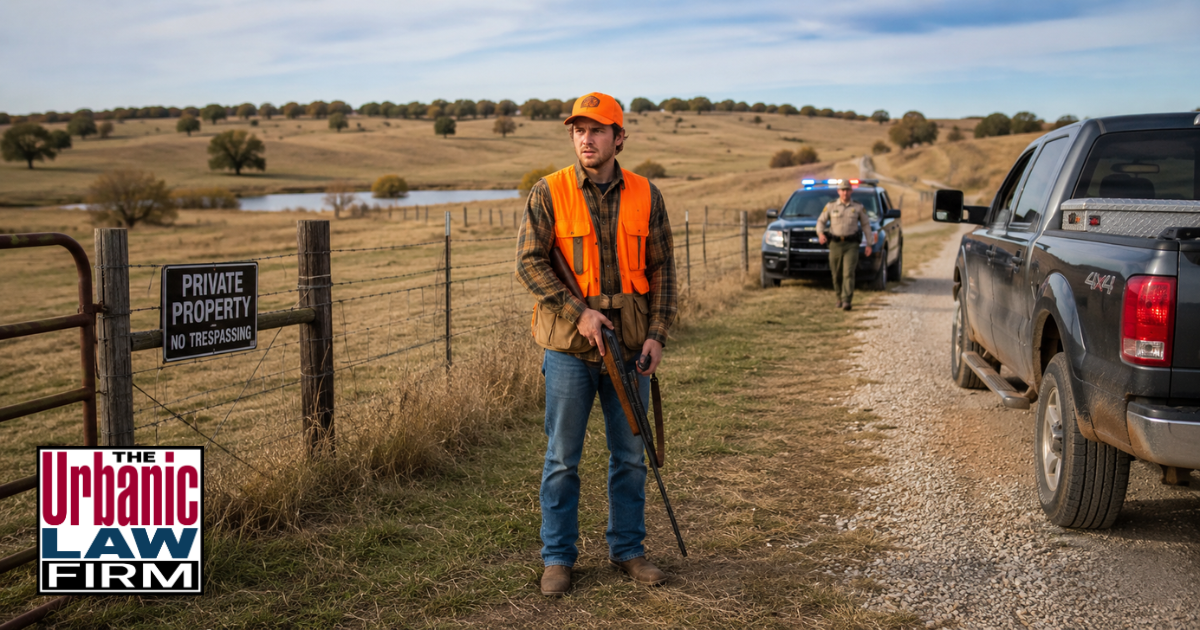 Hunting trespass, road hunting, hunter-orange, interference, and fishing-without-consent cases often turn on location. They also turn on permission, land boundaries, vehicles, field statements, and what a game warden can prove. This guide is for people accused of these offenses in Oklahoma who want to understand consent, road-location evidence, wildlife enforcement, and defense issues.
These allegations can grow once a field contact includes a firearm, a vehicle, a landowner complaint, or a claimed refusal to follow orders. In addition, license consequences and seized property can matter even when the case starts as a misdemeanor. You can also review our broader Oklahoma hunting and wildlife crimes guide.
Quick links for hunting trespass and road hunting cases
Talk with an Oklahoma wildlife crimes defense lawyer
If you’ve been accused of hunting trespass, road hunting, or interference crimes in Oklahoma, reach out for a free consultation. We’ll review the citation, maps, body-camera footage, landowner facts, and any seized property before you decide your next move. Call us at 405-633-3420 or use our secure online form.
Can you hunt on private land in Oklahoma without written permission?
Oklahoma can treat hunting or taking wildlife on another person’s land without consent as a crime. Written permission can matter, but consent can also become a disputed fact. However, the defense may change when the land involves adjoining property, leased ground, open gates, shared access roads, family land, or a mistaken boundary.
How hunting trespass and road hunting cases work in Oklahoma
What these offenses have in common
These cases usually center on permission, location, visibility, vehicle use, and what witnesses saw. Many start with a landowner complaint, trail-camera photo, road report, harvest record, or field interview.
In addition, prosecutors may look at trespass, reckless conduct with a firearm, DUI, or resisting arrest. Those companion charges may appear when the stop includes property-entry claims, unsafe gun handling, alcohol, or a field-stop dispute.
Evidence that often drives the case
Because these cases happen outdoors, evidence can be messy. Maps may disagree. Property lines may be hard to see. Photos may show a vehicle, but not who shot. Also, a witness may know what happened after the shot, but not where the shot started.
Game wardens often rely on interviews, shell casings, feathers, blood, GPS points, harvested-animal records, and vehicle descriptions. However, every piece of evidence needs context. A strong defense tests the timeline, location, identification, and legal authority behind the stop.
Crimes in this Oklahoma hunting trespass group
Hunting on Land of Another Without Consent
Oklahoma’s hunting-without-consent law covers hunting or taking wildlife on another person’s land without consent from the owner, lessee, or occupant (29 O.S. § 5-202(A)). The broader section also discusses consent duration, written complaints, certain motor-driven conveyances, and defenses tied to express or implied permission.
Because this charge often depends on land boundaries, details matter. We look at maps, messages, lease terms, written permission, prior access, gate location, where you stood, and whether the complainant had authority over the land.
Hunting or Shooting From or Across Road / Highway / Railroad Right-of-Way
Oklahoma law can apply when the State claims you hunted, pursued game, or discharged a firearm too close to certain public places. It also covers shooting from or across a public road, highway, right-of-way, or railroad right-of-way (29 O.S. § 5-204).
However, road cases can turn on small facts. The defense may focus on where the firearm was discharged, where the animal stood, whether the path crossed a road, and whether witnesses assumed more than they saw.
Required Hunter Orange Violations
Required hunter orange rules can apply during certain firearm hunting situations. The statute addresses head covering and outer-garment requirements for deer or elk hunting with legal firearms (29 O.S. § 5-205).
These citations may look simple, but the facts still matter. The season, weapon type, target species, clothing, visibility, photographs, and officer observations can all affect the defense.
Obstruction of Shooting, Hunting, Fishing, and Trapping
Oklahoma prohibits willfully obstructing or impeding another person’s lawful shooting, hunting, fishing, or trapping activity. The law also protects a landowner’s or lessee’s lawful right to prohibit those activities on that land (29 O.S. § 5-212).
Because the word “willfully” matters, the defense may focus on purpose. A protest, property dispute, warning, misunderstanding, or landowner conflict may look different from a purposeful effort to block lawful outdoor activity.
Fishing on Land of Another Without Consent
Oklahoma law also addresses fishing on another person’s land without consent from the owner, lessee, or occupant (29 O.S. § 6-304). The section also addresses consent duration, certain exempt lands, written complaints, and land devoted to farming, ranching, or forestry.
Fishing cases often involve ponds, creeks, river access, fences, signs, and rural property lines. In addition, a defense may depend on whether the land was occupied, posted, exempt, leased, or clearly controlled by the complaining party.
Defense strategies for Oklahoma hunting trespass cases
When The Urbanic Law Firm defends these cases, we first look for the facts that control permission, location, and intent. We review the citation, body-camera footage, land maps, ownership records, written permission, harvest data, trail-camera photos, witness statements, firearm evidence, and vehicle evidence.
- Location and boundary proof. The State may not prove where you stood, where the shot originated, or whether the road rule applies.
- Camera and witness reliability. Trail-camera angles, distance, darkness, vehicle descriptions, and assumptions can create real proof problems.
- Willfulness and mistake. Interference allegations may require purposeful conduct, not confusion, misunderstanding, or accidental presence.
- Stop, search, and seizure issues. We check whether the officer had lawful grounds to stop you, search your vehicle, seize property, or use statements against you.
Key terms for hunting trespass and road hunting cases
Hunting or taking
“Hunting or taking” means pursuing, killing, capturing, trapping, snaring, and netting wildlife. It also includes attempts and assistance to others in taking or attempting to take wild animals. (29 O.S. § 2-118)
This term matters because the State may claim hunting occurred even without a completed harvest.
Fishing
“Fishing” means taking or attempting to take fish or other aquatic-dwelling organisms by hook and line, seine, trap, or other legal means. (29 O.S. § 2-110)
That definition matters because a fishing trespass case may involve an attempt, not just a kept fish.
Public road
“Public road” means any governmental or corporate roadway where vehicular ingress and egress isn’t restricted and the roadway is routinely used by the public. (29 O.S. § 2-133.1)
This definition can shape whether a road-hunting allegation fits the actual location.
Headlighting
“Headlighting” means using any light or light-enhancement device commonly known as a nightscope, with a firearm, longbow, or crossbow, from sunset to sunrise for taking wildlife. (29 O.S. § 2-117)
This term can appear in field investigations involving vehicles, nighttime conduct, lights, and road-location claims.
Willful
“Willful” means purposeful. It implies a purpose or willingness to commit the act or omission, and it doesn’t require intent to violate the law, injure another, or gain an advantage. (21 O.S. § 92 & jury instruction 4-28)
This term can matter in interference cases because the State must connect the alleged obstruction to purposeful conduct.
Frequently asked questions about Oklahoma hunting cases
Can I be charged in Oklahoma for hunting on private land if I thought I had permission?
Yes. However, your belief about permission can become a major defense issue. Text messages, prior permission, lease access, family authority, open gates, property maps, and boundary confusion may all matter.
What does Oklahoma consider road hunting?
Road hunting can involve claims that someone hunted, pursued game, or shot from or across a road, highway, right-of-way, or railroad right-of-way. The exact location of the person, firearm, road, and animal can be critical.
Can an Oklahoma hunting or fishing trespass charge be expunged?
Maybe. Expungement depends on the outcome, your record, waiting periods, and the exact charge history. You can learn more in our Oklahoma expungement law guide.
What defenses apply to an Oklahoma hunter orange citation?
Possible defenses may involve the season, species, weapon type, clothing worn, visibility, identification, officer observations, and whether the rule applied to your activity. Photos and body-camera footage can matter.
Can Oklahoma game wardens seize my firearm or wildlife in a hunting case?
They may seize evidence in some investigations. However, the legality of a seizure depends on the stop, the search, the officer’s authority, the facts known at the time, and how the evidence was handled.
A hunting-without-consent report in the news
In a report from The Penny News, wardens described a landowner complaint, trail-camera photos, road evidence, and a later confession in a turkey case. The report said the person received citations for shooting from a public roadway, hunting with a motorized conveyance, and hunting without landowner consent. That fact pattern shows why these cases often turn on land boundaries, witness reports, and whether the alleged shot came from a road.
This page is for informational purposes only and is not legal advice. Every case is unique; consult an attorney about your specific situation. Law last reviewed on May 7, 2026 by attorney Frank Urbanic. Page last updated May 7, 2026. Consult the statutes listed above for the most up-to-date law.

Oklahoma Bird Law Attorneys: The Urbanic Law Firm v. Charlie Kelly
Banging More Than the Gavel! Another Judge Sex Scandal Raises Oklahoma Criminal Law Questions

Stick a fork in him! Brent Swadley convicted: Oklahoma post-trial sentencing procedure explained

When Workplace Retaliation Leads To Harm

Brent Swadley Trial Analysis: False Claims & Conspiracy to Defraud State Explained
| THESE OFFENSES IN THE NEWS |