Trespass Crimes Defense in Oklahoma
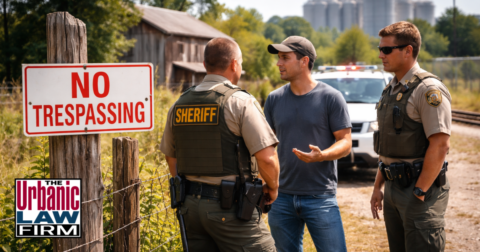 If you are accused of trespass, the State claims you crossed a line on someone else’s property. That might be a farm fence, a rail yard gate, a plant perimeter, or even a hotel hallway. However, not every step onto land becomes a crime, and Oklahoma trespass laws are more complex than a simple “no trespassing” sign.
Because trespass charges often arise from tense encounters on private or restricted land, they can escalate fast. Officers may add related counts like malicious injury to property, burglary, or interference with critical infrastructure. So it helps to see how these trespass offenses fit together with broader property crimes such as the ones gathered on the Oklahoma burglary and trespass crimes hub.
Quick links for trespass charges
Get help early on trespass charges in Oklahoma
If you’ve been accused of trespass crimes in Oklahoma, you don’t have to sort this out alone. Early advice can help protect your record, your job, and your freedom before small property disputes grow into bigger criminal cases.
Call us at 405-633-3420 or use our secure online form.
How Oklahoma trespass laws differ from burglary
Burglary focuses on breaking into buildings or structures with an intent to commit another crime inside. Trespass focuses on the act of entering or remaining on land or premises without permission. Both deal with places, but trespass charges often start with arguments about signs, warnings, consent, and what the property is used for.
In many trespass cases, prosecutors say you entered after being forbidden, refused to leave, or went into an area that is off limits to the public. In addition, lawmakers created special trespass statutes for sensitive locations. Those include railroad property, critical infrastructure, and private land used for farming, ranching, or forestry.
Because these laws share similar themes, the same defense issues repeat. Was there clear notice to stay away. Did you have express or implied permission. Did officers overreach with searches, statements, or property seizures. This guide pulls those threads together so you can see the patterns.
Trespass crimes in this group
Trespassing under Oklahoma general trespass statutes
General trespassing covers going onto the garden, yard, pasture, or field of another after being forbidden or without permission, or refusing to leave lodging premises when asked. The main criminal trespass statute is 21 O.S. § 1835, which also pulls in the separate hotel and lodging rules in 15 O.S. § 508. This offense is usually a misdemeanor but can carry stronger consequences if the State claims you tried to commit waste, theft, or damage while on the land.
In many cases, the fight centers on communication and context. You may have believed you had permission from an owner, employee, or past practice. Signs might have been missing or unclear. Officers also sometimes treat honest mix-ups over property lines, shared driveways, or rental boundaries as willful trespass when a civil fix would make more sense.
Trespassing on railroad property
Oklahoma has a dedicated statute for trespassing on railroad property, 21 O.S. § 1752.1(1). It targets people who walk or remain on tracks, rail yards, bridges, or other railroad areas without permission from the railroad. The law makes room for railroad employees and others with official duties, but it treats most unauthorized access as a crime because of obvious safety risks.
So prosecutors often file this charge when officers find people shortcutting across tracks, exploring rail yards, or hanging around trains. The State may argue you ignored posted warnings or verbal orders. A strong defense looks closely at the property layout, public crossings, lighting, and the exact place officers claim you stood or walked.
Trespass by a masked person demanding entry
Under 21 O.S. § 1302, it is a crime to enter the premises of another or demand entry into a house or enclosure while masked or in disguise with an intent to injure someone or damage property. The same statute also supports more serious felony charges when a masked person uses a dangerous weapon. Prosecutors see this law as a tool for cases that mix trespass with intimidation.
You might face this charge after a heated dispute at a home, business, or other private location where someone reports a masked person at the door. However, the State still has to prove you were the person at the scene, that you wore a mask or disguise, and that you had the intent the law requires. Surveillance footage, lighting, eyewitness reliability, and what you actually said at the door can all matter.
Trespass to a critical infrastructure facility
Trespass to a critical infrastructure facility, covered in 21 O.S. § 1792(A), raises the stakes far above basic trespass. The statute applies when someone willfully enters property that contains a critical infrastructure facility, such as certain energy, utility, or transportation sites, without permission from the owner or lawful occupant. A simple entry can be a misdemeanor, and alleged plans to damage or disrupt the facility can turn the case into a felony.
These cases often arise from protests, drone use, photography near plants or pipelines, or people exploring remote property lines. The State may claim you crossed a marked barrier or ignored obvious fencing. A careful defense examines maps, easements, signage, and exactly how “critical infrastructure facility” applies to that site. It also looks hard at any social media or political context the State tries to use as proof of intent.
Trespass to private land used for farming, ranching, or forestry
Oklahoma created a special trespass statute for private land that is primarily devoted to farming, ranching, or forestry. Trespass to this type of land is governed by 21 O.S. § 1835.2. It covers people who willfully enter this land without permission from the surface owner, surface lessee, hunting lessee, or lawful occupant. The law also increases penalties for repeated violations or when the State claims waste, theft, or damage.
Because rural property boundaries can be confusing, many of these cases involve misunderstandings about leases, hunting rights, and long-standing informal access. There are also specific defenses written into the statute, including issues with notice, signage, and who can grant permission. A strong defense challenges whether the land really fits the statute, who actually controls access, and whether your conduct was truly willful trespass rather than a good-faith mistake.
Defense strategies for trespass crimes in Oklahoma
Good trespass defenses usually start with the details that seem small at first. Where were you standing. Who spoke to you, and what exactly did they say. How clear was the line between public space and private or restricted land. The same themes show up across general trespass, railroad, masked entry, farm land, and critical-infrastructure cases.
- Show permission. Many trespass statutes require proof that you entered without consent. Evidence of express permission, a long-standing practice, a past business relationship, or an invitation can undercut that element.
- Attack notice. Trespass charges often assume you saw and understood a boundary or warning. Weak or hidden signs, open gates, confusing layouts, or shared access points can make a criminal conviction unfair.
- Challenge the location. The State must prove the place fits the statute, especially for railroad property, critical infrastructure facilities, and land devoted to farming or forestry. Surveys, maps, leases, and photos can show the law does not really apply.
- Dispute intent. Some trespass crimes turn on intent to damage property, interfere with operations, or intimidate people while masked. Messages, timing, and your actual conduct can support a noncriminal explanation for why you were there.
- Expose police overreach. Officers may overstep with stops, searches, or statements, especially near rail lines and sensitive facilities. If key evidence comes from an unlawful stop, search, or interrogation, it may be kept out of court.
Key terms for trespass charges
Trespasser
A person is a trespasser if he or she enters another’s land without consent or refuses to leave after a lawful request. (jury instruction 8-55)
Land
Land means private land primarily devoted to farming, ranching, or forestry including land and water and all structures, fixtures, equipment and machinery thereon. (21 O.S. § 1835.4)
Recreational use
Recreational use means any activity undertaken for exercise, education, relaxation, or pleasure on land owned by another. (21 O.S. § 1835.4)
Recreational trespass
Recreational trespass means remaining on land after being asked to leave by the owner or entering without the owner’s express or implied consent for recreation. (21 O.S. § 1835.4)
Critical infrastructure facility
Critical infrastructure facility means one of certain facilities completely enclosed by a fence or other physical barrier that is obviously designed to exclude. (21 O.S. § 1792)
Trespass crimes FAQs
What counts as trespass on private land in Oklahoma?
In Oklahoma, trespass usually means going onto another person’s land without permission or staying after you are told to leave. For rural property, the law pays special attention to land used for farming, ranching, or forestry, and those cases can involve higher fines and restitution. A careful review looks at consent, posting, and who actually controls the land.
Can a simple hotel dispute turn into a trespass case in Oklahoma?
Yes, hotel and lodging disputes can turn into trespass cases in Oklahoma when staff ask someone to leave and that person refuses. The criminal trespass statute ties into separate lodging rules, so officers sometimes write tickets or make arrests after arguments over payment, visitors, or noise. Strong defense work looks at video, witness accounts, and whether staff handled the situation fairly.
How serious is trespass to a critical infrastructure facility in Oklahoma?
Trespass to a critical infrastructure facility in Oklahoma is treated much more seriously than basic trespass. A simple unauthorized entry can be a misdemeanor, but prosecutors may file felony counts if they claim intent to damage equipment or disrupt operations. Those cases often involve complex evidence about the facility’s status, fencing, and any protest or political activity around the site.
What makes railroad trespass different from other trespass charges in Oklahoma?
Railroad trespass focuses on safety risks from walking or lingering on tracks, rail bridges, or yards in Oklahoma. The statute targets people who do not have permission from the railroad, but it also recognizes that some workers and emergency responders must be there. Defenses often involve whether the location was actually railroad property and whether public crossings or easements created confusion.
Do masked trespass allegations in Oklahoma always involve a felony?
Masked trespass allegations under the Oklahoma mask and disguise statutes do not always involve a felony. The law covers entering or demanding entry while masked with an intent to injure or damage, and related assault provisions can raise the charge. The exact level depends on the facts, including whether anyone was threatened, hurt, or confronted with a weapon.
Every trespass accusation turns on small details about place, permission, and intent. When you put those details next to the actual Oklahoma statutes and jury instructions, the case may look very different from the police report. Getting tailored advice early can keep a property dispute from turning into a lasting criminal record.
If you are dealing with any trespass charge in Oklahoma, you can talk through your options with a defense attorney who focuses on criminal law. You can also reach out through the firm’s contact form if a phone call is not convenient.
This page is for informational purposes only and is not legal advice. Every case is unique; consult an attorney about your specific situation. Page last updated March 9, 2026. Consult the statutes listed above for the most up-to-date law.