On-Person Carry, Intent, and Impairment Firearm Crimes Defense in Oklahoma
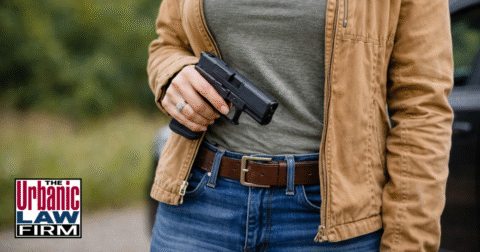 On-person firearm charges in Oklahoma often grow out of fast decisions and small details. Police look at where the gun was, how you carried it, and what else was going on around you. This on-person firearm carry intent and impairment Oklahoma group focuses on three crimes that share that same core fact pattern. Prosecutors try to show you meant to use a weapon, carried while impaired, or failed to follow Self-Defense Act rules. Because the State can spin the same moment in different ways, these cases can escalate very quickly.
Quick links
Reach out early if you face these Oklahoma gun charges
If you have an upcoming court date on any on-person firearm carry intent and impairment Oklahoma charge, timing matters. Important evidence can disappear fast, including video, texts, and witnesses who later move or forget details. When you get help early, you give your lawyer a better chance to steady the situation and control the flow of information. If you’ve been accused of one of these crimes, reach out for a free consultation so you can understand your options before you walk into court.
Call us at 405-633-3420 or use our secure online form.
How on-person carry, intent, and impairment charges work together
All three crimes in this group start with the same core idea: a weapon on or very close to your body. From there, each law adds a different twist. Unlawful intent focuses on what you meant to do with the weapon. Carrying under the influence focuses on how alcohol or other substances affected you while you had the gun. Unlawful carry under the Self-Defense Act focuses on who may carry, where you carried, and how you displayed the firearm.
Prosecutors often stack these allegations. You might see unlawful intent and carrying under the influence filed out of the same bar incident. A traffic stop could lead to an on-person firearm carry intent and impairment Oklahoma case plus a basic unlawful carry count. Sometimes the State adds disorderly conduct, resisting, or public intoxication to raise the pressure. Understanding how the statutes overlap helps you see where the State overreached and where there may be real risk.
This on-person group sits within the larger set of Oklahoma firearm charges. Many people face both on-person counts and other gun allegations, like sensitive-location or prohibited-person cases. Our broader Oklahoma firearms crimes guide explains how those categories interact and why prosecutors choose certain combinations.
Crimes in this on-person carry, intent, and impairment group
The on-person firearm carry intent and impairment Oklahoma group centers on three statutes that frequently appear together. Each one targets a different angle: your mindset, your condition, and your compliance with carry rules. Below is a brief overview of each crime and how it usually shows up in real cases.
Unlawful Intent to Carry a Weapon
Unlawful Intent to Carry a Weapon is charged under 21 O.S. § 1278. The State claims you carried or wore a deadly weapon or dangerous instrument with the purpose of unlawfully harming someone. The law covers guns and many other weapons, including blackjacks, metal knuckles, and similar devices. Prosecutors rarely have direct proof of what you were thinking. Instead, they point to words, gestures, and the context of the incident to argue that you meant to hurt someone and not simply carry for self-defense.
These cases often grow out of heated arguments, domestic disputes, or tense public confrontations. A person might raise or move a hand toward a weapon, or someone may claim you made a threat. Officers then treat that moment as proof of unlawful intent. However, Oklahoma law still allows lawful carry and self-defense. The gap between a defensive posture and an actual plan to attack can become a central fight in these cases.
Carrying a Weapon Under the Influence of Alcohol or Drugs
Carrying a Weapon Under the Influence of Alcohol is charged under 21 O.S. § 1289.9. This crime covers situations where you have or use a pistol, shotgun, or rifle while under the influence of alcohol or certain drugs. It doesn’t require driving or even a vehicle. The focus sits on your condition at the time you carried the gun. Officers usually rely on odor of alcohol, balance issues, slurred speech, admissions, and sometimes breath or blood tests.
Many people are surprised that they can face a weapons charge even when they believe they drank responsibly. Oklahoma law doesn’t always track the driving limit for this offense. If the State claims alcohol or other substances affected your judgment while you handled a firearm, prosecutors may file this charge. It often appears alongside other counts, like public intoxication, disorderly conduct, or even assault when the situation involves an argument or fight.
Unlawful Carry of a Firearm (Self-Defense Act)
Unlawful Carry of a Firearm under the Oklahoma Self-Defense Act is tied to 21 O.S. § 1290.4. That statute explains when adults who can lawfully possess a firearm may carry or transport a concealed or unconcealed gun. When officers believe you fall outside those protections, they often treat the situation as unlawful carry. They may say you were too young, legally barred from having guns, in a restricted place, or carrying in a way the Act doesn’t allow.
In practice, these cases hinge on details. Your age, immigration status, prior record, and the exact location can all matter. So does the way you carried the gun. A firearm in a visible holster may count as lawful open carry, while the same gun hidden under a jacket may be treated differently. Prosecutors sometimes combine this count with general unlawful carry allegations or sensitive-location charges when the incident happens in a school, bar, or other restricted area.
Defense strategies for on-person firearm charges in Oklahoma
On-person firearm cases are often built on officer impressions and quick snapshots of a tense scene. That gives you room to challenge how the story developed. Strong defenses attack weak assumptions about intent, impairment, and carry rules instead of accepting the report as the final word.
- Challenge the reason for the stop or encounter when officers stretched a minor issue or lacked clear reasonable suspicion.
- Attack the State’s proof of intent by highlighting statements, past behavior, and context that show lawful carry or self-protection.
- Question alcohol or drug evidence, including field tests, body-cam footage, and the timing or reliability of any chemical test.
- Highlight your rights under the Self-Defense Act when you met age, status, and location requirements for lawful carry.
- Expose credibility problems in witness accounts, especially claims about threats, drunken behavior, or aggressive gun handling.
- Limit charge stacking by pushing back on extra counts that simply repeat the same conduct in different language.
- Preserve options for favorable resolutions, including diversion, deferred sentences, or amendments that protect long-term firearm rights.
Every on-person firearm carry intent and impairment Oklahoma case has its own mix of facts, witnesses, and police behavior. The best defense plan selects the strategies that fit your specific incident instead of using the same approach in every case.
Key terms for on-person firearm carry
Concealed firearm
A concealed firearm is a loaded or unloaded firearm that a reasonable person can’t plainly see. The Self-Defense Act definition treats a gun as concealed even if part of the gun or holster shows, as long as you don’t deliberately display it. (21 O.S. § 1290.2 & jury instruction 6-45)
Unconcealed firearm or open carry
An unconcealed firearm, often called open carry, is a loaded or unloaded firearm that stays clearly visible to a reasonable person. Oklahoma law includes guns carried in belt or shoulder holsters, scabbards, slings, or cases as long as they remain in open view. (21 O.S. § 1290.2)
Firearm
For Self-Defense Act purposes, a firearm includes pistols, handguns, rifles, shotguns, and other guns that use an explosive charge to fire a projectile. The Act treats these weapons together as firearms when it discusses who may carry and how. (21 O.S. § 1289.31)
Deadly force
Deadly force means force that a person uses with the purpose of causing death or great bodily harm, or that a reasonable person would understand is likely to cause that kind of harm. (jury instruction 8-12)
FAQs about on-person firearm carry charges in Oklahoma
What counts as carrying a weapon “on your person” in Oklahoma?
You carry a weapon on your person when it is on your body or close enough for quick use. A gun in a waistband, pocket, purse, or bag within arm’s reach usually counts. Officers often argue that any firearm you can grab quickly is carried on your person under Oklahoma law.
Can I carry a gun after drinking in Oklahoma if I feel fine?
Carrying a gun after drinking always carries risk in Oklahoma, even when you feel normal. Officers and prosecutors look at how alcohol or other substances affected your behavior, not only at a test number. Slurred speech, balance issues, or aggressive conduct can lead to a carrying under the influence charge even when you think you are okay.
Can one incident lead to several on-person firearm charges in Oklahoma?
One event can trigger several on-person firearm charges in Oklahoma. A single bar fight, traffic stop, or domestic call may produce unlawful intent, carrying under the influence, and unlawful carry counts. The State sometimes files all of them to gain leverage, which makes it important to sort which charges actually fit the facts.
How serious is an unlawful intent to carry accusation in Oklahoma?
An unlawful intent to carry accusation is serious because it focuses on your purpose rather than simple possession. Prosecutors try to paint you as someone who brought a weapon to a situation in order to hurt someone. That kind of allegation can affect plea discussions, bond decisions, and how judges view you at sentencing.
Will an on-person firearm conviction affect future gun ownership in Oklahoma?
An on-person firearm conviction can affect your ability to own, buy, or carry guns in Oklahoma and beyond. Felony firearm convictions usually create long-term bars under state and federal law. Even some misdemeanors can complicate background checks, handgun licensing, and professional opportunities that involve weapons or security work.
This page is for informational purposes only and is not legal advice. Every case is unique; consult an attorney about your specific situation. Page last updated February 20, 2026. Consult the statutes listed above for the most up-to-date law.