Eluding Crimes Defense in Oklahoma
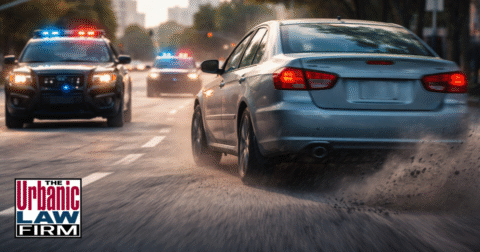 Eluding crimes focus on what happens after the lights come on behind you. Instead of pulling over, the State claims you tried to get away. That one choice can turn a simple traffic stop into a criminal case. Basic eluding is usually a misdemeanor. However, if officers say you endangered others or caused a serious crash, the charge jumps to a felony and the stakes rise fast.
These cases live in the space between traffic law and criminal law. Prosecutors often stack eluding with other dangerous driving crimes in Oklahoma like DUI, reckless driving, running a roadblock, or leaving the scene of an accident. They point to every lane change, turn, and burst of speed as proof of risk. So a short chase on video can become a long list of charges on the docket.
Quick links
Early legal help for eluding charges in Oklahoma
Evidence in an eluding case can move or disappear fast. Dash-cam and body-cam video, pursuit reports, crash data, and witness memories all matter. Because of that, it helps to get a defense lawyer involved as soon as you know an investigation or charge exists. If you’ve been accused of eluding crimes in Oklahoma, reach out for a free consultation before you speak to police or walk into court alone.
Call us at 405-633-3420 or use our secure online form.
How eluding crimes fit into Oklahoma dangerous driving laws
All three eluding crimes share the same basic story. You’re driving a motor vehicle. A peace officer behind you in an official car uses red lights and a siren and directs you to stop. Instead of stopping, you make a deliberate choice to keep going or take evasive action. The law treats that decision as “willful” flight, not just slow reaction time or confusion.
From there, the law divides eluding into levels. Basic eluding covers the choice to flee. The next level adds proof that your driving put someone else at risk. The highest level adds proof of an accident that caused “great bodily injury”. In real cases, these charges often appear with DUI, impaired driving, reckless driving, running a roadblock, or leaving the scene of an injury crash. Prosecutors argue those other counts show why you ran. A good defense looks at each element and each stack, not just the label on the top count.
Types of eluding crimes and what the State must prove
Basic eluding an officer in Oklahoma
Basic eluding covers the lowest level of this offense. You’re accused of driving a motor vehicle, receiving a red light and siren from a peace officer in an official police, sheriff, highway patrol, or state game ranger vehicle, being directed to stop, and then willfully speeding up, turning off your lights, or otherwise trying to get away instead of stopping (21 O.S. § 540A(A)). The State has to prove each of those parts beyond a reasonable doubt.
In practice, prosecutors lean heavily on dash-cam, body-cam, and radio traffic. They use that footage to show when the lights came on, whether the siren sounded, how clear the command to stop was, and what you did next. A defense often looks at the same video and asks different questions. Was the car obviously official? Did you need a safe place to pull over? Did you ever actually hear the siren? Those details can change the entire case.
Eluding and endangering others
Eluding and endangering others uses the same core facts as basic eluding but adds one more step. Subsection (B) of that statute raises the offense to a felony when the State claims your driving while fleeing put another person in danger. That can include high speeds near other vehicles, weaving through traffic, running lights in busy areas, or driving through spots where pedestrians or cyclists are close by.
Jury instructions tell jurors to look at how you drove during the chase, not just the speed on the dash-cam. They may hear about weather, traffic level, lighting, road design, and near misses. The State often tries to tie in separate charges like reckless driving or DUI to show “endangerment”. A defense lawyer can work through each claimed risk and show why it didn’t actually create a serious danger in your specific situation.
Causing an accident while eluding
Causing an accident while eluding is the most serious version of this crime. Subsection (C) applies when the State claims you caused an accident while trying to elude an officer and that crash caused great bodily injury to someone else. Great bodily injury means more than soreness or minor cuts. It involves a real risk of death, serious long-term disfigurement, or a significant loss or impairment of a body part’s function.
This offense is a felony and can mean significant prison time if you’re convicted. Prosecutors often combine it with charges like DUI, impaired driving, negligent homicide, or leaving the scene of an injury accident. A strong defense looks at causation. Did your actions actually cause the crash, or did another driver or road condition break the chain of events? It also digs into the medical records to test whether the claimed injuries truly meet the “great bodily injury” threshold.
Failing to stop at a police roadblock in Oklahoma
State law also creates a separate offense for avoiding a lawful police roadblock (21 O.S. § 540B). Officers may set up a roadblock when they have probable cause about a serious crime. That includes suspected eluding, escape from custody, or a felony involving someone in a moving vehicle.
The statute defines a roadblock as a temporary barricade, sign, standing vehicle, or similar obstacle beside a public roadway. One or more peace officers must be present and must direct each approaching driver to stop or proceed. A driver who willfully avoids the roadblock, fails to stop, or drives through without permission commits a Class C2 felony. That felony can carry significant prison time and fines in addition to any eluding, escape, or underlying felony charge.
Defined legal terms for eluding cases
Elude
Elude means more than just not stopping right away. It describes a choice to avoid or escape a pursuing officer, often by speeding away, turning off lights, or using other evasive moves after a clear signal to stop has been given (jury instruction 6-35).
Peace officer
Peace officer means a sheriff, police officer, or other law enforcement officer whose legal duty is to enforce the law and preserve the public peace (21 O.S. § 99).
Great bodily injury in Oklahoma law
Great bodily injury is an injury that creates a substantial risk of death, causes serious and lasting disfigurement, or leads to a significant and ongoing loss or impairment of the function of a bodily member or organ (21 O.S. § 540A(C)(2); jury instruction 6-30).
Defense strategies for eluding crimes in Oklahoma
Every eluding case turns on its own facts. However, certain defense themes appear again and again. A careful defense starts with the video and reports, then compares them to what the law actually requires. The goal is to show reasonable doubt on one or more key elements, reduce the level of the charge, or both.
- Challenge the stop signal. The State has to show a clear red light and siren from an official vehicle and a direct command to stop. If the patrol car wasn’t clearly marked, the siren never sounded, or you reasonably thought it wasn’t police, that can undercut the charge.
- Dispute a “willful” choice to flee. Eluding requires a deliberate decision to get away. Confusion, looking for a safe shoulder, panic, or a brief delay in a loud or crowded area can support an argument that you never meant to run.
- Attack the claimed danger level. For endangering-others and accident cases, prosecutors must prove real danger or great bodily injury, not just fast driving. Low traffic, open roads, minor contact, or modest injuries can weigh against a felony theory.
- Question identification of the driver. At night or at distance, it can be hard to tell who was behind the wheel. Tinted windows, borrowed cars, or conflicting witness accounts can weaken the State’s proof that you were the driver who allegedly fled.
- Test causation for crashes and injuries. For accident-based charges, the State has to link your driving to the collision and the injuries. Evidence of sudden actions by another driver, dangerous road design, or weather can break that chain.
Sometimes the best result is a full dismissal. Other times, the goal is to reframe the case as basic eluding or even a non-eluding traffic offense. The right strategy depends on the footage, the reports, the injuries, and your history.
Eluding crime FAQs
What does it mean to elude a peace officer in Oklahoma?
In Oklahoma, eluding a peace officer means you were driving, an officer in an official vehicle used red lights and a siren and told you to stop, and you then chose to keep going or take evasive action instead of pulling over. The key idea is a deliberate attempt to avoid the officer, not just hesitating or slowing down while you look for a safe spot.
Is basic eluding a misdemeanor or felony in Oklahoma?
Basic eluding under the first level of the statute is treated as a misdemeanor. It becomes a felony when the State claims you eluded in a way that endangered another person or when a crash during the chase caused great bodily injury. That step up in level is why prosecutors often push hard to prove extra risk or serious injury.
How do courts decide if others were endangered in an Oklahoma eluding case?
Courts and juries look at how you drove during the alleged flight. They consider speed, traffic, time of day, weather, lighting, and how close you came to other vehicles or people. Cutting through neighborhoods, running red lights in busy areas, or racing through parking lots carries more risk than briefly speeding on an empty rural road. A defense lawyer can show why your specific driving didn’t create the level of danger the State claims.
What counts as great bodily injury in an Oklahoma eluding accident case?
Great bodily injury is reserved for serious harm. It involves injuries that create a real risk of death, cause major and lasting disfigurement, or significantly impair the function of a body part. Broken bones that heal well, bruises, and soreness usually don’t qualify by themselves. Medical records, imaging, and follow-up treatment often become key evidence in deciding whether an injury meets this threshold.
Can you be charged with eluding in Oklahoma if the officer never used a siren?
The statute describes a red light and a siren from an official vehicle, but real cases can be more complicated. Some Oklahoma appellate decisions have allowed convictions where the patrol car had no siren yet used emergency lights and a horn, and the driver clearly knew an officer was trying to stop them. Whether the State can proceed without a siren in your case depends on the exact facts and how clearly any signal to stop came through.
This page is for informational purposes only and is not legal advice. Every case is unique; consult an attorney about your specific situation. Page last updated February 23, 2026. Consult the statutes listed above for the most up-to-date law.