Oklahoma DUI Driver’s License Consequences: IDAP, Revocation, Appeals, & Restricted Licenses
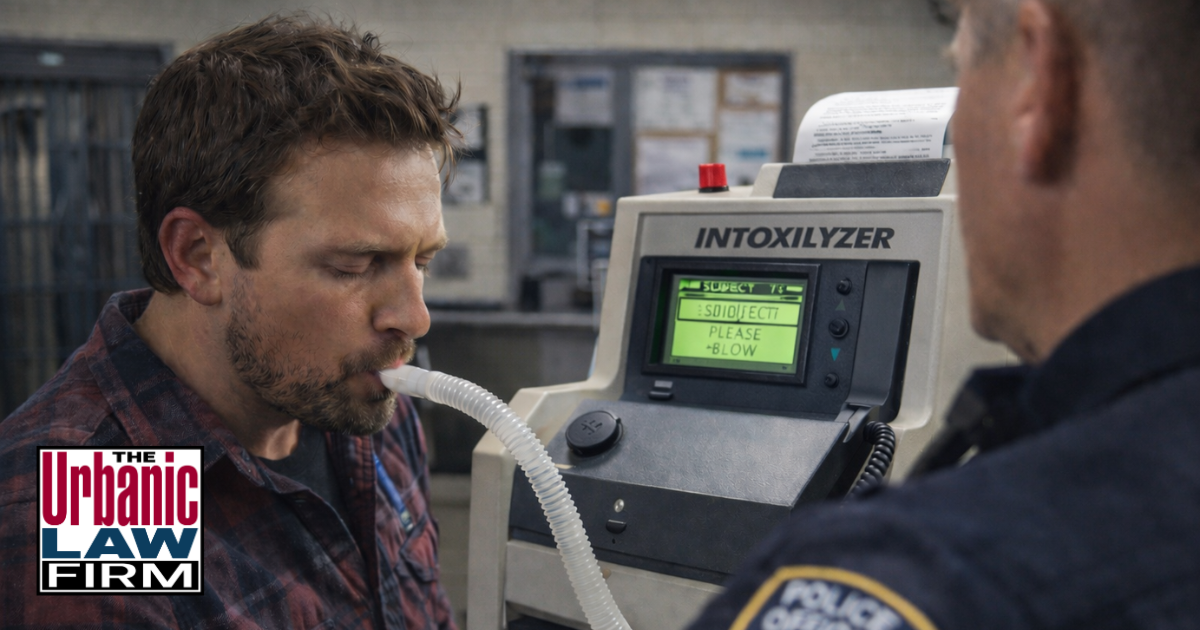 A DUI or APC arrest in Oklahoma can create a driver’s-license case that’s separate from the criminal charge. One part of the case involves Driving Under the Influence (DUI) or Actual Physical Control (APC). The other involves whether Service Oklahoma will revoke or restrict your driving privilege.
The driver’s-license side can move much faster than the criminal case. Service Oklahoma may begin the revocation process even while the DUI or APC prosecution remains pending, so the deadlines on the license side should be addressed immediately.
Oklahoma’s Impaired Driver Accountability Program (IDAP), a district court appeal, and allowing the revocation to take effect can lead to very different consequences. This page explains those choices, IDAP enrollment and completion requirements, ignition-interlock rules, revocation lengths, and reinstatement.
The criminal DUI or APC case has separate defenses and consequences. For more information, review our guides on what happens when you’re arrested for DUI in Oklahoma, Oklahoma APC defense, and Oklahoma DUI-drugs defense.
What Happens to My Driver’s License After a DUI in Oklahoma?
After a DUI or APC arrest in Oklahoma, Service Oklahoma may revoke your driving privilege even before the criminal case is resolved. Current Service Oklahoma Orders of Revocation instruct drivers to act within 40 days of the printed Issued Date to pursue timely IDAP treatment or file a district-court appeal. If you choose IDAP and meet all requirements of 47 O.S. § 6-212.5(F), your record can ultimately show completion of IDAP without revocation. If the revocation takes effect, an otherwise eligible driver may still be able to obtain a restricted Class D license requiring an ignition interlock while completing IDAP.
Quick Links
- Your three options after a DUI/APC arrest
- Option 1: IDAP – Oklahoma’s Impaired Driver Accountability Program
- The IDAP timing rule and completion without revocation
- How Service Oklahoma is currently applying the deadlines
- How to apply for and enroll in IDAP
- How long IDAP lasts
- Active interlock days and the 15-test rule
- IDAP violations and program failure
- Option 2: Appeal your license revocation in district court
- What the court looks at in a license appeal
- Option 3: Doing nothing and allowing the revocation to take effect
- How long DUI and APC revocations last
- Defense strategies to protect your license
- Frequently asked questions about Oklahoma DUI license revocations
- Key Oklahoma laws and sources
Get Help Early to Protect Your License
Current Service Oklahoma Orders of Revocation instruct drivers to act within 40 days of the printed Issued Date if they want to pursue timely IDAP treatment or file a district-court appeal. The revocation itself has a separate later effective date, and a driver seeking the special treatment under 47 O.S. § 6-212.5(F) must complete additional steps before that effective date.
Fill out our secure online form so our attorneys can better understand your situation before we speak. You may also call us at 405-633-3420.
Your Three Options After a DUI or APC Arrest
After a DUI or APC arrest, you need to decide whether to pursue IDAP treatment, challenge the revocation, or allow the revocation to take effect. If you’re arrested for DUI or APC, Service Oklahoma may revoke your driving privilege.
- Pursue IDAP, including the special treatment available under 47 O.S. § 6-212.5(F) (completion without license revocation) when all of that subsection’s requirements are satisfied.
- File a district court appeal challenging the revocation.
- Allow the revocation to take effect and later satisfy IDAP and other reinstatement requirements that apply.
For practical purposes, current Service Oklahoma Orders give drivers two important 40-day deadlines measured from the document’s printed Issued Date. The Orders instruct eligible drivers to pursue timely IDAP within 40 days, including 10 days for mailing, and likewise instruct drivers to file a district-court appeal within 40 days of the Issued Date. The revocation effective date is separate and appears later on the Order.
Option 1 – IDAP: Oklahoma’s Impaired Driver Accountability Program
IDAP is Oklahoma’s ignition-interlock program administered by the Board of Tests for Alcohol and Drug Influence, and it’s available only to Class D licenses. Under OAC 40:50-3-2, an otherwise eligible person subject to a driver-license revocation for an arrest occurring on or after November 1, 2022 may enroll in BOT IDAP.
Merely completing IDAP doesn’t automatically mean every revocation disappears from your driving record. For a qualifying person covered by 47 O.S. § 6-212.5(F), the record is updated to indicate completion of IDAP without revocation only if all of the statutory requirements in subsection F are satisfied.
IDAP enrollment or prior IDAP completion can still matter in a later impaired-driving case. Under 47 O.S. § 6-205.1, current IDAP enrollment and previous IDAP completion are among the events that may affect the length of a later revocation within the statutory ten-year lookback period.
Who’s Eligible for IDAP?
The basic BOT IDAP eligibility rules are different from the additional requirements for obtaining § 6-212.5(F)’s completion-without-revocation treatment. General enrollment depends on the Board’s current IDAP rules, while subsection F imposes additional timing and eligibility requirements.
- You must be subject to a qualifying driver-license revocation arising from an impaired-driving arrest occurring on or after November 1, 2022.
- IDAP is available only to individuals holding a Class D license. A person holding an Oklahoma Class A, B, or C commercial driver license may operate Class D vehicles, but the commercial license is not itself a Class D license. Therefore, a current CDL holder doesn’t meet the Board of Tests rule limiting IDAP to Class D licenses.
- You must otherwise be eligible for driving privileges when you enroll. Enrollment itself doesn’t grant permission to drive.
- You must submit the Service Oklahoma Order of Revocation with the IDAP application.
A person with commercial driving privileges shouldn’t assume that IDAP protects a CDL. The current BOT rule expressly limits IDAP to Class D licenses, and § 6-212.5(F) additionally requires that the qualifying driver was not driving or in actual physical control of a commercial motor vehicle at the time of the arrest.
The IDAP Timing Rule and “Completion Without Revocation”
The 30-day language in § 6-212.5(F)(2) is not a general deadline after which a person can never participate in IDAP. Instead, it’s one of the requirements for the special statutory treatment that allows the driving record of a qualifying person to be updated to indicate completion of IDAP without revocation.
Section 6-212.5(F)(2) requires the Board to receive both the request for IDAP participation and the $150 program administration fee within 30 calendar days from receipt of the Service Oklahoma revocation notice. Oklahoma’s mailed-notice statute, 47 O.S. § 2-116, provides a 10-day period for mailed Service Oklahoma notice, and current Service Oklahoma Orders implement those provisions by instructing eligible drivers to pursue IDAP within 40 days of the document’s printed Issued Date.
Meeting the initial 40-day Service Oklahoma IDAP instruction alone doesn’t prevent the revocation. To qualify for the special driving-record treatment under 47 O.S. § 6-212.5(F), you must also fully enroll in IDAP, provide proof of that enrollment to Service Oklahoma, and obtain the restricted driver license before the revocation takes effect. If you timely submit the IDAP request and $150 fee but fail to obtain the restricted license before the effective revocation date, the revocation can still take effect and you will not satisfy all the requirements for your driving record to be updated to indicate completion of IDAP without revocation.
The Board’s statement that there is “no deadline for enrollment” doesn’t mean a driver seeking § 6-212.5(F) treatment can finish enrollment whenever he or she chooses. The Board’s Enrollment Guide distinguishes the initial IDAP application from the later enrollment process. Section 6-212.5(F)(2) imposes the initial request-and-fee timing requirement, while § 6-212.5(F)(4) separately requires proof of IDAP enrollment and issuance of the restricted driver license before the revocation becomes effective.
How Service Oklahoma Is Currently Applying These Deadlines
Current Service Oklahoma Orders of Revocation reviewed by The Urbanic Law Firm use the printed “Issued Date” as the practical starting point for both 40-day deadlines shown to the driver. The same document contains both the revocation Notice and the Order of Revocation, but there isn’t a separate printed “Notice Date” and “Order Date.” Instead, the form has a single Issued Date and then gives the driver separate instructions concerning IDAP, a district-court appeal, and the later revocation effective date.
| Event | How current Service Oklahoma Orders describe it |
|---|---|
| Issued Date | The single printed date near the beginning of the Service Oklahoma Order of Revocation. |
| IDAP deadline | Current Orders instruct eligible drivers to apply within 40 days of the Issued Date, with the 10-day mailing period already included in that 40-day total. |
| District-court appeal deadline | Current Orders instruct drivers to file the petition within 40 days of the Issued Date. |
| Revocation effective date | The Order separately prints a later Effective date showing when the revocation will begin if it is not avoided or stayed. On the current form reviewed, that effective date is 55 days after the Issued Date. |
The two 40-day deadlines and the revocation effective date are not the same thing. A driver can satisfy the initial IDAP request-and-fee deadline and still lose the § 6-212.5(F) benefit if the driver doesn’t complete enrollment, provide proof of enrollment to Service Oklahoma, and obtain the restricted driver license before the separate effective date printed on the Order.
Use the actual revocation effective date printed on your own Order rather than relying solely on a mathematical calculation. The current Service Oklahoma form reviewed sets the effective date 55 days after the Issued Date, but the controlling practical date for a particular driver is the Effective date Service Oklahoma actually printed on that person’s Order.
The 40-day instructions described here reflect how Service Oklahoma is currently implementing the statutes in the Orders of Revocation it is sending to drivers. The statute itself still refers to 30 calendar days after receipt for § 6-212.5(F)(2). If there is a genuine dispute about whether Service Oklahoma actually mailed an Order when indicated, whether notice was legally effective, or whether a deadline was calculated correctly, that can present a separate legal issue. A driver shouldn’t intentionally rely on claiming a later receipt date instead of complying with the deadlines printed on the Order.
IDAP vs. District Court Appeal
You must waive the § 6-211 appeal relating to the arrest if you enroll under the special provisions of § 6-212.5(F). That means you can’t preserve a district-court challenge to the same revocation while also claiming the subsection F benefit.
An unsuccessful district-court appeal does’t necessarily eliminate IDAP from your future. If the revocation is ultimately upheld, 47 O.S. § 6-205.1 can still require completion of IDAP before the driving privilege is fully restored.
The better path depends on the facts of the arrest and the strength of the license challenge. A court appeal may be more valuable when there are substantial problems with the stop, arrest, testing, implied-consent procedure, or paperwork; timely subsection F treatment may be more attractive when preserving driving privileges and the statutory driving-record treatment is the priority.
Applying for IDAP – Timeline and Process
Applying for IDAP, fully enrolling in IDAP, and commencing the IDAP program are three different events. Current Service Oklahoma Orders instruct eligible drivers seeking timely IDAP treatment to satisfy the initial IDAP timing requirement within 40 days of the printed Issued Date. Full enrollment may occur after that initial requirement has been satisfied, but it must occur early enough for the driver to provide proof of enrollment to Service Oklahoma and obtain the restricted driver license before the separate revocation effective date printed on the Order. The IDAP program itself then commences under the timing rules in OAC 40:50-3-2.
- Apply to the Board of Tests and submit the Service Oklahoma Order of Revocation. You can use the Board of Tests online IDAP application. If you’re seeking § 6-212.5(F) treatment, current Service Oklahoma Orders instruct drivers to satisfy the initial IDAP request-and-fee requirement within 40 days of the printed Issued Date, including 10 days for mailing.
- Install an approved ignition interlock device with a camera in the Program Vehicle. Use a device from the Board’s approved manufacturer list. The installer should provide an Oklahoma Ignition Interlock Installation Verification Form. Keep a copy for your records.
- Read and sign the BOT IDAP Participant Agreement and provide the information required for enrollment. The current rule places responsibility on the participant to report the required program length reflected on the Service Oklahoma Order of Revocation/Disqualification.
- Pay the nonrefundable $150 IDAP program fee and any applicable electronic-payment service fee. This is separate from installation, lease, monitoring, calibration, service, and removal charges paid to the interlock provider.
- Complete full enrollment with the Board. Full enrollment requires the program fee, Installation Verification Form, signed participant agreement, and required program-length information.
- Wait for the Board’s Confirmation of Enrollment. The Board’s Enrollment Guide instructs participants to contact Service Oklahoma about obtaining driving privileges after receiving this confirmation.
- Obtain the appropriate restricted driver license from Service Oklahoma before driving under the IDAP restriction. If you want to complete IDAP without a license revocation on your record, you must have completed the Board enrollment process, provide proof of that enrollment to Service Oklahoma, and obtain the restricted driver license before the Effective revocation date printed on the Order.
Installing the interlock doesn’t by itself establish the IDAP program commencement date. Under the current rule, the program commences when the Board has received all documents and fees satisfying IDAP enrollment criteria, but never earlier than the effective revocation date shown on the Notice and Order of Revocation/Disqualification.
How Long Do You Keep the Interlock Under IDAP?
IDAP length is based on the revocation category in § 6-205.1, not simply whether someone casually describes the case as a “first DUI,” “second DUI,” or “third DUI.” Prior revocations, current IDAP enrollments, previous IDAP completions, and certain out-of-state convictions within the ten-year lookback can affect the required period.
- First qualifying revocation within the statutory ten-year lookback: no less than 180 days and until IDAP is completed.
- One qualifying prior event within the ten-year lookback: no less than one year and until IDAP is completed.
- Two or more qualifying prior events within the ten-year lookback: no less than two years and until IDAP is completed.
The IDAP program length cannot be shorter than the revocation period shown on the Notice and Order of Revocation/Disqualification. OAC 40:50-3-3 also requires the participant to satisfy the active-day and program-participation requirements before receiving credit for completion.
Multiple IDAP program periods run consecutively, not concurrently. A participant may enroll in more than one IDAP, but must complete the current program before beginning the next one, and credit earned in one program cannot be transferred to another.
Active Interlock Days and the 15-Test Rule
An “active ignition interlock day” is a 24-hour period in which the device is installed in the Program Vehicle, is not in permanent lockout, and has the required operational power. The rule does not require the vehicle to be driven every day for the day itself to qualify as an active ignition-interlock day.
IDAP separately requires at least 15 breath-alcohol tests during each 30-calendar-day period beginning from the date of installation. Startup tests and retests performed by the participant count toward that requirement under the Board’s current Participant Agreement.
If you fail the program-participation criteria for a 30-day cycle, you receive no credit toward your program length for that entire 30-day cycle. A compliance-download service may also be required to establish that the participation criteria and active-day requirements were satisfied.
Loss of electrical power can cost you active-day credit even before a 72-hour “power violation” is reached. Under the active-day definition and the Board’s Participant Agreement, a 24-hour period without the required operational power doesn’t count as an active ignition-interlock day. Separately, the ignition-interlock rules define a “power violation” as failure to provide power to the device for 72 hours or more.
How to Successfully Complete IDAP
Reaching the tentative calendar end date is not enough by itself to complete IDAP. Under OAC 40:50-3-5, the Board issues a Completion Certificate only after the participant satisfies the active-day, participation, and final-90-day compliance requirements.
- Accumulate at least the required number of active ignition-interlock days.
- Meet the program-participation requirements, including the required breath tests for each 30-day cycle.
- Complete the final 90 active ignition-interlock days free of the program and reportable violations that prevent completion.
- After reaching the tentative completion date, submit an IDAP Completion Certificate request.
- After the Board issues the Completion Certificate, satisfy the separate Service Oklahoma reinstatement requirements. Those include the documentation required by 47 O.S. § 6-212.2 and applicable statutory fees. You can also review Service Oklahoma’s online reinstatement portal.
The alcohol-and-drug assessment and evaluation requirements are reinstatement requirements and, for § 6-212.5(F) treatment, are expressly required by the statute. Completing the BOT interlock requirements and obtaining the IDAP Completion Certificate should therefore be distinguished from completing every separate condition necessary for unrestricted driving privileges.
Don’t assume you should remove the interlock simply because you reached the tentative completion date. Obtain the Completion Certificate and make sure the applicable license restriction and reinstatement requirements have been addressed. Removing a device and failing to reinstall one in a substitute Program Vehicle within 60 days is an IDAP program-failure event.
What if I Drive a Vehicle for my Employer?
Employer exceptions are narrow and are limited to the first-revocation category. Under OAC 40:50-3-4, a qualifying employer may request permission for an IDAP participant to operate an employer-owned or employer-leased vehicle without installing an interlock in that particular employer vehicle.
The exception doesn’t apply to rental vehicles or vehicles you own or control. The vehicle must be owned or leased by the employer as reflected on the registration, and the Board won’t accept the request when the participant is self-employed, owns part or all of the business, or exercises control over the business that owns or leases the vehicle.
The employer—not merely the participant—must submit the required written request. The request must be notarized, appear on official employer letterhead, include a copy of the vehicle registration, and be submitted to the Board.
An employer exception doesn’t eliminate the participant’s personal interlock requirement. The participant must still have a Program Vehicle with the required interlock, and the employer exception applies only while operating the employer vehicle within the course and scope of employment.
The Board won’t accept an employer-exception request from a qualifying relative relationship prohibited by the rule. The current rule refers to employment by a relative within the first degree of consanguinity or a relative who resides in the same household.
If the employer exception is approved, the participant must keep the approved exception on his or her person while operating the employer vehicle. The participant is also responsible for obtaining the additional restriction required by the state driver-licensing authority.
What Happens If You Commit an Interlock Violation in IDAP?
The last 90 active ignition-interlock days are especially important because certain violations during that period can prevent completion. The current IDAP completion rule incorporates the ignition-interlock reportable violations and adds a specific numerical rule for retest violations during the final 90 active days.
Reportable Violations Affecting IDAP Completion
- Three positive startup tests within a 15-minute period.
- Circumvention, meaning bypassing the proper operation of the interlock.
- Tampering with the device and/or camera.
- Permanent lockout.
- Three or more retest violations during the final 90 active ignition-interlock days.
For IDAP completion purposes, three or more retest violations during the final 90 active ignition-interlock days constitute a reportable violation. This is more precise than describing the rule merely as “repeated” missed or failed rolling retests.
A 72-hour power violation should be distinguished from the final-90-day reportable-violation list. Even when an outage does not fit one of the reportable violations used in the completion analysis, a 24-hour period without required operational power can still fail to count as an active ignition-interlock day.
An additional DUI or APC arrest before IDAP completion is also treated as a program violation when the Board discovers it. The current completion rule gives that additional arrest the same weight as the reportable violations when the Board evaluates eligibility for the Completion Certificate.
Program Failure
A participant who fails IDAP or voluntarily discontinues the program receives no credit for time served beginning from enrollment. The participant may re-enroll, but the previously served IDAP time isn’t carried into the new enrollment.
- Removing the device from the Program Vehicle and failing to reinstall a device in a substitute Program Vehicle within 60 days.
- For a medical-exemption participant, operating a motor vehicle during the required program period.
The Board’s current IDAP Participant Agreement also warns that operating a vehicle without the required interlock can result in program failure in a specific circumstance. The agreement describes a participant who, after receiving a documented Board warning that the participant is unauthorized to do so, is reported by law enforcement citation for operating a vehicle that is not equipped with the required interlock.
Voluntarily withdrawing from IDAP can have immediate driving consequences as well as erase IDAP credit. The Board’s current Participant Agreement warns that voluntary withdrawal results in loss of lawful driving privileges and no credit for interlock time served beginning from enrollment.
Can You Appeal an IDAP Denial or Program Failure?
Several Board IDAP decisions can be challenged through the administrative appeal process in OAC 40:50-3-6. This includes denial of a Completion Certificate, program failure, denial of affordability accommodations, denial of a medical exemption, and denial of an employer exception.
The first appeal request, with supporting documentation, must be received by the Board within 30 calendar days after the date the denial is issued. The Ignition Interlock Program Administrator then issues an administrative order, and a further appeal to the Director must likewise be received within 30 calendar days after an order sustaining the denial. A final Director order may be appealed under the Oklahoma Administrative Procedures Act.
No Vehicle, Out-of-State Licenses, and Out-of-State Interlock
Without a Program Vehicle, an ordinary IDAP participant generally cannot complete full enrollment because an Installation Verification Form is required. You may be able to begin the application process, but full enrollment and program commencement normally require an approved device installed in the Program Vehicle unless a valid medical exemption applies.
Waiting for a vehicle can jeopardize the special § 6-212.5(F) treatment even though general IDAP enrollment may remain possible later. Subsection F separately requires proof of IDAP enrollment and the restricted license before the revocation takes effect.
People who live outside Oklahoma or hold another state’s license should confirm both Oklahoma and home-state requirements before acting. Oklahoma may withdraw the person’s privilege to drive in Oklahoma, while the home licensing state may impose separate consequences based on the Oklahoma action.
Don’t assume that any out-of-state interlock installer will satisfy Oklahoma IDAP. The IDAP rules require an approved device and acceptable installation documentation. If installation will occur outside Oklahoma, confirm the arrangement with the Board and an approved manufacturer before installation.
IDAP Costs, Provider Add-Ons, and Affordability Credits
The statutory IDAP administration fee is $150, but that isn’t the total cost of participating. Participants can also incur installation, lease, monitoring, maintenance, calibration, service, and removal charges from the ignition-interlock provider, as well as applicable Service Oklahoma licensing or reinstatement fees.
You can compare approved interlock providers because prices, devices, and service-center locations vary. The Board’s current IDAP Enrollment Guide specifically recommends comparing manufacturers to determine which approved provider best fits the participant’s budget and circumstances.
An approved interlock provider can’t require an IDAP participant to purchase device insurance, roadside assistance, or automobile insurance offered by that provider. The Board’s current Enrollment Guide specifically warns participants that those add-on products are not mandatory.
The current affordability rule specifically recognizes TANF and SNAP benefits as proof of affordability status. Section 6-212.5(A)(7) more broadly directs the Board to establish affordability criteria for persons on public assistance or whose family income is at or below 150% of the federal poverty level, while the current codified OAC 40:50-3-4 rule expressly lists Temporary Assistance for Needy Families (TANF) and Supplemental Nutrition Assistance Program (SNAP).
- First-revocation category: up to $150 total credit.
- Second-revocation category: up to $300 total credit.
- Third-or-subsequent-revocation category: up to $450 total credit.
The affordability credit is limited to no more than $25 per 30 days, and noncompliance with IDAP or device-lease fees can cause the participant to lose affordability eligibility. The participant must provide the required documentation to the Board for approval.
What If You Can’t Provide the Required Interlock Breath Sample?
A medical exemption is narrow and doesn’t give the participant permission to drive. Under OAC 40:50-3-4, only people qualifying under 47 O.S. § 6-205 may seek the exemption, and the participant must still enroll in IDAP and complete the required program length.
- A pulmonologist must certify a documented medical condition preventing the person from providing a breath sample of at least 1.2 liters.
- The participant enrolls in BOT IDAP without the ordinary Installation Verification Form requirement.
- The participant may not operate, drive, or be in actual physical control of a motor vehicle during the required program period.
- The participant must still complete the required IDAP program length.
Driving during a medical-exemption IDAP period is expressly listed as a program-failure event. A denial of a medical exemption can also be challenged through the Board’s administrative appeal procedure.
Option 2 – Challenge the Revocation in District Court
A district-court license appeal is a civil challenge separate from the criminal DUI or APC prosecution. If there are legal or factual problems with the stop, arrest, implied-consent process, test, refusal, or paperwork, the revocation may be challenged under 47 O.S. § 6-211.
Current Service Oklahoma Orders instruct drivers to file the district-court appeal within 40 days of the document’s printed Issued Date. The current form contains both the Notice and Order of Revocation and does not display a separate Notice Date and Order Date; instead, Service Oklahoma uses the single Issued Date as the practical starting point for the 40-day appeal instruction.
District Court Appeal Timeline and Process
- File the petition for review in the proper district court within 40 days of the Issued Date shown on the current Service Oklahoma Order.
- For a revocation under §§ 753 or 754, file in the county where the arrest occurred.
- Obtain the required order setting the matter for hearing.
- Serve the required certified copies in the manner required by § 6-211.
- A properly filed appeal can stay the revocation while the appeal is pending, subject to the governing statute and court orders.
What Will the District Court Look At?
The court examines the statutory issues underlying the Service Oklahoma revocation rather than deciding guilt or innocence on the criminal DUI charge. Depending on the type of revocation, the court may consider whether the officer had the required grounds for the impaired-driving action, whether the arrest requirements were met, and whether the testing or refusal requirements were satisfied.
- The officer had reasonable grounds to believe you had been driving or in actual physical control of a vehicle on a public road, street, highway, turnpike, or other public place in Oklahoma while impaired.
- The statutory arrest and implied-consent requirements were satisfied.
- The State can establish the test result, test refusal, warnings, and other issues required for the particular revocation.
The driver’s-license appeal uses a civil standard rather than the criminal “beyond a reasonable doubt” burden. The administrative license case and the criminal DUI/APC prosecution therefore can produce different outcomes.
Extra Issues in Breath or Blood Test Cases
Breath- and blood-test revocations can turn on whether the statutory implied-consent and testing requirements were actually satisfied. Relevant issues may include the test offered, the warnings given, timing of the sample, and the alcohol concentration reported.
- You were offered the required test and were not improperly denied an independent or additional test where applicable.
- The sample was obtained within the time required by Oklahoma’s implied-consent statutes.
- If you were under 21, the applicable underage alcohol warning was given.
- If you were 21 or older, the applicable warning concerning an alcohol concentration of 0.08 or more was given.
- The State can establish the test result relied on for the revocation.
Extra Issues in Refusal Cases
A refusal revocation requires proof that a legally sufficient request and warning were made and that the driver actually refused the requested test. Whether the driver’s conduct legally constituted a refusal can therefore be an important issue.
- You actually refused the requested test or tests authorized by the implied-consent law.
- The officer gave the legally required warning concerning the consequences of refusal.
Can I Get a Restricted License if I Lose the Appeal?
If you lose a district-court appeal of a post–November 1, 2022 DUI or APC revocation, the revocation generally takes effect, but an otherwise eligible driver may still obtain restricted Class D driving privileges through IDAP. This is different from an Oklahoma “modified driver license.” Modern DUI/APC revocations are handled through IDAP, while Service Oklahoma generally reserves modified licenses for other types of suspensions or revocations and certain older DUI cases.
After completing the required IDAP enrollment steps, an eligible participant can obtain a restricted Class D driver license that permits driving only in a vehicle equipped with the required ignition interlock. Under 47 O.S. § 6-212.3, the restricted license and driving record must show the interlock restriction. Installing an interlock or enrolling in IDAP doesn’t, by itself, authorize driving; Service Oklahoma must grant the lawful restricted driving privilege.
While a timely district-court appeal is pending, the driver doesn’t need a “modified license” simply because the appeal was filed. Under 47 O.S. § 6-211, Service Oklahoma must withhold or stay the challenged revocation during the appeal and grant or restore driving privileges if the person is otherwise eligible. If the driver ultimately loses the appeal, that protection ends and the revocation can take effect.
Appealing the District Court’s Decision
An adverse district-court decision may itself be appealed through Oklahoma’s appellate process. The appellate court generally reviews whether the district court committed reversible legal or evidentiary error rather than simply conducting the license hearing again from the beginning.
Option 3 – Do Nothing and Allow the Revocation to Take Effect
If you don’t timely challenge the revocation or satisfy the requirements for the special § 6-212.5(F) treatment, the revocation can take effect on the Effective date printed on the Service Oklahoma Order. Current Orders separately identify that effective date so the driver can see when unrestricted driving privileges will be revoked if the action isn’t avoided or stayed.
A missing or delayed officer affidavit can affect whether Service Oklahoma has authority to proceed with a particular administrative revocation, but relying on that possibility is risky. The affidavit may later be received, and a criminal conviction can create separate driver’s-license consequences.
What If I Miss the 40-Day IDAP or Appeal Deadline?
Missing the 40-day Service Oklahoma IDAP instruction doesn’t necessarily mean you are permanently barred from IDAP. The Board’s current enrollment materials state that there’s no separate deadline for general IDAP enrollment, and the current IDAP rule allows an otherwise eligible person subject to a qualifying revocation to enroll. What may be lost is the special § 6-212.5(F) driving-record treatment and, separately, the opportunity to file a timely district-court appeal.
A person whose revocation has already taken effect still has to complete IDAP before reinstatement. Section 6-205.1 provides that the applicable revocation lasts for at least the required period and until the person completes IDAP.
If the revocation takes effect, that doesn’t necessarily mean the person must remain completely unable to drive for the entire revocation period. An otherwise eligible person may still enroll in IDAP and obtain a restricted Class D driver license from Service Oklahoma that permits driving with the required ignition interlock. The underlying revocation remains in effect and on the person’s driving record; the restricted license provides limited lawful driving privileges during that revocation.
How Long Is My License Revoked?
For revocations governed by § 6-205.1(A), the minimum period depends on qualifying events within the preceding ten years—not merely the number of criminal DUI convictions. Service Oklahoma’s record of prior revocations, IDAP enrollments or completions, and certain qualifying out-of-state convictions can affect the category.
- First qualifying revocation within ten years: no less than 180 days and until IDAP is completed.
- One qualifying prior event within ten years: no less than one year and until IDAP is completed.
- Two or more qualifying prior events within ten years: no less than two years and until IDAP is completed.
Different incidents don’t simply overlap indefinitely to shorten the total period. Section 6-205.1 provides that revocations arising from different incidents don’t run concurrently, and the IDAP regulations likewise require multiple IDAP program periods to run consecutively.
Can I “Sit Out” a Revocation Instead of Doing IDAP?
No. For a revocation governed by § 6-205.1(A), simply waiting for the minimum calendar period to expire doesn’t satisfy the statute. The statute provides that the revocation lasts for no less than the applicable period and until IDAP is completed.
Reinstatement also requires more than finishing the interlock period. The driver may need the IDAP Completion Certificate, alcohol-and-drug assessment/evaluation documentation required by 47 O.S. § 6-212.2, applicable fees, and any other outstanding Service Oklahoma requirements.
Delaying IDAP can therefore delay full reinstatement even when the minimum revocation period is already running. The correct timing depends on whether you are pursuing § 6-212.5(F), appealing the revocation, or completing IDAP after the revocation has taken effect.
Additional Crimes Related to Interlock & License Revocation
Driving Without the Required Ignition Interlock
Driving a vehicle without the required ignition interlock is a separate Oklahoma crime. If your license, restricted license, or other legal requirement limits you to interlock-equipped vehicles, driving a non-interlock vehicle outside a lawful exception can expose you to an additional misdemeanor under 47 O.S. § 11-902a, in addition to consequences arising from the DUI/APC case or IDAP.
Driving While Revoked
Driving while your privilege is revoked, suspended, canceled, denied, or disqualified can create another criminal case. A person who continues driving while a revocation is in effect without a restricted license may be prosecuted under 47 O.S. § 6-303, and the charge may exist in addition to an interlock-related offense.
Defense Strategies to Protect Your License
The strongest license-defense strategy depends on the legal basis for the revocation and the evidence supporting it. The administrative license case should be reviewed separately from the criminal prosecution even though many of the same facts, videos, reports, and test records may matter in both.
- Challenge the traffic stop or initial detention when there was no lawful basis for the officer’s contact.
- Challenge the grounds for arrest using driving evidence, body-camera video, field sobriety tests, statements, and other facts.
- Examine the implied-consent warnings for omissions, mistakes, or legally significant confusion.
- Review breath and blood testing procedures, including timing, observation requirements, instrument records, laboratory evidence, and chain-of-custody issues.
- Review the officer’s affidavit and Service Oklahoma paperwork for missing information, incorrect dates, signatures, or filing problems.
- Consider medical and factual explanations for observations that the officer characterized as evidence of intoxication.
A successful license challenge can preserve driving privileges even though the criminal DUI or APC case remains separate. The same factual or evidentiary problems identified during the license case may also become important in defending the criminal charge.
Frequently Asked Questions About Oklahoma DUI License Revocations
Service Oklahoma sent me an Order of Revocation. What should I do?
Look immediately at the printed Issued Date and the separate revocation Effective date on the Order. Current Service Oklahoma Orders reviewed by The Urbanic Law Firm instruct eligible drivers to pursue timely IDAP within 40 days of the Issued Date, including 10 days for mailing, and to file a district-court appeal within 40 days of that same Issued Date. A driver seeking § 6-212.5(F) treatment must also complete enrollment and obtain the restricted driver license before the separate revocation Effective date.
Why does the Service Oklahoma Order say 40 days when § 6-212.5(F) says 30 days?
Service Oklahoma is currently implementing the 30-day statutory requirement for mailed Orders by giving drivers 40 days from the printed Issued Date, including 10 days for mailing. Section 6-212.5(F)(2) refers to 30 calendar days from receipt of the revocation notice, while 47 O.S. § 2-116 contains Oklahoma’s mailed-notice rule. Current Service Oklahoma Orders combine those concepts into the 40-day instruction appearing on the document.
Can I start the alcohol and drug assessment or ADSAC requirements early?
Completing the required alcohol-and-drug assessment, evaluation, and resulting requirements early can help prevent reinstatement delays later. 47 O.S. § 6-212.2 governs the applicable evaluation and reinstatement documentation, and § 6-212.5(F) expressly requires proof of completion of the assessment and evaluation for its special driving-record treatment.
When does my IDAP program actually start?
Your IDAP program doesn’t start merely because you submitted the application or installed the interlock. Under the current rule, the commencement date is when the Board has received all documents and fees satisfying the IDAP enrollment criteria, but it can never be earlier than the effective revocation date shown on the Notice and Order of Revocation/Disqualification.
Does IDAP have a 40-day deadline?
The current 40-day Service Oklahoma instruction is important for preserving the special benefits of § 6-212.5(F), but it is not necessarily the last date on which a person can ever enroll in IDAP. Current Orders instruct eligible drivers to submit the timely IDAP request within 40 days of the printed Issued Date, including 10 days for mailing. A driver seeking § 6-212.5(F) treatment must then complete IDAP enrollment, provide proof of enrollment to Service Oklahoma, and obtain the restricted driver license before the separate revocation Effective date. A person who misses the initial timing requirement may still be able to enroll in IDAP later, but the revocation can take effect and the special completion-without-revocation treatment may be lost.
When will my Oklahoma driver’s license actually be revoked?
Look at the separate “Effective” date printed on your Service Oklahoma Order of Revocation. Current Orders distinguish the 40-day action deadlines from the later date on which the revocation actually begins. On the current form reviewed by The Urbanic Law Firm, the revocation Effective date is 55 days after the printed Issued Date, but you should use the specific Effective date printed on your own Order rather than assuming every case follows exactly the same calendar calculation.
What if I haven’t received an Order of Revocation from Service Oklahoma yet?
The current BOT application rule requires the Service Oklahoma Order of Revocation, so the absence of that document matters. You can contact Service Oklahoma to check the status of the administrative action. Make sure your address is correct and, if necessary, update your address with Service Oklahoma so you don’t miss legally significant notice.
What if I don’t have a vehicle for IDAP?
Ordinarily, you can’t fully enroll and commence IDAP without a Program Vehicle because full enrollment requires an Installation Verification Form. A valid medical exemption is treated differently. If you’re trying to not get your license revoked, waiting for a vehicle can also create a problem because proof of enrollment and the restricted license must be obtained before the revocation takes effect.
What if I have an out-of-state driver’s license or live out of state?
An Oklahoma revocation can affect your Oklahoma driving privilege even when another state issued your license. Because the current IDAP rule is expressly limited to Class D licenses and another state may impose its own consequences, confirm the requirements with the Board of Tests, Service Oklahoma, and the licensing authority in your home state before choosing a course of action.
How do I get an ignition interlock installed outside Oklahoma?
Confirm the installation with the Board before relying on an out-of-state installer. Oklahoma requires an approved device and acceptable installation verification, so start with a manufacturer on the Board of Tests approved device list and verify that the proposed out-of-state arrangement will satisfy Oklahoma’s IDAP requirements.
What if I need to take my vehicle to a mechanic while I’m in IDAP?
Protect the interlock record before repairs begin whenever possible. Have the mechanic contact the interlock service center or manufacturer for instructions before disconnecting power or performing work that could affect the device. If a repair produces an event that appears to be a violation, the Board provides a Mechanic’s Affidavit that may help document what occurred.
How often do I need to drive my vehicle after the interlock is installed?
You don’t necessarily have to drive every day, but you must provide at least 15 breath-alcohol tests during every 30-calendar-day participation cycle. A powered, installed device that isn’t permanently locked out can continue generating active ignition-interlock days while the vehicle is parked, but failure to satisfy the 15-test participation requirement can cause you to receive no program credit for the entire 30-day cycle.
What happens if my interlock vehicle has a dead battery?
A dead battery can cost IDAP credit even if the power interruption lasts less than 72 hours. A 24-hour period without required operational power is not an active ignition-interlock day, while the ignition-interlock regulations separately define a “power violation” as a loss of power lasting 72 hours or more. Document legitimate repairs and contact the interlock provider promptly.
Is it possible to lower the cost of the interlock?
Compare approved providers and check whether you qualify for the Board’s affordability program. Prices and service locations vary among approved manufacturers, and the current affordability rule provides credits for qualifying TANF or SNAP recipients. The Board’s Enrollment Guide also makes clear that provider-offered device insurance, roadside assistance, and automobile insurance are not mandatory IDAP purchases.
What if I have a hard time blowing into an interlock?
A qualifying medical exemption requires a pulmonologist to certify that a documented medical condition prevents you from providing a breath sample of at least 1.2 liters. A medical exemption does not authorize driving; the exempt participant may not operate, drive, or be in actual physical control of a motor vehicle during the required program period and must still complete the program length.
Can I remove the interlock as soon as my expected IDAP end date arrives?
Don’t treat the tentative completion date as automatic permission to remove the interlock. You must satisfy the completion criteria and obtain the Board’s IDAP Completion Certificate, and you should make sure Service Oklahoma’s restrictions and reinstatement requirements have been addressed before assuming unrestricted driving privileges have been restored.
Can I still drive if I apply for IDAP after the 40-day Service Oklahoma deadline?
Possibly, but the special § 6-212.5(F) treatment (no license revocation) may be lost if you miss the initial timing requirement. An otherwise eligible driver may still be able to enroll in IDAP later and obtain a restricted Class D driver license from Service Oklahoma requiring an ignition interlock. If the revocation has already taken effect, the underlying revocation remains in place. Until Service Oklahoma actually grants restricted driving privileges, however, IDAP enrollment or installation of the interlock does not by itself make it legal to drive.
What if I meet the 40-day IDAP deadline but don’t get my restricted license before the revocation effective date?
Meeting the initial 40-day IDAP application requirement by itself isn’t enough to receive § 6-212.5(F)’s completion-without-revocation treatment. You must also fully enroll in IDAP, provide proof of enrollment to Service Oklahoma, and obtain the restricted driver license before the separate revocation Effective date printed on the Order. If you miss that second deadline, the revocation can take effect even though the initial IDAP request and fee were timely.
What happens if I submit my IDAP request and $150 fee on time, but finish IDAP enrollment after my revocation effective date?
If the Board of Tests receives your IDAP request and $150 fee within the required time, but doesn’t receive all remaining enrollment requirements until after the revocation effective date, your IDAP program begins on the date the Board receives the final item necessary to complete enrollment. Those remaining requirements include the Ignition Interlock Installation Verification Form, signed IDAP Participant Agreement, and required program-length information. IDAP doesn’t begin retroactively on the revocation effective date. For example, if your revocation becomes effective May 15 but the Board doesn’t receive the last required enrollment document until May 20, your IDAP commencement date is May 20. Although timely submission of the request and $150 fee may satisfy the initial timing requirement of 47 O.S. § 6-212.5(F)(2), you won’t qualify for that subsection’s completion-without-revocation treatment if you didn’t fully enroll, provide proof of enrollment to Service Oklahoma, and obtain the restricted driver license before the revocation took effect.
What if I completed all IDAP enrollment requirements before my revocation date, but the Board of Tests didn’t issue my Confirmation of Enrollment until after the revocation took effect?
Your license may still be revoked if the delay prevents you from obtaining the restricted driver license before the revocation effective date, even though you timely completed everything required for IDAP enrollment. Under the current IDAP rules, a person is fully enrolled when the Board of Tests has received all required enrollment documents and fees, including the $150 fee, Ignition Interlock Installation Verification Form, signed Participant Agreement, and required program-length information. If all of those items were received before the revocation effective date, the IDAP program should commence on the revocation effective date. However, 47 O.S. § 6-212.5(F)(4) separately requires a person seeking the special completion-without-revocation treatment to provide proof of enrollment to Service Oklahoma and obtain the restricted driver license before the revocation takes effect. If the Board doesn’t issue the Confirmation of Enrollment until after that date, the driver may be unable to complete the Service Oklahoma step in time, and the statute doesn’t expressly provide an exception for a delay caused by the Board.
This is one reason it’s important to have a lawyer who understands Oklahoma’s IDAP, Service Oklahoma, and driver-license procedures involved early in the process. If a driver timely submitted every required item but an agency processing delay caused the restricted-license deadline to be missed, an attorney familiar with these issues can document when each requirement was submitted, preserve proof that the driver completed everything within his or her control, communicate with the Board of Tests and Service Oklahoma, and evaluate whether the revocation or loss of § 6-212.5(F) treatment should be challenged. That doesn’t guarantee that the revocation will be reversed, but a case involving an agency-caused delay can raise legal and procedural issues that are very different from a situation in which the driver simply missed the deadline.
Key Oklahoma Laws and Sources
- 47 O.S. § 11-902 – DUI, DUI-drugs, and APC offenses.
- 47 O.S. § 6-205 and 47 O.S. § 6-205.1 – mandatory driver’s-license revocations, revocation history, revocation periods, and IDAP-completion requirements.
- 47 O.S. § 6-211 – district-court appeals from driver’s-license revocations and denials.
- 47 O.S. § 6-212.3, 47 O.S. § 6-212, 47 O.S. § 6-212.2, and 47 O.S. § 6-212.5 – restricted licenses, reinstatement requirements, alcohol-and-drug assessment and evaluation requirements, and Oklahoma’s Impaired Driver Accountability Program (IDAP).
- 47 O.S. § 751, 47 O.S. § 752, 47 O.S. § 753, 47 O.S. § 754, and 47 O.S. § 757 – implied consent, chemical testing, test refusal, and administrative driver’s-license revocation procedures.
- 47 O.S. § 2-116 – statutory requirements for giving notice, including Service Oklahoma notice by mail.
- 47 O.S. § 11-902a – criminal offense involving operation of a motor vehicle without a required ignition interlock device.
- 47 O.S. § 6-303 – driving while the driver’s license or driving privilege is canceled, denied, suspended, or revoked.
- OAC 40:50-3-1.1 – IDAP definitions, including “active ignition interlock day,” “program participation,” “Program Vehicle,” and “compliance download service.”
- OAC 40:50-3-2 – IDAP application, Class D eligibility, enrollment requirements, program commencement, Confirmation of Enrollment, and rules for multiple IDAP programs.
- OAC 40:50-3-3 – IDAP program length, program-participation requirements, and calculation of active ignition-interlock days.
- OAC 40:50-3-4 – medical exemptions, employer exceptions, and affordability accommodations for ignition-interlock participants.
- OAC 40:50-3-5 – IDAP Completion Certificates, final-90-day compliance requirements, program violations, and program-failure criteria.
- OAC 40:50-3-6 – administrative appeals from IDAP Completion Certificate denials, program-failure decisions, medical-exemption denials, employer-exception denials, and affordability-accommodation denials.
- OAC 40:50-1-1.1 – general Oklahoma ignition-interlock definitions, including circumvention, permanent lockout, power violation, retest violation, and tampering.
- OAC 40:50-1-3.2 – ignition-interlock reportable violations and reporting requirements.
- Board of Tests for Alcohol and Drug Influence IDAP Enrollment Guide and Participant Agreement – current Board enrollment instructions, participant responsibilities, breath-test requirements, interlock-provider guidance, and IDAP-completion information.
- Current Service Oklahoma Orders of Revocation reviewed by The Urbanic Law Firm – current agency implementation of the mailed-notice timing rules, including the 40-day IDAP instruction, 40-day district-court appeal instruction, and separately stated revocation Effective date.
About the Author: Attorney Frank Urbanic

This page provides general legal information and is not legal advice for a particular case. Every case is different. Law last reviewed on August 29, 2026 by attorney Frank Urbanic. Page last updated August 29, 2026. Review the statutes, administrative rules, and the deadlines printed on your own Service Oklahoma Order of Revocation for the most current information.