Fishing, Paddlefish & Aquatic-Wildlife Crimes Defense in Oklahoma
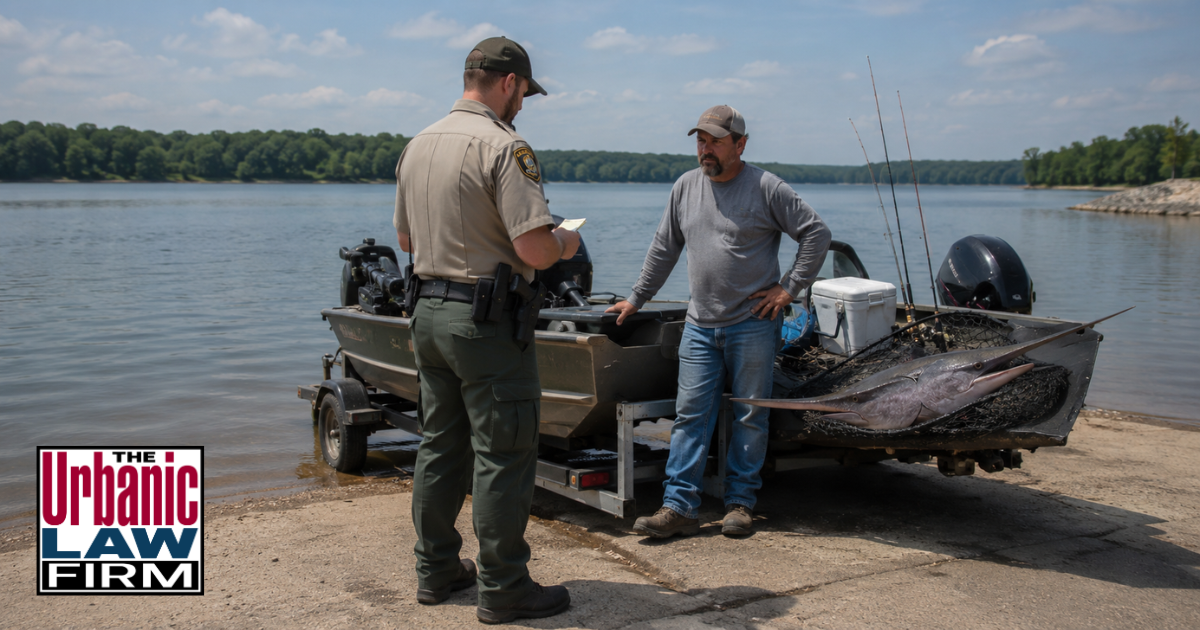 Fishing, paddlefish, and aquatic-wildlife cases in Oklahoma usually start with a game warden contact, boat stop, bank check, road stop, or tip. These cases can involve fish, eggs, nets, lines, shocking devices, closed waters, or alleged commercial activity.
This guide is for people accused of fishing, paddlefish, or aquatic-wildlife violations in Oklahoma who are trying to understand the charge, the evidence, the court process, and the defenses that may apply. Because these cases often turn on small details, the exact location, gear, species, possession theory, and officer report matter a lot.
These offenses sit within Oklahoma’s broader hunting and wildlife crimes framework. However, aquatic cases have their own patterns because the evidence often includes water conditions, fish-identification issues, possession limits, and equipment seizures.
Quick links for fishing and paddlefish charges
Talk with an Oklahoma fishing violations lawyer
If you’ve been accused of fishing, paddlefish, or aquatic-wildlife crimes in Oklahoma, reach out for a free consultation. Early help can protect your rights, preserve evidence, and help you avoid statements that get used against you later.
Call us at 405-633-3420 or use our secure online form.
What is an Oklahoma paddlefish product violation?
An Oklahoma paddlefish product violation usually involves claims that someone possessed too many paddlefish eggs, transported paddlefish eggs into or out of Oklahoma, or tried to move paddlefish with viscera out of the state. However, the exact charge depends on what officers found, how it was packaged, where it was going, and whether an exception applies.
How fishing, paddlefish, and aquatic-wildlife cases work
These cases often share the same core issues. The State may claim you used unlawful gear, took the wrong species, exceeded a limit, possessed illegal product, blocked fish movement, or fished in waters closed by the Wildlife Conservation Commission.
Because the evidence usually comes from a field contact, we look closely at the stop, the officer’s authority, the location, and the chain of custody. In addition, we review photographs, body-camera footage, boat evidence, seized devices, GPS data, witness statements, and any admission the State claims you made.
Prosecutors may also add related counts when the report claims conduct beyond the fishing violation. For example, a case may involve trespass, obstructing or resisting law enforcement, identity theft or impersonation, or theft and property crimes if officers claim false identity, private-land entry, interference with a game warden, stolen equipment, or illegal product tied to a property loss.
However, a field accusation isn’t the same as proof. Many defenses start with ordinary facts, like who owned the gear, whether the water was open, whether the fish was legally taken, and whether you actually possessed the item at issue.
Crimes in this group
Prohibited means of taking fish
Prohibited means of taking fish (29 O.S. § 6-301) focuses on gear and methods used to take game or nongame fish from Oklahoma waters. The law addresses trotlines, throwlines, limblines, juglines, nets, traps, seines, and taking fish from another person’s line without consent.
Because this charge depends on equipment details, the defense often starts with the setup. For example, line ownership, labeling, hook count, water size, location, permission, and lawful exceptions may all matter.
Prohibited means of taking fish by poison, explosives, or electricity
Prohibited means of taking fish by poison, explosives, or electricity (29 O.S. § 6-301a) deals with rotenone or other poison, dynamite or other explosives, and electrical shocking devices. It also treats possession of certain devices or equipment near the banks of Oklahoma waters as important evidence.
However, the State still has to connect the device, location, and conduct to the charged theory. A defense may challenge whether the item was capable of unlawful use, whether it was near covered waters, and whether officers can prove use or possession beyond suspicion.
Unlawful taking of game fish
Unlawful taking of game fish (29 O.S. § 6-302) covers claims that someone took game fish by an unauthorized method, exceeded a limit, used certain netting or snagging methods, or handled game fish for sale. The charge can become more serious when the State claims commercial conduct.
Because game fish cases often rely on species identification and method of take, the details matter. In addition, the defense may review whether the fish was actually a covered species, whether the method was lawful, and whether the State can prove any sales-related allegation.
Unlawful taking of nongame fish
Unlawful taking of nongame fish (29 O.S. § 6-303) involves taking, killing, catching, attempting to take, or assisting with nongame fish by unlawful methods. The statute lists methods such as rod and line, trotline, throwline, limblines, gigs, spears, nets, and seines, with limits and exceptions.
However, nongame fish cases can still be technical. The defense may focus on species classification, the exact gear used, whether a commercial license or exception applied, and whether the alleged conduct happened during a restricted time or place.
Paddlefish product offenses
Paddlefish product offenses (29 O.S. § 6-303.1) focus on paddlefish eggs, processed paddlefish eggs, and transport. The law limits possession of eggs attached to the membrane, limits combined egg weight after removal, and restricts moving paddlefish eggs into or out of Oklahoma.
Because these cases often involve containers, weights, vehicles, and travel plans, the defense may challenge possession, ownership, intent to transport, and whether the product was lawfully handled. Also, labelling, packaging, and who controlled the container can become major issues.
Commercial minnow / fish-movement obstruction violations
Commercial minnow / fish-movement obstruction violations (29 O.S. § 6-501) involve stationary dams, nets, traps, or obstacles that block minnow or fish movement. The statute also restricts commercial minnow harvesting near structures and allows only a limited temporary block by a licensed commercial minnow dealer.
Because this charge turns on placement and timing, the defense often examines maps, photos, flow conditions, and the claimed duration of the block. In addition, a licensing defense may apply if the State overlooks a lawful temporary setup.
Violations involving closed waters
Violations involving closed waters (29 O.S. § 6-502) involve fishing in waters that the Wildlife Conservation Commission has closed. The closure can apply when the Commission determines that certain waters need protection until reopened.
However, the State still needs proof that the water was closed and that you fished there. A defense may focus on notice, boundaries, signs, maps, reopening dates, and whether the alleged fishing happened inside the closed area.
Defense strategies for Oklahoma fishing violations
When we defend these cases, we first look at what the officer actually saw. Then we compare the report to the law, the gear, the species, the water, the photographs, and any statement attributed to you. Because small facts can change the entire case, we don’t assume the citation tells the whole story.
- Lawful method or lawful gear. The gear may have complied with the statute, regulation, license, or exception.
- Species-identification problems. The State may have misclassified fish as game fish, nongame fish, paddlefish, or illegally taken wildlife.
- Possession and control issues. The evidence may not show that you knowingly controlled the fish, eggs, device, line, net, or container.
- Location and boundary disputes. The alleged fishing may not have occurred in covered waters, closed waters, or the restricted zone described by law.
- Search, seizure, and statement challenges. We review whether officers lawfully stopped you, searched property, seized gear, and obtained any alleged admission.
Key terms in fishing and paddlefish cases
Temporary block
Temporary block means an obstruction for no more than four hours at any one location in any twenty-four-hour period. This term matters in commercial minnow cases because a lawful short-term setup can look unlawful unless timing and licensing get reviewed. (29 O.S. § 6-501)
Processed paddlefish eggs
Processed paddlefish eggs are eggs taken from paddlefish that have gone through a process that makes the eggs into caviar or a caviar-like product. This definition matters because paddlefish cases often turn on whether eggs were raw, fresh, frozen, processed, or packaged for transport. (29 O.S. § 2-132.1)
Game fish
Game fish are fish normally sought by sportsmen, including the species listed by Oklahoma law. The classification matters because game fish rules can differ from nongame fish rules on methods, limits, and sale-related allegations. (29 O.S. § 2-115)
Nongame fish
Nongame fish are all fish that are not game fish. This definition matters because the lawful methods and restrictions for nongame fish can differ from the rules that apply to game fish. (29 O.S. § 2-123)
Possession
Possession is the retention and control of the thing referred to and may be actual or constructive. Actual possession involves knowing direct physical control, while constructive possession involves knowing power and intention to exercise dominion or control. This issue often decides whether the State can connect you to fish, eggs, devices, nets, or containers. (29 O.S. § 2-129 & jury instruction 6-11)
FAQs about Oklahoma fishing and paddlefish charges
Is an Oklahoma fishing violation a criminal charge?
Yes. Many Oklahoma fishing violations can be filed as criminal misdemeanors, and some related wildlife or commercial allegations can create more serious exposure. The exact result depends on the statute, the facts, your record, and whether the State claims unlawful possession, illegal methods, sale, transport, or other aggravating conduct.
What happens if I’m accused of having too many paddlefish eggs in Oklahoma?
If you’re accused of having too many paddlefish eggs in Oklahoma, the case may focus on weight, packaging, membrane status, processing, transport, and possession. A defense lawyer may review who controlled the eggs, how officers weighed them, whether an exception applies, and whether the State can prove intent to move them.
Can Oklahoma charge me for a shocking device even if I didn’t catch fish?
Yes. Oklahoma law can treat possession of certain poison, explosive, device, or equipment near the banks of state waters as important evidence. However, the State still has to prove the facts needed for the charged offense. The defense may challenge capability, location, ownership, use, and knowledge.
What defenses apply to fishing in closed waters in Oklahoma?
Defenses to fishing in closed waters in Oklahoma may include lack of notice, unclear boundaries, wrong location, reopening of the water, mistaken identity, and lack of proof that fishing occurred. Maps, signage, officer photos, GPS data, and Commission closure records can become important.
Can an Oklahoma fishing violation be expunged?
Sometimes. An Oklahoma fishing violation may be eligible for expungement depending on the final outcome, the type of charge, your record, and how much time has passed. For a broader overview, read this guide to Oklahoma expungement law.
Oklahoma fishing violation in the news
A KTUL report about a Hugo Lake investigation described game wardens seizing shocking devices, wire lead sets, and catfish. The report said the suspect faced allegations tied to shocking devices, illegally taking game fish, and possession of wildlife not legally taken. That kind of case shows why equipment, location, fish species, and possession can all matter in an Oklahoma fishing violations defense.
This page is for informational purposes only and is not legal advice. Every case is unique; consult an attorney about your specific situation. Law last reviewed on May 7, 2026 by attorney Frank Urbanic. Page last updated May 7, 2026. Consult the statutes listed above for the most up-to-date law.